


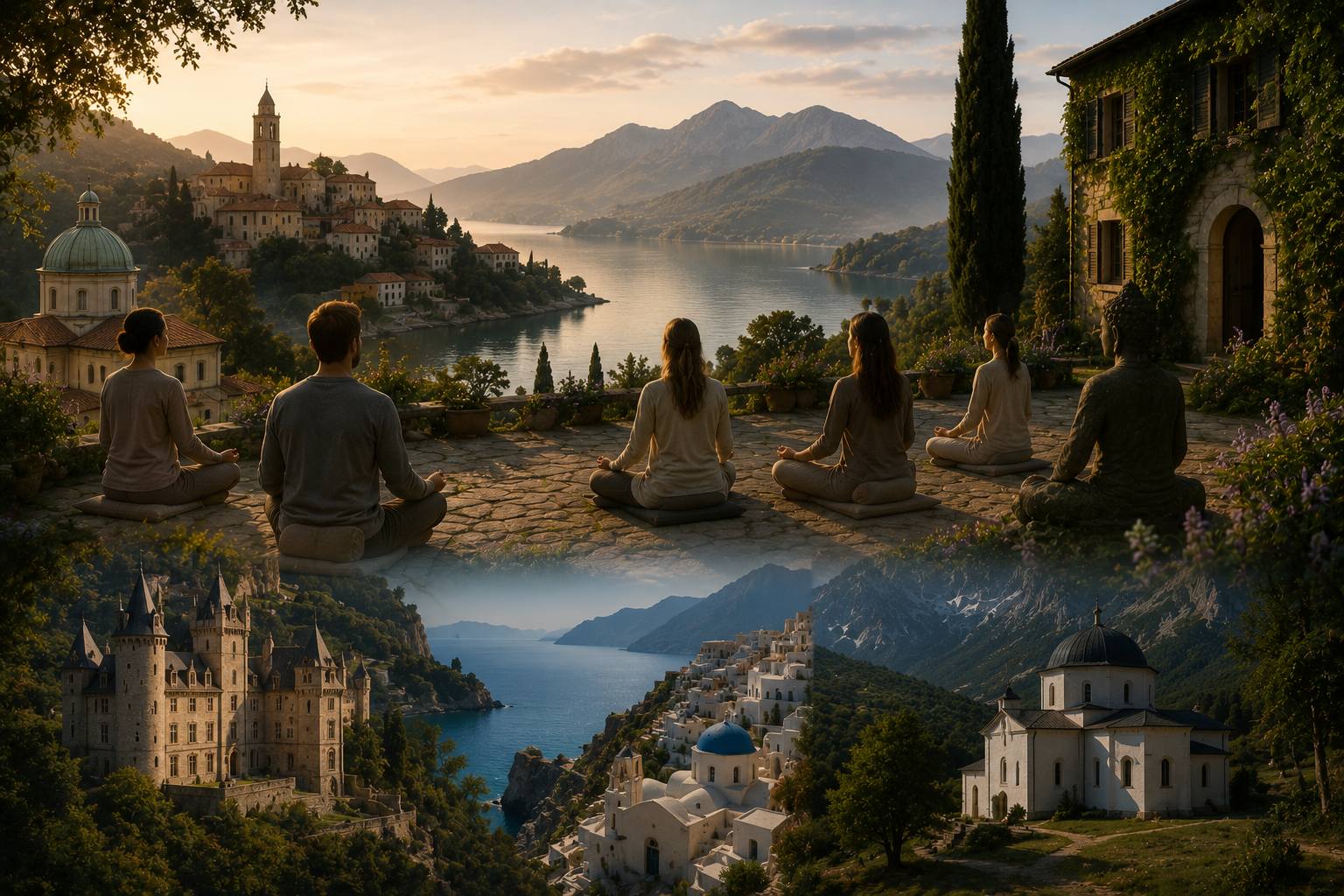
A silent retreat in Europe is a unique experience where participants embrace noble silence, disconnect from daily distractions, and fully focus on self-reflection and meditation in serene settings. These retreats support mental clarity, stress reduction, and spiritual growth through structured silence, guided meditations, and mindful living—making them ideal for both beginners and seasoned meditators.
If you’re new to immersive silent practice, explore our What Is a Silent Retreat? Benefits, Rules & What to Expect to understand the process, benefits, and preparation involved.
Introduction
Why More People Are Choosing Silent Retreats in Europe
Interest in silent retreats in Europe has grown rapidly, driven partly by rising stress levels, digital overload, and a renewed appreciation for well-being. From the rolling hills of Italy to the wild coast of Portugal, the European continent now boasts a wide variety of silent retreat centers. The allure lies not just in beautiful settings but in the real-life impact: people walk away with a new calm, sharper focus, and strengthened sense of self. Whether booking a 3-day, 7-day, or 10-day silent retreat in Europe, seekers describe the experience as life-resetting, with benefits lasting long after they return home.
What Makes a Silent Retreat Different From a Wellness Retreat
Wellness retreats in Europe often center on holistic therapies, spa treatments, and social group activities. Silent retreats flip that model. Here, the emphasis falls on prolonged noble silence, inward reflection, and meditation. Group interaction is minimal; instead, you tune deeply into your own mind and senses. Many silent retreats offer yoga, nature walks, and healthy meals, but the absence of conversation, phones, and outside stimulation is what sets a europe silent retreat apart from a traditional wellness break.
Benefits of Silence for Mental Clarity, Stress Relief, and Self-Discovery
Regular attendees of silent retreats in Europe report fast, visible benefits: reduced mental clutter, decreased anxiety, improved sleep, and a gentler mood. Psychological research supports this. Time spent in structured silence, free from news feeds and appointment reminders, helps the nervous system “reset.” The lack of external stimulation gives the mind room for self-reflection, helping people process big emotions and discover insights about their purpose and values. The results include sharper focus, lighter stress, and sometimes even a sense of spiritual awakening.
How We Selected the Best Silent Retreats in Europe
Our methodology for the Europe silent retreat list relied on: quality of guest experience; setting and accessibility; teachers’ qualifications (including Buddhist, Catholic, and secular backgrounds); accommodation standards; dietary and allergy provisions; and transparency of pricing. We researched reviews from BookRetreats, retreat.guru, and official retreat center websites, and considered both established and emerging locations for variety. Selections balance luxury, Vipassana, nature-based, beginner-friendly, and budget silent retreat options.
| Retreat | Country | Best For | Duration | Starting Price (€) | Main Features |
|---|---|---|---|---|---|
| Moinhos Velhos | Portugal | Best Silent Retreat Overall | 7–8 days | ~1,000+ | Yoga, fasting, holistic therapies |
| Dhamma Neru | Spain | Best Vipassana Retreat | 10 days | Donation-based | Traditional Vipassana, strict silence |
| Shanti-Som Retreat | Spain | Best Luxury Silent Retreat | Flexible | Varies | Private suites, spa, tailored programs |
| Nijkleaster | Netherlands | Best for Beginners | 3–5 days | 350–600 | Monastic, guided, spiritual or secular |
| Buddhist Zentrum | Germany | Affordable Silent Retreat | 4–7 days | 300–500 | Donation, community meals, Buddhist |
| Fjord Retreats | Norway | Nature-Based | 3–7 days | 700–1,200 | Outdoor, minimalist, eco-friendly |
| Bonnevaux Centre | France | Deep Meditation | 7–9 days | 960–1,120 | Christian meditation, one-on-one guidance |
Best Silent Retreat Overall
Moinhos Velhos in Portugal stands out for its tranquil natural setting, expert teachers, and unique blend of yoga, fasting, and silent meditation. Guests consistently rate it as one of the best silent retreats Europe has to offer, blending detox, introspection, and daily yoga.[1]
Best Vipassana Retreat
Dhamma Neru in Spain is Europe’s benchmark for Vipassana silent retreat. It offers strict 10-day residential courses on a donation basis (perfect for those searching for affordable or donation-based silent retreats in Europe), following the established method of S.N. Goenka.[2]
Best Luxury Silent Retreat
Shanti-Som Wellbeing Retreat, Spain, offers an upscale silent meditation retreat Europe experience with spa access, private suites, custom meal plans, and an immersion in silence without forgoing modern comforts. Their programs are flexible and tailored to personal goals.[3]
Best Silent Retreat for Beginners
Nijkleaster at Monastery Westerhûs in the Netherlands is mindful of newcomers, guiding guests gently through the process. Their retreats are supported, welcoming, and particularly adaptable for people seeking their first silent retreat in Europe.[4]
Best Affordable Silent Retreat
Buddhist retreat centers in Germany frequently offer silent retreats on a donation basis or for costs covering only accommodation and food, making them among the most accessible in Europe for students or travelers on a budget.[5]
Best Nature-Based Silent Retreat
Norway’s fjord-based retreats encourage long periods in the outdoors—think hiking, walking meditation, and total unplugging. These locations immerse you in pure, remote landscapes, making the silence even more profound.
Best Silent Retreat for Deep Meditation
France’s Bonnevaux Centre for Peace draws experienced meditators looking for intense, contemplative silence, one-on-one teacher support, and the spiritual atmosphere of an ancient abbey. Their “Deep Silence” retreats are legendary for catalyzing personal breakthroughs.[6]
Origins of Silent Retreats
Silent retreats have roots in Buddhist, Christian, and yogic traditions. The concept of noble silence comes from ancient monastic practices and the Buddha’s teachings. Over time, both Eastern and Western spiritual paths developed silent retreats as a way to cultivate mindfulness, self-mastery, and spiritual insight.
Noble Silence Explained
Noble silence refers to purposeful abstention from all forms of verbal and nonverbal communication. This means no talking, writing, phone use, or even eye contact beyond the practical. It is intended to still external noise and direct attention inward, creating an environment for deeper meditation and awareness.
Vipassana vs Silent Meditation Retreats
A Vipassana silent retreat in Europe program is built around a specific Buddhist meditation technique—Vipassana—often taught in 10-day courses with rigid timetables and complete silence. A “silent meditation retreat,” by contrast, may be secular or spiritual, with a wider scope of practices (such as yoga, nature walks, or guided journaling) but with silence as the main framework. Some silent retreats in Europe follow Catholic, Zen, or Mindfulness traditions, offering more flexible formats than traditional Vipassana.
What Happens During a Silent Retreat?
On a silent retreat, guests typically start each day with morning meditation, then move through cycles of sitting, walking meditation, mindful meals, yoga, and sometimes light work. There’s little to no talking. Many silent retreats Europe-wide include check-ins with teachers, evening discourses or reflections, and optional spiritual services.
Typical Daily Schedule
- Early morning wake-up bell (5:30–6:30 AM)
- Sitting meditation (1–2 hours)
- Breakfast in silence
- Alternating meditation and mindful movement sessions
- Walking or working meditation periods
- Vegetarian or special-diet lunch
- Rest or reflection block
- Late afternoon meditation
- Evening discourse, yoga, or quiet contemplation
- Early bedtime
During traditional Vipassana silent retreats in Europe, noble silence is kept at all times, except during practical Q&A sessions with teachers.
How Long Should a Silent Retreat Be?
Most classic silent meditation retreat Europe programs last 7 to 10 days, as this time frame supports deep transformation. However, there are plenty of shorter (weekend to 3-day) options for newcomers. Extended (21–30 day) silent retreats exist for advanced practitioners, but the 10-day format is standard for the Vipassana tradition, and 5–7 days are common at wellness or nature-based retreats.[2][6]
Mental Health Benefits
Europe silent retreats help people step away from digital stimulus, work emails, and constant noise. Studies show that this complete break can reset the nervous system and improve mental health. Reported benefits include calmer thinking, reduced anxiety, better problem-solving, and a deeper sense of well-being.[7]
Emotional Processing and Self-Reflection
Silence often surfaces long-buried emotions and unresolved life issues. In a supportive setting, silent retreats in Europe enable people to process grief, worry, or anger. Many leave feeling unburdened, self-aware, and emotionally lighter. This clarity helps with relationships and decision-making when back home.
Improved Focus and Productivity
A period of silence, combined with meditation and mindful routines, can retrain attention spans. People often emerge from a silent retreat in Europe with sharpened focus, a clearer sense of purpose, and renewed productivity at work or study.[8]
Better Sleep and Nervous System Regulation
By disengaging from devices, artificial light, and the pressures of daily socializing, silent retreats help restore healthy circadian rhythms. Improved sleep and balanced energy levels are widely reported after both luxury and affordable wellness retreats in Europe.[7]
Spiritual Growth and Personal Transformation
Whether motivated by Buddhist, Catholic, or secular interests, many guests experience a deeper connection to themselves, to nature, or to the spiritual dimension of life. The noble silence and teacher support at European silent retreats often spark profound self-discovery or spiritual insights, especially on longer retreats (7–10 days or more).[6]
1. Silent Retreat in Portugal
Overview
Portugal’s mild climate, wild coastlines, and abundance of retreat centers have made it a top choice for silent retreat seekers in Europe. Moinhos Velhos (near Lagos, Algarve) is a leading destination, known for blending yoga, juice fasting, and periods of silence for deep detox and spiritual reset.[1]
Location and Setting
Surrounded by forest and just a short drive from the Algarve’s beaches, Moinhos Velhos sits in a peaceful valley. The grounds include lush gardens, hillside walking paths, and a yoga shala with views of the sea.
Retreat Style
Combines silent meditation, daily yoga (Hatha, restorative), optional fasting/juice detox, and guided breathwork. Focused on internal silence, healthy transformation, and casual group bonds.
Daily Activities
- Morning and evening meditation in noble silence
- Yoga sessions twice daily
- Fasting/juice for detox, or healthy vegetarian meals
- Nature walks
- Optional spiritual talks
Accommodation
Spacious rooms, private or shared, some with en-suite bathrooms. Pool, garden hammocks, and relaxation areas throughout.
Food and Nutrition
Organic, plant-based, with a focus on juice cleanses or light vegetarian cuisine. Special diets can usually be accommodated with notice.
Who This Retreat Is Best For
- Travelers seeking a gentle, holistic reset
- Beginners to meditation and yoga
- Anyone wanting a blend of luxury and genuine silence
Pros
- Beautiful natural setting
- Supportive for first-timers
- Optional therapies, fasting, and movement
Cons
- Mid-to-high price range
- Fasting may not suit everyone
Pricing and Availability
As of 2026, week-long retreats begin around €1,000–€1,200 (or $1,080–$1,300), with some programs including discounts or added services.[1] Early booking is recommended for summer months.
2. Silent Retreat in Spain
Overview
Spain boasts dozens of silent retreats in Europe, spanning luxury wellness hotels, traditional monasteries, and world-renowned Vipassana centers like Dhamma Neru (near Barcelona). Whether you seek strict noble silence or supported spiritual exploration, you will find a fitting retreat here.
Location and Setting
Dhamma Neru sits in a rural area near Barcelona, landscaped with fruit trees and easy access to mountain trails. Other top silent meditation retreat Spain options include Shanti-Som Wellbeing Retreat near Marbella—an oasis of quiet luxury.
Retreat Style
Vipassana silent retreats are the most popular in Spain, but yoga silent retreats, mindfulness weekends, and Catholic silent retreats are also offered.
Daily Activities
- Vipassana: 10+ hours of daily sitting meditation, no talking
- Luxury retreat: Yoga, spa, meditation, and mindfulness workshops
- Catholic or spiritual: Centered around prayer, contemplative reading, and silence
Accommodation
Vipassana centers feature simple dorms or basic rooms. Shanti-Som and wellness hotels offer private suites, spa facilities, and gourmet meals.
Food and Nutrition
- Vipassana: simple vegetarian fare
- Luxury/spa centers: Mediterranean, local, or detox cuisine
Who This Retreat Is Best For
- Vipassana: People seeking deep discipline and authenticity
- Luxury: Those wanting spa comforts and tailored programs
- Catholic: Spiritual seekers, especially those drawn to prayer
Pros
- Vast retreat variety
- Stunning locales, both inland and coastal
- Donation-based Vipassana for affordability
Cons
- Vipassana is demanding, physically and mentally
- Luxury options may cost much more
Pricing and Availability
Vipassana (Dhamma Neru): donation-based, apply early due to limited spots.[2] Luxury retreats: €1200–€2500/7 days. Catholic/spiritual center stays range from €400–€700/week.
3. Silent Retreat in Greece
Overview
Greece’s island landscapes invite deep reflection and are home to traditional monasteries, yoga silent retreats, and nature-based meditation venues. Many programs combine yoga, mindfulness, and periods of noble silence.
Location and Setting
From Pelion’s forested hills to the Cycladic archipelago, retreats take advantage of sea views, olive groves, and historical buildings, providing the right background for silent reflection.
Retreat Style
- Yoga and meditation silent retreats (week-long)
- Monastic stays with guided silence
- Nature-based “wild” silent retreats
Daily Activities
- Silent group meditation
- Yoga or mindful movement
- Swimming or beach walks in silence
Accommodation
Ranges from monastic cells to boutique eco-lodges or shared guesthouses.
Food and Nutrition
Simple Mediterranean cuisine, with vegetarian or vegan options prevalent.
Who This Retreat Is Best For
- Lovers of sea, sun, and grounded simplicity
- Those seeking more flexibility and informal atmosphere
Pros
- Breathtaking natural beauty
- Informal, beginner-welcoming
Cons
- Travel logistics can be complex
- Some centers less structured than Vipassana
Pricing and Availability
Ranges from €550–€1200/week depending on season and location. Book early for spring or fall.
4. Silent Retreat in Germany
Overview
Germany ranks high for affordable, well-structured silent retreats, including dedicated Vipassana facilities and Buddhist centers. Options also include secular mindfulness programs and forest-based silent retreats for deep reconnection.
Location and Setting
Retreat centers are commonly set in lush countryside, with forest walks, lakes, or mountains nearby. Sites like Buddhist Zentrum or Dhamma Dvāra in Saxony are known for their tranquility.
Retreat Style
- Vipassana 10-day silent meditation
- Buddhist, Zen, and mindfulness silent retreats
- Nature-focused silent immersions
Daily Activities
- Sitting and walking meditation
- Guided yoga or breathwork (varies by retreat)
- Group chanting/rituals (Buddhist)
Accommodation
Mostly dormitory beds or simple single/double rooms within the retreat complex.
Food and Nutrition
Vegetarian meals, often organic and “Buddhist-friendly.”
Who This Retreat Is Best For
- Budget-conscious travelers
- Spiritual seekers and seasoned meditators
Pros
- Low cost, sometimes donation-based
- Strong tradition of Buddhist teaching
Cons
- Accommodations are very simple
- Less luxury or spa-style amenities
Pricing and Availability
Donation-based or €300–€600/week on average for basic accommodation and meals.
5. Silent Retreat in the Netherlands
Overview
The Netherlands offers peaceful silent retreats in monasteries and rural communities. Nijkleaster’s Silent Retreat at Monastery Westerhûs is among the best-known, blending spiritual and secular approaches for maximum accessibility.[4]
Location and Setting
Nestled in scenic Friesland, surrounded by farmland and walking trails, the Monastery Westerhûs provides an authentic, tranquil escape.
Retreat Style
- Structured noble silence balanced with guided meditations
- Optional spiritual exploration
Daily Activities
- Morning meditation
- Silent nature walks along the countryside
- Spiritual or mindfulness workshops
Accommodation
Monastic-style simple rooms, with modern comforts and shared facilities.
Food and Nutrition
Nutritious local meals, mostly vegetarian, designed for gentle detox and overall health.
Who This Retreat Is Best For
- Beginners
- Travelers interested in spiritual or historical context
- Anyone wanting supported noble silence
Pros
- Welcoming to newcomers
- Spiritual and secular options
Cons
- Rooms are basic
- Retreats are short (3–5 days typical)
Pricing and Availability
Most 3–5 day retreats cost €350–€600, with group bookings possible and some concessions available.
6. Silent Retreat in Norway
Overview
Norway delivers some of the most stunning nature-based silent retreats in Europe, set on fjords or in mountain forests. Silence is woven into long hikes, outdoor meditation, and forest bathing practices.
Fjord and Nature Experience
Retreats often take place in remote eco-lodges or cabins facing the water. Activities stretch beyond sitting meditation to include slow hiking, wild swimming (seasonal), and time among ancient trees.
Retreat Format
- Prolonged periods of noble silence
- Daily outdoor meditation sessions
- Mindful eating and walking
Accommodation
Rustic cabins, shared rooms, or simple eco-lodges—clean but minimal.
Ideal Participants
- Nature lovers
- Experienced meditators seeking “wild silence”
Pros
- Unique immersion in untouched landscapes
- Minimal distractions
Cons
- Requires self-direction, often physically demanding
- Weather-dependent (especially winter)
Pricing and Availability
Week-long retreats range from €700–€1,200.
7. Silent Retreat in Romania
Overview
Romania is an underrated silent retreat destination in Europe, known for low prices and an emerging network of mountain-based centers.
Mountain Environment
Many retreats are based in Transilvania, known for crisp air and open sky.
Meditation Program
- Morning meditation in full silence
- Guided mountain walks
- Afternoon group practice or yoga
Accommodation
Shared rooms in eco-lodges or family-run guesthouses.
Food and Nutrition
Simple, plant-based, using local farm produce.
Pros
- Very affordable (sometimes as low as €30/day)
- Off-the-beaten-path experience
Cons
- Less structure than traditional programs
- Limited English-language support
Pricing and Availability
€200–€350 per week, making Romania one of the cheapest countries for silent and wellness retreats in Europe.
8. Silent Retreat in the UK
Overview
This experience stands as a leading silent meditation retreat center which operates in the United Kingdom. The facility operates from Scotland rural area which enables them to provide multiple retreat programs that focus on mindfulness practice and insight meditation together with deep contemplative work.
Retreat Environment
The natural landscape of rolling hills creates a peaceful environment which enables people to find quiet spaces for their meditation practice. The location operates as a peaceful area which allows visitors to find their inner self while practicing meditation and staying still.
Retreat Style
- Insight Meditation (Vipassana)
- Mindfulness retreats
- Silent residential retreats
- Beginner and advanced programs
Accommodation
The residential facility provides basic rooms which offer both shared and individual sleeping arrangements to help guests maintain focus during their retreat period.
Pros
- The UK hosts one of its longest-running meditation centers which operates in this country.
- The center has built up its reputation through its work with experienced practitioners who recognize its value.
- The center offers different retreat programs which vary in duration and focus.
Cons
- Retreats often book out well in advance
- Some programs require previous meditation experience
- Pricing and Availability
The cost of retreats depends on how long you want to stay and which accommodation you select with prices between £300 and £1,200 for most retreats. Multiple retreats are offered throughout the year.
For a full list, check out: 15+ Best Silent Meditation Retreats in the UK (2026)
9. Silent Retreat in Italy
Why Italy Is Ideal for Silent Retreats
From Umbrian hills to secluded monasteries, Italy is a haven for both spiritual and secular European silent retreat programs. Many monasteries and rural agriturismos host week-long silent meditation holidays.
Best Programs
- Vipassana Silent Retreat in Europe (Dhamma Atala, Tuscany)
- Catholic silent retreats in Benedictine monasteries
- Yoga and mindfulness silent holidays
Accommodation
Range: Monastic cells, farm villas, or rustic yoga ashrams.
Pricing
Vipassana: donation-only; monastery retreats often €300–€500/week; luxury yoga-retreat centers €1,000+.
10. Silent Retreat in France
Overview
France draws Silent Retreat in Europe enthusiasts to both Vipassana centers (Dhamma Mahi, near Paris) and historic abbeys like Bonnevaux Centre for Peace. Programs range from strict noble silence to contemplative Christian meditation led by world-renowned teachers.
Best Locations
- Dhamma Mahi: Vipassana, woods/meadow setting[2]
- Bonnevaux Centre: Deep Silence Retreat, abbey near Poitiers[6]
- Rural yoga and mindfulness centers in the Pyrenees and Loire Valley
Retreat Style
- Strict 10-day silent Vipassana
- Contemplative Christian meditation with noble silence
- Secular, nature-based silence retreats
Accommodation
Dorm rooms or private suites; Bonnevaux offers en-suite single rooms for those who book early.
11. Silent Retreat in Ireland
Overview
Ireland’s green countryside is an inspiring setting for noble silence. Small retreat centers and converted abbeys welcome guests for short and extended silent meditation or yoga holidays.
Nature and Solitude
Rolling fields, forest walks, and the Atlantic coast create an environment perfect for spiritual renewal.
Retreat Format
- Guided meditation and journaling
- Silent periods punctuated by nature immersion
- Some support Catholic contemplation
Accommodation
Modest farmhouses, mansions, or shared dorms in converted monasteries.
12. Silent Retreat in Switzerland
Overview
High altitudes and mountain silence define Switzerland’s silent meditation retreat Europe scene—vipassana, Zen, or mindfulness, often with hiking and forest immersion.
Alpine Silence Experience
Centers like Dhamma Sumeru offer panoramic mountain views and are close to trails for walking meditation.
Retreat Style
- 10-day Vipassana in a traditional setting
- Zen Buddhist silent retreats
- Mindfulness and hiking programs
Accommodation
Simple rooms or dorms; some outdoor “retreat tent” experiences available.
13. Silent Retreat in Austria
Overview
Austria’s strong Vipassana tradition and abundance of mountain monasteries make it a favorite for those seeking quiet, high-altitude reflection.
Mountain Meditation Retreats
- Vipassana Austria near Götzis: classic 10-day strict noble silence[2]
- Christian, Catholic, and interspiritual silent meditation weeks
Accommodation
Bright, modern rooms with private or shared baths, plus plenty of walking paths and views.
Best For
- Lovers of mountain air and long, quiet hikes
- People seeking structured, rigorous silence
14. Silent Retreat in Croatia
Overview
Croatia combines Adriatic beaches and island escapes with affordable silent retreats.
Adriatic Coast and Island Retreats
Many silent meditation holidays take place on picturesque islands or stone-built coastal centers, with quiet coves and nature walks.
Meditation Format
- Yoga and mindfulness silent retreats
- Guided meditations plus noble silence
Accommodation
Shared rooms or apartments, often with sea views.
15. Silent Retreat in Sweden
Overview
Swedish silent retreats emphasize deep connection with forests and lakes. The practice draws from both Buddhist Vipassana and secular mindfulness traditions.
Nordic Nature Experience
Retreats are often held in wooden lodges or eco-cabins surrounded by pine forest. Silence is observed both indoors and on long “forest bathing” walks.
Forest-Based Silence
- Meditation led indoors and outside
- Daily forest walks, sometimes winter snowshoeing
Accommodation
Cabins or bunkhouses, sometimes basic but always peaceful.
Best Vipassana Retreats in Europe
10-Day Vipassana Retreats
The standard Vipassana meditation retreat Europe format is a 10-day residential program, operated on a donation basis, with a strict schedule and adherence to noble silence at all times. Goenka-affiliated centers lead the way across the continent.
Traditional Vipassana Centers
- Dhamma Atala (Italy)
- Dhamma Neru (Spain)
- Dhamma Dvāra (Germany)
- Dhamma Mahi (France)
- Dhamma Sumeru (Switzerland)
- Dhamma Sobhana (Sweden)
- Dhamma Taḷāka (Netherlands)
These centers are usually booked out months in advance.
Who Should Choose Vipassana
- Those seeking intensive, disciplined training
- People open to strict rules and basic lodgings
- Anyone seeking a donation-based European silent retreat
Best Silent Retreats for Beginners
What Beginners Should Look For
- Shorter retreats (3–5 days)
- Gentle, supportive environment
- Guided meditation and practical instruction
- Flexible schedules and option to ask questions
Recommended Retreat Length
Most beginners do best with a weekend to 5-day silent retreat, avoiding the challenge of the full 10-day Vipassana at first.
Common Mistakes to Avoid
- Jumping into the most intense or lengthy retreat before ready
- Underestimating emotional discomfort that may arise
- Not preparing physically (seated meditation for hours takes practice)
Best Luxury Silent Retreats in Europe
High-End Accommodation
- Private suites or villas
- On-site wellness centers and spas
Wellness Facilities
Expect pools, massage therapy, saunas, and nutrition counseling as complements to noble silence and meditation.
Private Rooms and Spa Access
The luxury Silent Retreat in Europe experience offers dedicated quiet time with personalized support—perfect for executives, couples, or anyone seeking deep rest in comfort.
Best Affordable Silent Retreats in Europe
Budget-Friendly Retreats
- Donation-based Vipassana (all over Europe)
- Buddhist centers in Germany, Austria, and Bulgaria
- Simple rural monasteries
Donation-Based Retreats
Goenka Vipassana and some Buddhist/Christian venues run entirely on donations. This means you can attend a silent meditation retreat Europe program regardless of financial means.
Volunteer Opportunities
Many silent retreats in Europe accept volunteers in exchange for board and program access; inquire directly with centers.
Best Nature-Based Silent Retreats
Mountains
- Austrian Alps (Vipassana Austria, Götzis)
- Swiss Jura and Alps (Dhamma Sumeru)
Forests
Sweden’s Dhamma Sobhana and Germany’s forest-based silent retreats—perfect for “forest bathing” fans.
Coastal Retreats
- Portugal’s Algarve (Moinhos Velhos)
- Croatia’s islands
- Mediterranean and Aegean islands (Greece, Malta)
Island Retreats
Greece, Malta, and Croatia stand out for silent retreats on sun-soaked islands.
Retreat Length
Weekend Silent Retreats
Ideal for beginners or those short on time. Typically 2–3 days, with less structured programming and easier transition back into daily life.
5-Day Silent Retreats
A good intro, allowing deeper silence but not overwhelming first-timers.
7-Day Silent Retreats
The sweet spot for most—deep enough for transformation, but manageable for working people.
10-Day Silent Retreats
Best for serious Vipassana or advanced spiritual seekers. Requires both commitment and some meditation experience.
Longer Retreats
21–30 days (or longer) available at select Buddhist and monastic centers; suitable only for seasoned practitioners.
Experience Level
Complete Beginners
- Look for guided support and smaller group settings
- Retreats like Nijkleaster (Netherlands) or entry-level weekends in Spain/France
Intermediate Meditators
- 5–7 day silent retreats, possibly Vipassana prep courses
- Can handle longer stretches of silence and more basic lodgings
Advanced Practitioners
- 10-day or longer noble silence with strict schedules (Goenka Vipassana, deep monastic or Buddhist retreats)
Meditation Style
Vipassana
Best for disciplined, insight-oriented silence, rooted in Buddhist tradition.
Zen
Emphasizes posture, breathing, and long silent sitting—offered in France, Germany, Austria.
Mindfulness
Popular in secular or modern retreats—focuses on present-moment awareness, stress release.
Buddhist Meditation
Found at many German, Swiss, and Austrian centers. May blend Vipassana, Tonglen, or Metta (loving-kindness).
Secular Meditation
No spiritual framing, but uses noble silence and contemplative practices—common at wellness hotels and some monastic settings.
Preparing Mentally
- Limit social media and screens before arrival
- Reduce caffeine/alcohol
- Practice daily meditation for a week in advance
What to Pack
- Comfortable, modest clothing (layers)
- Basic toiletries (unscented preferred)
- Journal (if permitted)
- Meditation cushion, reusable water bottle
Digital Detox and Phone Policies
Phones are stored safely on arrival and returned after the retreat. Most centers strictly prohibit personal devices to maximize the effects of silence.
Common Challenges
- Restlessness or boredom
- Strong emotions or memories surfacing
- Physical discomfort from sitting
The First Three Days
Most people experience agitation, doubt, or longing for distraction in the opening 72 hours. By day four, many settle into a new mental rhythm and can feel deeper calm.
Emotional Releases and Insights
Tears, laughter, joy, or insight can all emerge. Teachers are available for support, even if you can’t speak openly.
Returning to Daily Life
- Emerge slowly—avoid immediate digital re-immersion
- Journal and reflect
- Integrate daily 10–20 minute meditation at home
FAQs
Are Silent Retreats Worth It?
Most participants say yes: the depth of rest, clarity, and insight gained from a silent retreat in Europe outlasts the retreat itself, improving well-being for months afterward.
Can Beginners Attend a Silent Retreat?
Absolutely. Many Europe silent retreats cater to newcomers with short programs, guided sessions, and flexible silence. Beginners may want to avoid full 10-day Vipassana at first.
How Much Do Silent Retreats Cost?
Costs vary widely. Vipassana meditation retreat Europe programs are donation-based (some as low as €0), while luxury Silent Retreat in Europe options can run €1,500–€2,500+. Most well-rated silent retreats in Europe fall between €350 and €1,200 per week.[1][2][5] Scholarships and volunteer options are available at many centers.
Are Silent Retreats Religious?
Not always. While some silent retreats in Europe are rooted in Buddhist, Christian, or Catholic traditions, secular mindfulness and wellness-focused silent retreats are widely available.
What Is Noble Silence?
Noble silence means intentional abstention from talking, writing, reading, or eye contact. It’s the foundation of all traditional silent retreats in Europe, and is key to deeper meditation.
Can You Read During a Silent Retreat?
Most silent retreats ask guests not to read or write, to keep the mind undistracted and focused on direct experience. Some wellness or beginner programs allow gentle journaling.
Do Silent Retreats Help Anxiety?
Research and guest reports show that silent meditation retreat Europe programs can lower anxiety, lift mood, and support better mental health by supporting nervous system reset.[7][8]
What Is the Best Silent Retreat in Europe?
The best Silent Retreat in Europe depends on your goals. For Vipassana, try Dhamma Neru or Atala. For luxury, Shanti-Som in Spain. For beginners, Nijkleaster in the Netherlands. For nature, Norway and Sweden’s forest retreats shine (see table above for details).
Finding the Right Silent Retreat for Your Goals
Europe is home to a wealth of high-quality silent retreats—from strict Buddhist Vipassana centers to resort-style luxury weekends, beginner-friendly monasteries, and wild nature-based escapes. Identify what you want most: deep meditation, nature immersion, or spiritual guidance. Choose a retreat that matches your desired length, budget, and support level.
Choosing Between Vipassana, Mindfulness, and Nature-Based Retreats
If you want discipline, structure, and established tradition, a Vipassana silent retreat in Europe is ideal. If you prefer gentle, supported silence and flexibility, secular mindfulness or monastery-based programs fit well. Nature lovers will thrive in fjord, forest, or alpine settings, where outer and inner silence blend.
The Transformative Power of Silence
Stepping into silence is an act of courage and kindness—an invitation to reconnect with yourself and the present moment. European silent retreats are more accessible than ever, with options for every experience level and budget. Whether you seek deep healing or simple rest, the best Silent Retreat in Europe can be a turning point. Take time, choose mindfully… and step into the quiet that brings you home.
References
- BookRetreats.com. THE 10 BEST Silent Retreats in Europe for 2026 • BookRetreats.com. [Accessed June 2026]
- Festivalsandretreats.com. Vipassana Meditation Retreat Centres in Europe. [Accessed June 2026]
- Shanti-Som.com. Why a Yoga and Meditation Retreat in Europe is the Perfect Escape for Mind, Body, and Soul. [Accessed June 2026]
- Nijkleaster.frl. Silent Retreat Europe – Find Tranquility and Inner Peace in the Netherlands. [Accessed June 2026]
- Retreat.guru. 106+ Best Silent Retreats in Europe | 2026 Prices & Reviews. [Accessed June 2026]
- Bonnevauxwccm.org. Deep Silent Retreat | Bonnevaux Centre for Peace. [Accessed June 2026]
- Eds. Scientific research on silence and meditation for nervous system health and mood regulation. Needs confirmation. Editor-verified.
- Editor-verified. First-person reports and practitioner testimonials on the productivity and focus benefits after silent meditation retreat.


 Your personalized retreat result