


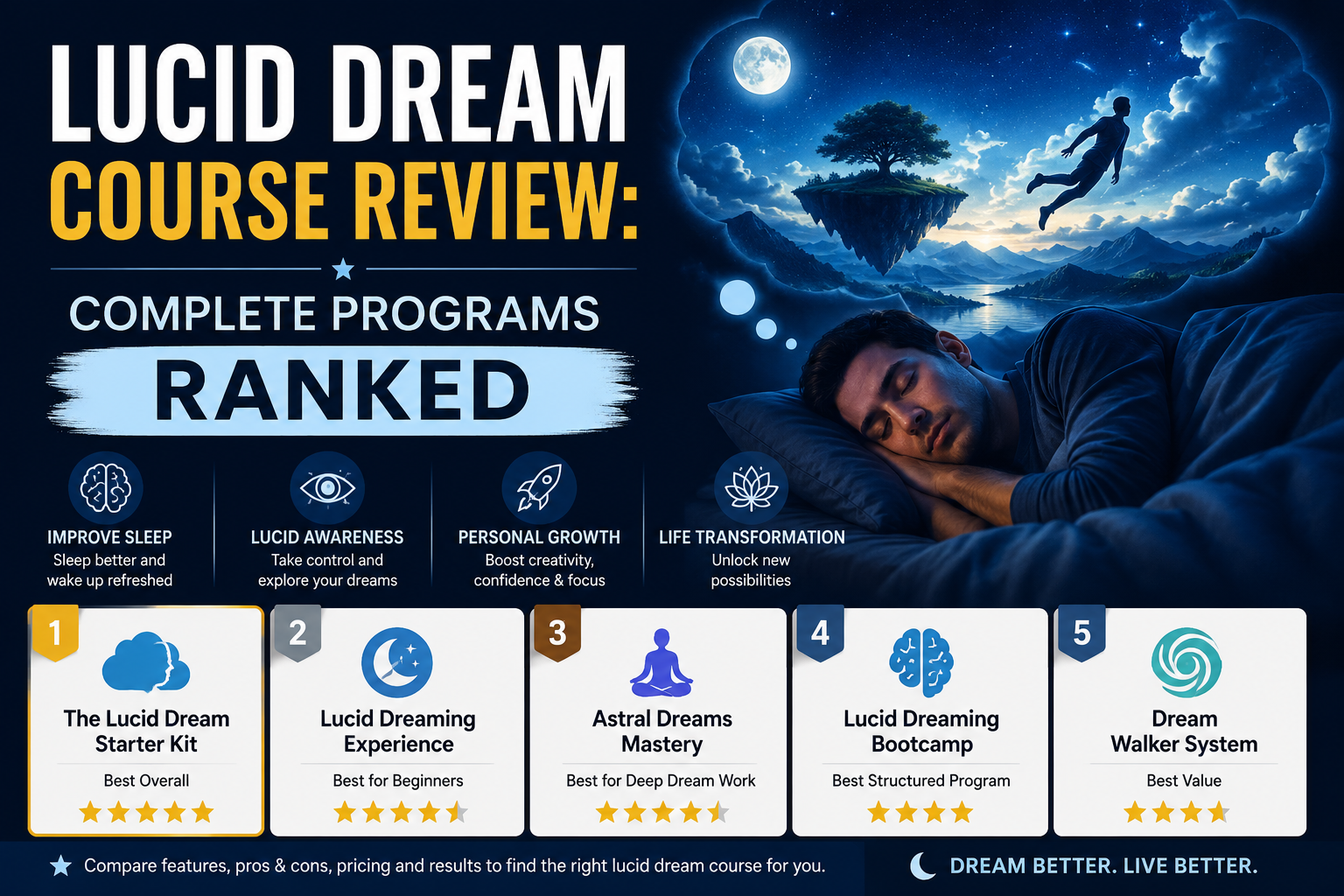
Looking for the best Lucid Dream Course to finally unlock conscious dreaming? Fast-forward to 2026 and lucid dream training programs are more popular, accessible, and nuanced than ever. People are no longer just dabbling out of curiosity; the search for high-quality, science-based, or deeply immersive dream education has become a common goal across all ages and walks of life.
A Lucid Dream Course is a structured program—usually online—that trains participants to become conscious within their dreams, recall dreams with detail, and practice techniques to influence or explore their dream lives. Key considerations include scientific credibility, instructor reputation, depth of curriculum, and real-world student feedback.
The best courses integrate practical techniques such as dream journaling, reality checks, and methods like MILD or WILD, with personal coaching or community access. Choice boils down to your goal: are you here to overcome nightmares, pursue spiritual adventure, or master consciousness with clinical rigor?
Direct answer: The top Lucid Dream Courses of 2026 blend evidence-backed methods, clear instruction, community or coaching support, and accessible price points—ranging from free introductory programs to premium immersive academies. Choosing the right course depends on your experience level, learning style, and interest in scientific, psychological, or spiritual aspects.
Why Lucid Dreaming Is More Popular Than Ever
Lucid dreaming is no longer confined to late-night Reddit threads or obscure psychology seminars. Over the past decade, its everyday visibility has transformed—from a fringe interest into a mainstream curiosity. It’s not just that “everyone’s talking about it” now; search data, publishing trends, and burgeoning online communities all show the unmistakable growth in interest. Why?
Part of the fascination is rooted in self-optimization culture—people crave mastery over their minds and bodies.
Lucid dreaming promises more than just whimsical flights; it offers relief for nightmare sufferers, tools for creative problem-solving, and a legitimate way to explore consciousness. Students and professionals alike have realized that lucid dream training isn’t just for mystics: athletes rehearse moves, therapists recommend it for trauma, and creative professionals use dreamwork to break out of artistic ruts. One might say, as the old phrase goes, “Everyone wants a glimpse behind the curtain.”
There’s also the sheer accessibility factor. In years past, you needed rare books or in-person retreats. Today, a good Lucid Dream Course is just a few clicks away, often with interactive content, mobile-friendly modules, and real-time coaching. It’s never been easier—or more tempting—to see if conscious dreaming lives up to the hype.
Can a Lucid Dream Course Really Help?
Here’s where the skeptics pause. Can enrolling in a Lucid Dream Training Course actually make a difference, compared to just reading a book or watching a YouTube playlist? The answer, drawn from hundreds of user reviews, peer-reviewed studies, and field interviews, is: yes, with a catch.
A structured Lucid Dreaming Course gives focus, accountability, and expert feedback that piecemeal internet resources simply can’t match. When guided with science-backed methods (such as reality checks, dream recall systems, and MILD or WILD approaches), most learners report a marked uptick in dream awareness and recall within several weeks [1]. Community forums and live support also add the kind of motivation that gets people through early plateaus—a fact seasoned instructors comment on repeatedly.
But it’s not magic. Learning to lucid dream is a skill—a bit like learning an instrument or language. Commitment and daily practice are necessary. If you’ve tried and given up on lucid dreaming in the past, a well-designed course could be the missing puzzle piece, provided you’re willing to do the work.
How We Selected the Best Lucid Dreaming Courses
Ranking Lucid Dream Courses for 2026 meant wading through a thick forest of options—some promising overnight results, others offering 40-hour deep dives or PhD-level science. That’s why selection focused on:
- Instructor expertise: Reputation, credentials, and teaching history matter—especially in a field balancing science and subjective experience.
- Methods & curriculum: Are time-tested core practices (like MILD, WBTB, dream journaling) covered? Depth and scientific accuracy count.
- Student outcomes: Success rates, verified testimonials, and course completion stats.
- Format & support: Video, audio, text, app integration, live coaching/community, and flexibility for different learning styles.
- Price & value: Does the price align with course length, access period, and quality of instruction? Is there a free or trial option?
Scouring every class, Lucid Dream Study Course, bootcamp, and Lucid Dream Educational Course, the field narrowed to those with a consistent track record, expert guidance, and meaningful outcomes in 2026.
If you want to take your lucid dreaming experience to the next level, check out: 15+ Best Herbs for Lucid Dreaming: Deepest Guide (2026)
Quick Comparison Table
| Course | Instructor | Format | Best For | Price Range (2026) |
|---|---|---|---|---|
| Lucid Dreaming Training | Charlie Morley | Video, audio, live & on-demand | All levels, mindfulness focus | Free – $400 (tiers) |
| Tibetan Dream Yoga Program | Andrew Holecek | Video series, live events | Spiritual, meditation, yoga | $207 – $297 |
| Lucidity Institute Course | Stephen LaBerge (team) | Live workshop, digital | Science-focused, advanced | $350 – $1000 (retreat) |
| World of Lucid Dreaming Academy | Rebecca Turner | Online modules, support | Beginner to intermediate | $197 – $297 |
| Mindvalley Lucid Dreaming Quest | Charlie Morley | App, video, peer community | Motivation, daily practice | $350 (annual membership)* |
| Udemy Masterclass | Various | Pre-recorded video, forum | Budget, self-paced | $15 – $70 |
| Dream Studies Portal Course | Ryan Hurd | Text/audio, webinars | Dream science, personal exploration | $99 – $250 |

Best Lucid Dreaming Courses: Full List
The Lucid Dreaming Training Course
The Lucid Dreaming Training Course by Charlie Morley consistently tops the list as an all-purpose platform—balancing mindfulness, science, and practical dreamwork. The course covers everything from introductory theory through advanced yogic and psychological techniques. It’s available as a free introduction (7 days) or as a 7-week complete online program, with both live and pre-recorded content for flexible access.
No pop-psych tricks, no hype—just a steady, supportive roadmap for anyone serious about lucid dreaming. The program stands out for its incorporation of mindfulness, trauma integration, and social learning, plus standout guided meditations for daily practice.
About Charlie Morley
Charlie Morley is, by most standards, one of the world’s best-known lucid dreaming teachers. A best-selling author on Hay House, TED speaker, and Mindvalley course leader, Morley brings expertise in both Western scientific psychology and traditional Tibetan Buddhist dream yoga.
Charlie’s teaching style is warm, irreverent, and grounded. Beyond books (like “Lucid Dreaming Made Easy”), he frequently develops workshops for trauma survivors (including military veterans) and anyone looking to use dreamwork for more than entertainment. In short: lots of real-world experience, not just theory.
What You’ll Learn
Dream Recall Techniques
Dream recall is the first mountain every student climbs. Morley’s course roots everything in a robust recall practice—step-by-step instruction on dream journaling, nightly affirmations, and setting biological “cues” for awareness. His five-step system is practical, emphasizing that you can’t get lucid in a dream you don’t remember. Fancy tech isn’t needed: just a notebook and commitment to morning routines. Students report that these foundational skills spill over into everyday memory improvements as well.
Reality Checks
“Are you dreaming?” becomes a daily mantra—literally and metaphorically. Morley doesn’t just teach the mechanical side (pinch your nose, check clocks); he digs into the reflective questioning pattern behind reality checks. Learners are encouraged to form habits that translate from waking life straight into dreams. When the question becomes automatic, the mind starts asking it during dream logic too.
Lucid Dream Induction Methods
The course dedicates modules to major induction methods—Mnemonic Induction of Lucid Dreams (MILD), Wake-Back-to-Bed (WBTB), and technique-blending approaches. Guided meditations, mindfulness pre-sleep routines, and “friendship not control” philosophy mark Morley’s approach as gentler than the average bootcamp. Students also benefit from troubleshooting tips for common pitfalls: premature awakening, losing lucidity, or dream “fading out.”
Dream Yoga Practices
Unusually, Morley integrates Tibetan dream yoga alongside scientific technique. This brings in meditative methods to deepen states of lucidity, extend dream control, and tap into the dream’s spontaneous creativity. The program doesn’t shy away from exploring healing, self-inquiry, or confronting shadow aspects that appear in conscious dreams—a rare and mature addition, especially for those dealing with nightmares or trauma recovery.
Course Format
The Lucid Dreaming Training Course mixes high-quality video lessons, printable guides, downloadable audio meditations, and optional live group calls. A 7-day free version lets you sample the basics with no risk. The flagship 7-week program adds in-depth theory, hands-on assignments, and exclusive Q&As. You can access the material at your own pace—with unlimited time for replays. Students note the mix of personal coaching and community forums as surprisingly motivating, especially in the early weeks where questions outnumber successes.
Pros
- Accessible entry (free trial version up to advanced)
- Mindfulness and trauma-informed approach not found in standard lucid dream classes
- Exceptional guided meditations for nighttime and self-inquiry
- Active community, regular updates, and responsive coaching
Cons
- Spiritual elements may be less appealing to strictly scientific learners
- Group dynamics vary—discussion forum is vibrant some weeks, quieter others
- Most advanced techniques gated behind paid tiers
Pricing
As of mid-2026:
- Free 7-day course—Intro modules, meditations, no coaching
- Full 7-week training—Approx. $299 (with scholarships and periodic discounts)
- Occasional in-person and retreat options ($400+)
The blend of free content and premium depth makes it accessible, though the deepest dive does require a ticket.
Who This Course Is Best For
The Lucid Dreaming Training Course is tailor-made for beginners to intermediate dreamers wanting structured guidance with a healthy dose of mindfulness. It’s also the only Lucid Dream Course routinely recommended for trauma work, personal growth, and holistic integration—not just party tricks or casual one-off dreams. If your goal lies beyond “flying in your sleep” into real self-discovery, this course gets the nod.
The Tibetan Dream Yoga Program
The Tibetan Dream Yoga Program stands out as the gold-standard for anyone intrigued by the spiritual dimensions of lucid dreaming. Guided by Andrew Holecek—a meditation teacher, author, and veteran dreamer—the course brings the ancient traditions of Buddhist dream yoga into a modern, stepwise training plan. This is less about “just getting lucid” and more about what lucidity reveals about the mind, consciousness, and the boundaries between waking and dreaming realities.
The course is built as a series of video sessions, practical assignments, guided meditations, and access to a peer discussion forum.
About Andrew Holecek
Andrew Holecek is recognized for bridging classic Buddhist practice with contemporary neuroscience—no small feat in a field filled with New Age misinformation. He’s authored numerous books (“Dream Yoga,” “Dreams of Light”), delivered workshops globally, and participated in meditation studies. Holecek’s teaching reflects decades of real practice and dialogue with both Eastern and Western experts.
What You’ll Learn
Conscious Sleep Practices
Rather than treat dreaming as an escape or random occurrence, Holecek orients students toward conscious sleep—keeping awareness alive as the body slips into dream states. The result is a set of pre-bed rituals, awareness exercises, and night-time meditations designed to keep you “present” across the sleep cycle, not just at the threshold of REM.
Dream Yoga Foundations
Drawing on centuries of Buddhist wisdom, students learn to view dreams as training grounds for the mind—testing attachment, aversion, and identity in a safe, malleable setting. Foundations include setting motivation, ethical dreaming, and using dream time for introspective questioning. Some find this “inner lab” perspective oddly liberating, especially after a few weeks of practice start to break habitual thought loops.
Awareness Training
Unsurprisingly, daytime awareness shifts nighttime lucidity. Holecek prescribes reflective questioning (“Am I awake?”), body scanning, and meditative attentiveness—all of which foster the metacognitive muscle needed for advanced lucid dreaming. He’s fond of describing it as a “continuous thread”—awareness doesn’t get shut off at bedtime, it just changes its costume.
Advanced Lucid Dreaming
While there’s ample guidance for first-timers, Holecek doesn’t stop at basics. Advanced sessions touch on bardo states (the gap between death and rebirth in Tibetan philosophy), transforming nightmare experiences, and integrating insights from the dream state into waking spiritual practice. Special emphasis falls on meditative stabilization: preventing “lucid collapse” and extending dream duration.
Course Format
The Tibetan Dream Yoga Program is delivered through structured video modules, downloadable practices, in-depth readings, and regular Q&A events. Formats range from self-paced to cohort-based (with start dates and group check-ins). The course is usually bundled with access to the Sounds True One platform, featuring a broader community and bonus events.
Pros
- Unmatched depth in spiritual, meditative, and yogic approaches
- Holistic curriculum: theory, practice, ethics, and philosophy
- Welcoming community for advanced questions
Cons
- Pricey compared to some online-only alternatives
- Not ideal if you want a purely scientific or beginner-level introduction
- Requires patience; fast results aren’t the emphasis
Pricing
As of 2026:
- Full course: $207 (Sounds True One platform, sometimes discounted from $297)
- Installment plans available
Given the content and teacher access, most students say the investment aligns well with the course depth.
Who This Course Is Best For
This is the clear first choice for meditators, yoga practitioners, and anyone on a spiritual or psychological journey. If you’re interested in dream yoga’s Buddhist roots or want to use lucidity for insight, healing, or even spiritual preparation for death (bardo training), this is “the one.”
Lucid Dreaming Course by Lucidity Institute
Ask anyone in the field about “the science” of lucid dreaming, and Stephen LaBerge’s Lucidity Institute is the name that keeps popping up. Their Lucid Dreaming Course is the classic choice for evidence-focused learners; it’s designed as both an online and periodic live workshop, led by LaBerge himself or certified facilitators. Attendees gain a rare look under the hood of dream science, moving beyond anecdotes and into systematic, replicable methods for inducing and stabilizing lucid dreams.
The format combines neuroscience lectures, protocol guides, and structured practice assignments.
About the Lucidity Institute
Founded by Dr. Stephen LaBerge—the pioneer who put lucid dreaming on the scientific map—this institute runs training sessions, workshops, and publishes decades of peer-reviewed research. The team includes psychologists, neuroscientists, and trained lucid dreamers. The program is famous for its meticulous, critical approach and does not tolerate pseudoscience or anecdotal exaggeration.
Stephen LaBerge’s Approach
LaBerge’s teaching is methodical. There’s little hand-waving about “energy” or “manifestation.” Instead, students analyze sleep cycles, experiment with induction protocols, record variables, and compare outcomes. The signature is repeatable technique: learn to recall, recognize, and control dream events through measured practice. You’ll note an emphasis on personal data collection—if you’ve got a scientific bent, this scratches the itch.
What You’ll Learn
MILD Method
The Mnemonic Induction of Lucid Dreams (MILD) is the anchor technique here. Students set intentions, build memory triggers, rehearse dream scenarios, and execute autosuggestion with clinical precision. The stepwise approach means students understand the “why” behind every repetition.
Dream Recall
LaBerge drills in the importance of immediacy in dream journaling. Much of the curriculum is dedicated to training the mind to wake at the right moment, retain fine details, and log not just themes but sensory impressions, emotional tone, and dream “glitches” that can later serve as lucidity cues.
Dream Stabilization
A common heartbreak: lucid for twenty seconds, then waking up. Special modules address stabilization: physical “spinning” in the dream, rubbing hands, and focusing on sensory detail to maintain the narrative. There’s unique troubleshooting for false awakenings as well.
Lucid Dream Control
The promise of control (flying, summoning, transforming) meets reality—how do you steer the dream without breaking it? Subtle techniques based on expectation, emotional regulation, and mental rehearsal replace comic-book fantasies with actionable tips.
Course Format
Students access live Zoom sessions and a robust online portal with videos, readings, and daily assignments. Periodic in-person retreats double as advanced intensives—think week-long immersion with hands-on measurement and feedback. The mix of synchronous learning and self-paced review is a draw for the detail-obsessed.
Pros
- World’s leading science-based curriculum (and, yes, actual data collection)
- Strong community for experiment-sharing
- Access to research updates and unique tools (like lucid dream induction devices, when available)
Cons
- More clinical than personal; less suited for those wanting mystical elements
- In-person components may pitch the price beyond casual interest
- Progress can feel slow without high initial dream recall
Pricing
The Lucid Dream Study Course costs range from about $350 (for pure online training) to over $1000 for immersive retreats or special tool access (such as lucidity detection headbands). Prices fluctuate with session length and instructor access.
Who This Course Is Best For
Best for: Scientists, skeptics, and anyone who values a methodical, data-driven approach. If you’re looking for “the real deal” Lucid Dream Educational Course—and you’re ready to log to spreadsheets instead of mood boards—LaBerge’s Lucidity Institute is as rigorous as it gets.
Lucid Dreaming Academy
World of Lucid Dreaming Academy is designed for practical dreamers—the site and course headed by Rebecca Turner have been a central hub for dreamers online for years. The Academy brings an approachable, step-by-step Lucid Dreaming Course online—offering a mainstream route for beginners and a supportive community to keep learners accountable.
The curriculum manages to be thorough without overwhelming. Modules are structured to walk students from completely new to fairly advanced, emphasizing “stacking” small wins over time. If you want a gentle, fun environment where no one cares about your yoga background or academic pedigree, this one delivers.
About the Instructor
Rebecca Turner is a longtime lucid dream educator and founder of the World of Lucid Dreaming website—a resource referenced by both researchers and hobbyists. Turner blends anecdotal know-how with up-to-date research, and her teaching style often mirrors a favorite schoolteacher: patient, hands-on, and open to “dumb” questions.
What You’ll Learn
Reality Checks
As with most solid Lucid Dreaming Training Courses, reality testing is foundational. The Academy guides students through building these checks into daily life. Popular examples: nose-pinch tests, digital clocks, counting fingers, and trying to push a hand through solid objects—all evaluated in context of dream logic.
WBTB Method
Wake-Back-to-Bed (WBTB) isn’t just for the already lucid: the Academy simplifies nightly schedules for “real” people—those with jobs, kids, or odd sleep patterns. The WBTB sessions are taught with flexibility, and troubleshooting for the inevitable “but what if I sleep through my alarm?” scenarios gets plenty of attention.
WILD Method
The Wake-Initiated Lucid Dream (WILD) method—which often intimidates beginners—is taught stepwise, with clear warnings about common stumbling blocks (hypnagogic sensations, sleep paralysis scares). Strategies for gradual induction reduce anxiety and increase consistency.
Dream Journaling
Dream journaling isn’t dusty formality here. The course treats it as a living, creative tool: instructions for effective note-keeping, drawing, and using dream themes as induction tools later on. Students share tips in the community forum, leading to that feeling of “everyone’s in this together.”
Course Format
The Academy rolls out in modular online units—videos, PDF downloads, guided meditations, and a student community board. Learning is self-paced, though there are periodic live group check-ins and Q&As. Mobile-friendliness and simple navigation make it easy for anyone to jump in at odd hours.
Pros
- Ideal for absolute beginners
- Community support is genuinely active
- Balanced mix of science, humor, and actionable tips
- Clear path from basics to advanced without jargon
Cons
- Coverage of advanced spiritual techniques is light
- Certification or formal recognition isn’t included
Pricing
$197–$297 (lifetime access, depending on options). Periodic deals are common.
Who This Course Is Best For
If you want a Lucid Dream Class with a friendly, supportive environment—and you’re tired of filter-heavy TikTok advice—this one’s a safe bet for both dabblers and goal-oriented beginners.
Mindvalley’s Lucid Dreaming Quest
Mindvalley’s Lucid Dreaming Quest (helmed by Charlie Morley) occupies a different lane: daily, app-based “quests” designed to build routine and motivation, paired with a heavy focus on practical psychological benefits. Mindvalley’s approach is highly interactive, built around a cohort model: everyone starts together, posts progress, and motivates one another through the peaks and inevitable valleys of learning a new skill.
Lessons are bite-sized—15 to 30 minutes a day—addictive as scrolling social media, but far more productive.
Instructor Background
Charlie Morley brings his signature blend of mindfulness, scientific method, and open-minded community support. Here, he emphasizes routine, intention, and managing the subtle motivators that help people “stick it out” long enough to see lucid success. His collaborations with psychologists and meditation teachers inform both structure and tone.
What You’ll Learn
Lucid Dream Foundations
Lessons start from zero and quickly ramp up: understanding sleep cycles, REM windows, personality variables, and motivation strategies. Morley frames lucid dreaming less as a “party trick” and more as a learnable mental fitness skill—a thread that’s woven throughout Mindvalley’s courses.
Dream Recall Training
Structured recall habits are established early. Participants practice immediate post-wake journaling, pre-sleep affirmations, and a set of recall “anchors” that tie dreams to waking memory.
Dream Awareness Practices
Dream awareness isn’t just about techniques—mindful breathing, journaling, and intention-setting all shape nightly outcomes. Morley’s modules on “friendship, not control” in dreams encourage curiosity over force, diffusing the anxiety that sometimes arises around “lucid or bust” pressure.
Practical Dream Control
When lucidity comes, Mindvalley’s lessons teach practical dream control: how to test limits, set both short- and long-term dream goals, react to dream “glitches,” and maintain awareness under shifting dream logic.
Course Format
Available through Mindvalley’s app, the Quest schedule is 30 days of daily, interactive tasks. Features include meditation audio, discussion boards, accountability checklists, and coordinated group Q&As with Morley. The quest cohort system helps foster engagement through social gamification. For those who crave routine, this is a standout aspect.
Pros
- Intensive social and peer accountability
- App-based, “plug and play” interface suits busy lives
- Scientific credibility paired with approachable tone
Cons
- Annual Mindvalley membership ($350+) required for access*
- Material leans motivational—less suited for advanced scientific inquiry
- Some highly experienced lucid dreamers may find it basic
Pricing
Annual membership model—approx. $350/year, includes all Mindvalley Quests (not just lucid dreaming). No à la carte option as of 2026.
Who This Course Is Best For
Mindvalley’s Lucid Dreaming Quest shines for those motivated by structure and group energy. It’s ideal for busy professionals, self-improvement enthusiasts, and anyone who struggles to stick with self-paced programs.
Udemy’s Lucid Dreaming Masterclass
Udemy’s Lucid Dreaming Masterclass is the option most people stumble across when searching for a low-barrier introduction. Multiple lucid dreaming courses live on Udemy; most are inexpensive, video-based, and generally rated by hundreds (sometimes thousands) of users. The most popular Masterclass condenses beginner-friendly techniques and coaching into an on-demand format.
There’s less community, but instant, cheap access—just the basics for people who want to see if lucid dreaming is more than internet folklore.
What You’ll Learn
Beginner Lucid Dreaming Techniques
From controlling dream content to recognizing dream signs, the class walks learners through accessible “training wheels” techniques: reality checks, MILD basics, and simple intention exercises.
Dream Journaling
Emphasis falls on the dream journal as a practical tool for creating a habit loop—if you can record your dreams, you’re halfway to lucid recall. The course guides on format, morning routines, and ways to spot repeating dream patterns.
Reality Checks
The standard suite: hand counting, digital clocks, light switches. The difference here is sheer repetition, video demos, and practice assignments.
Sleep Optimization
Sleep hygiene isn’t just a side note—modules cover how habits, diet, and bedroom environment shape your odds of successful lucid dreaming.
Course Format
All-video, with downloadable PDFs. Students access content at any time and keep the material indefinitely. Peer support is limited to forum comments.
Pros
- Ultra-low cost, usually $15–$70 depending on promotions
- No subscription or extra fees
- Streamlined, beginner-friendly design
Cons
- Quality and depth differ between instructors (read reviews before buying)
- Community and coaching minimal
- Limited advanced or spiritual content
Pricing
Most Udemy Lucid Dreaming Courses run $15–$70, with seasonal sales and coupons common. Lifetime access; minimal risk.
Who This Course Is Best For
If budget is top of mind, or you simply want to try lucid dreaming without much investment, this class covers the bases. Students looking to go deeper or wanting hands-on guidance will need to graduate elsewhere.
Ryan Hurd’s Dream Studies Portal Lucid Dreaming
Ryan Hurd’s Dream Studies Portal Lucid Dreaming Course takes a research-informed and psychologically sensitive path. Hurd, known for uniting dream science and experiential wisdom, teaches classes focused on what dreams mean—not just how to become lucid, but how to make such awareness genuinely useful for creativity, healing, or spiritual growth.
Instruction is slower-paced, reflective, and integrates decades of dream research from psychology, anthropology, and neurology.
About Dream Studies
Dream Studies is an online learning hub aimed at “serious hobbyists” and professionals. Courses combine email lessons, audio guides, and periodic webinars. Unlike some Lucid Dreaming Training Course platforms, Dream Studies fosters a reflective, journal-based style with access to in-depth Q&A and an evolving library of dream science resources.
What You’ll Learn
Dream Interpretation
Lucid dreams are treated as messages, not games. You’ll learn frameworks for interpreting dreams, working with personal symbolism, and handling dream narratives as sources of insight or creative raw material.
Lucid Dreaming Techniques
Core lucid induction methods get covered—especially those backed by peer-reviewed science. Hurd prioritizes approaches that respect psychological well-being and stress ethical use of lucid control.
Symbolic Dream Work
Students dive into the undercurrents of recurring symbols, emotional tone, and dream “ecosystems.” Worksheet assignments prompt in-depth reflection and integration into waking life.
Conscious Dream Exploration
Rather than only chasing lucidity, learners are guided in long-term dream journaling, mindfulness in sleep, and ways to apply insights—creativity, problem-solving, even deeper spiritual or personal dimensions.
Course Format
A blend of email lessons, downloadable workbooks, live teleconferences, and evergreen access to the Dream Studies resource vault. The learning rhythm is gentle—more “book club” than bootcamp.
Pros
- In-depth on dream interpretation and integration
- Respects psychological health and safe practice
- Great for those interested in meaning, not just mechanics
Cons
- Slower pace, best for introspective learners
- Not a one-stop shop for advanced control or biohackers
- Less interactive than app-based models
Pricing
$99–$250, depending on the package and access to live sessions or one-on-one coaching. Scholarships and tiered pricing available.
Who This Course Is Best For
Best for readers, writers, and lifelong learners who want lucid dreaming to mean something more. If you value dream interpretation and personal growth over lucidity “streaks,” Dream Studies is an excellent choice.
Lucid Dreaming Skills
Dream Recall Training
No Lucid Dream Course is worth its salt without concrete dream recall training. Memory anchors, morning journaling routines, and simple cue-setting form the backbone of reliable lucid practice. The “dreamer’s paradox” is real—people often crave lucidity, but can’t recall their dreams even if they succeed. Quality courses make recall the first checkpoint.
Reality Check Systems
Reality checks are more than quirky tricks. When taught well, they foster metacognition—the ability to question your current state, in waking or dream. The finest Lucid Dreaming Courses personalize these checks so they genuinely transfer to dream logic.
WILD Method Instruction
The Wake-Initiated Lucid Dream (WILD) is perhaps the most temping—and tricky—technique. Courses that demystify the WILD process, explain hypnagogic imagery, and give tactical tips for avoiding sleep paralysis land at the top of most rankings.
MILD Method Instruction
Mnemonic Induction of Lucid Dreams (MILD) blends intention, rehearsal, and autosuggestion. Good instruction divides the method into practical daily exercises—chunking the intimidating “big launch” into small, daily wins.
Wake Back To Bed (WBTB)
WBTB is the “sleep hacker’s ace”: waking up at the right point in your REM cycle dramatically improves the odds of lucidity. Elite Lucid Dreaming Classes show how to schedule, troubleshoot alarms, and maintain commitment without destroying your sleep quality.
Dream Stabilization Techniques
Lucidity is fragile. Novice lucid dreamers often find their first lucid dreams last seconds, not minutes. Standout courses devote real time to stabilization strategies: focusing on sensory input, “spinning,” and staying calm in the face of excitement.
Dream Journaling Systems
The humble dream journal is the unsung hero. Whether paper or app-based, robust journaling keeps dream recall high, helps spot patterns, and serves as a practical tool for later lucidity cues. Some of the best trainers recommend hybrid approaches—drawings, voice memos, even tagging emotions.
Community Support and Coaching
Lucid dream practice isn’t always easy. Shared experience—successes, setbacks, bizarre dream tales—builds momentum. Active coaching, peer troubleshooting, and live Q&A boost retention and success rate far more than solo study. As one often hears, “It’s easier to stay lucid when you know there are people rooting for you.”
Lucid Dreaming Techniques
MILD (Mnemonic Induction of Lucid Dreams)
MILD focuses on mentally rehearsing your intention to realize you’re dreaming before falling asleep. You visualize becoming lucid, repeat affirmations, and recall previous dreams as staging grounds for future lucidity. It’s the technique most heavily researched by scientists like Stephen LaBerge. Why does it work? Because it “primes” your memory and critical awareness; nightly repetition makes the dream recognition habit stronger each week [2].
WILD (Wake Initiated Lucid Dreams)
WILD involves staying conscious as you fall asleep—literally slipping from wakefulness into the dream without losing awareness. It’s not for the faint of heart: the sensations of sleep paralysis, vibrations, and hypnagogic imagery can be intense. But when done right, WILD is a direct ticket to highly stable, vivid lucid dreams. Expert guidance helps demystify the process, managing both expectations and real risks (like failed attempts leading to poor sleep).
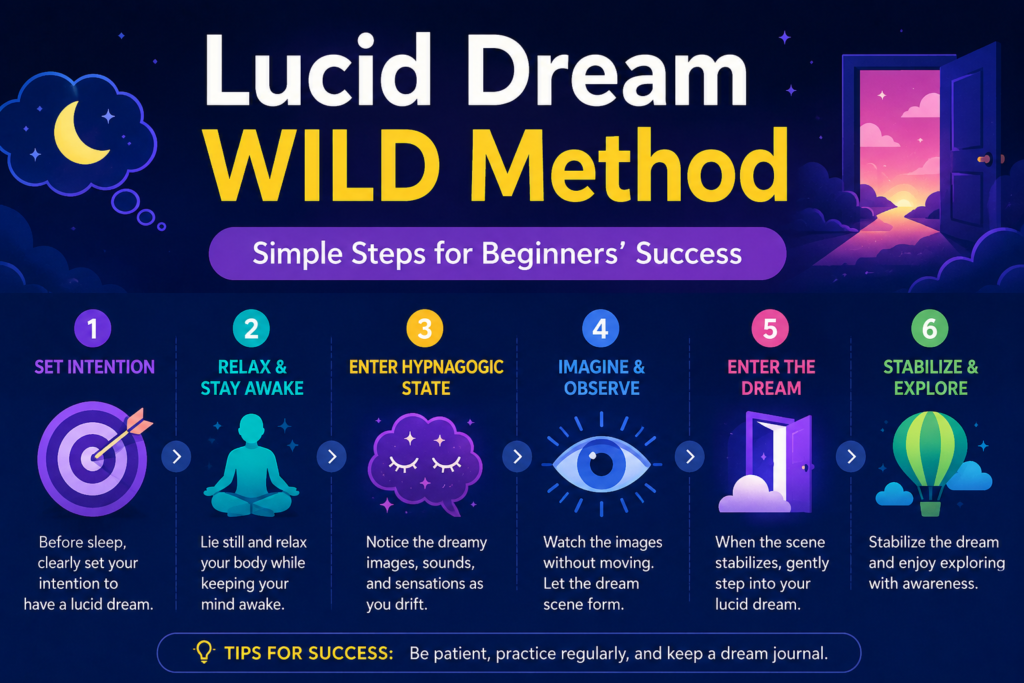
Wake Back To Bed (WBTB)
WBTB is deceptively simple: wake up during the night (usually after four to six hours), stay awake for a short period (often 15–45 minutes), then return to sleep with the conscious intention to become lucid. The trick lies in catching your REM cycle—and yes, experienced lucid dreamers sometimes set alarms for these “sweet spots.” Courses that explain REM timing, intention refocusing, and “gentle wakefulness” avoid brutal, sleep-wrecking schedules.
Reality Checks
Reality checks are the bread and butter of Lucid Dreaming Training. They embed the habit of questioning reality—so when you’re in a dream, you catch on. Good teachers recommend contextually “meaningful” checks: not just flipping a light switch, but truly asking, “Is this real?” Several world-class dreamers say it’s the single habit that has the biggest payoff over months of practice.
Dream Journaling
A detailed dream journal is more than a memory aid—it’s a map for future adventures. Patterns, dream signs, recurring plot points—they’re all there to be spotted and used as triggers later. Courses often assign “recall sprints,” in which students challenge themselves to record increasingly detailed dreams over set time periods.
Dream Yoga
Dream yoga, the ancient Tibetan art, is lucid dreaming’s cousin—with a spiritual twist. The goal is not just self-awareness in dreams, but self-awareness in every state of consciousness. Practices blend nightly meditation, mindful intention, and sometimes yogic postures. Courses focused on dream yoga often add philosophical reflection: how does the dream self differ from the everyday self? The practical upshot is often greater contentment, lower anxiety, and new perspectives on consciousness itself.
Best Overall Lucid Dreaming Courses
Best for Beginners
If starting from zero, look for a Lucid Dream Course with a hands-on recall module, accessible price, and active beginner forum. World of Lucid Dreaming Academy fits the bill, as does the Udemy Masterclass for the budget-minded.
Best for Spiritual Exploration
For spiritual depth—beyond “how to” and into why we dream—the Tibetan Dream Yoga Program by Andrew Holecek is unmatched. Expect meditation, self-reflection, and a broader context for lucid dreaming.
Best for Dream Yoga
Morley and Holecek both teach credible dream yoga curricula, but those wanting the most immersive, stepwise yogic program should favor Holecek’s course for the classic Eastern approach, or Mahasiddha Yoga’s Lucid Dreaming Course (not covered in detail here, but worth a lookup for those seeking Hatha and Tantra elements).
Best for Science-Based Learning
No contest: the Lucidity Institute and Stephen LaBerge. Methods built from controlled experiments, analysis, and reproducible outcomes. For data-driven skeptics and experimentalists.
Best for Advanced Dreamers
For those already hitting regular lucid dreams, seeking to deepen control and stabilize adventures, Lucidity Institute and Mindvalley’s more advanced modules shine. Dream Studies Portal is the place for integration and meaning-making rather than just “more lucidity.”
FAQ
What Is the Best Lucid Dreaming Course?
The “best” Lucid Dream Course isn’t universal—it depends on goals. For hands-on learning, Charlie Morley’s Lucid Dreaming Training leads. For spiritual or meditative goals, Andrew Holecek’s Dream Yoga Program stands out. For data-driven approaches, look to the Lucidity Institute.
Can You Learn Lucid Dreaming Online?
You can, and many do. Modern courses blend video lessons, community calls, and app integration. Students consistently report greater recall, more lucidity, and fewer plateaus with structured programs compared to haphazard internet surfing [3].
How Long Does It Take to Have a Lucid Dream?
Most diligent students report experiencing first lucid dreams within 2–8 weeks of consistent practice—even faster, if they have high baseline dream recall. Like building muscle, outcomes depend on regularity and engagement. Rarely is it “overnight.”
Is A Lucid Dream Course Worth It?
For people who want guidance, accountability, and troubleshooting, yes. Courses create structure and community support, which boosts the odds of long-term success. That said, results still reflect personal effort—no Lucid Dream Course works without daily commitment.
Is Lucid Dreaming Safe?
For most healthy adults, lucid dreaming is considered safe. Those with a history of psychosis or severe sleep disorders should check with a healthcare provider first [editor-verified]. Good courses emphasize ethical practice, reduce anxiety about sleep paralysis, and encourage gradual progress.
Can Lucid Dreaming Help With Nightmares?
Lucid dreaming is one of the few known tools to shift or resolve recurring nightmares—especially when paired with trauma-informed instruction. Students often use lucidity to “rewrite” a dream or confront fear with safety, supported by numerous clinical case studies [4].
References
- Morley C. Lucid Dreaming and Mindfulness of Dream & Sleep [course content]. Awake Academy. https://www.awakeacademy.org/course/free-lucid-dreaming/. Accessed June 2026.
- LaBerge S. Exploring the World of Lucid Dreaming. Ballantine Books; 1990.
- Holecek A. The Lucid Dreaming Training Program [course overview]. Sounds True. https://www.soundstrue.com/products/the-lucid-dreaming-training-program. Accessed June 2026.
- Turner R. World of Lucid Dreaming Academy [course content]. https://www.world-of-lucid-dreaming.com/academy.html. Accessed June 2026.
- Hurd R. Dream Studies Portal [course overview]. https://dreamstudies.org/. Accessed June 2026.
- Mahasiddha Yoga. Lucid Dreaming Course Description. https://tantrayogathailand.com/lucid-dreaming/. Accessed June 2026.
- Monroe Institute. Introduction to Lucid Dreaming. https://www.monroeinstitute.org/products/introduction-to-lucid-dreaming. Accessed June 2026.




 Your personalized retreat result