

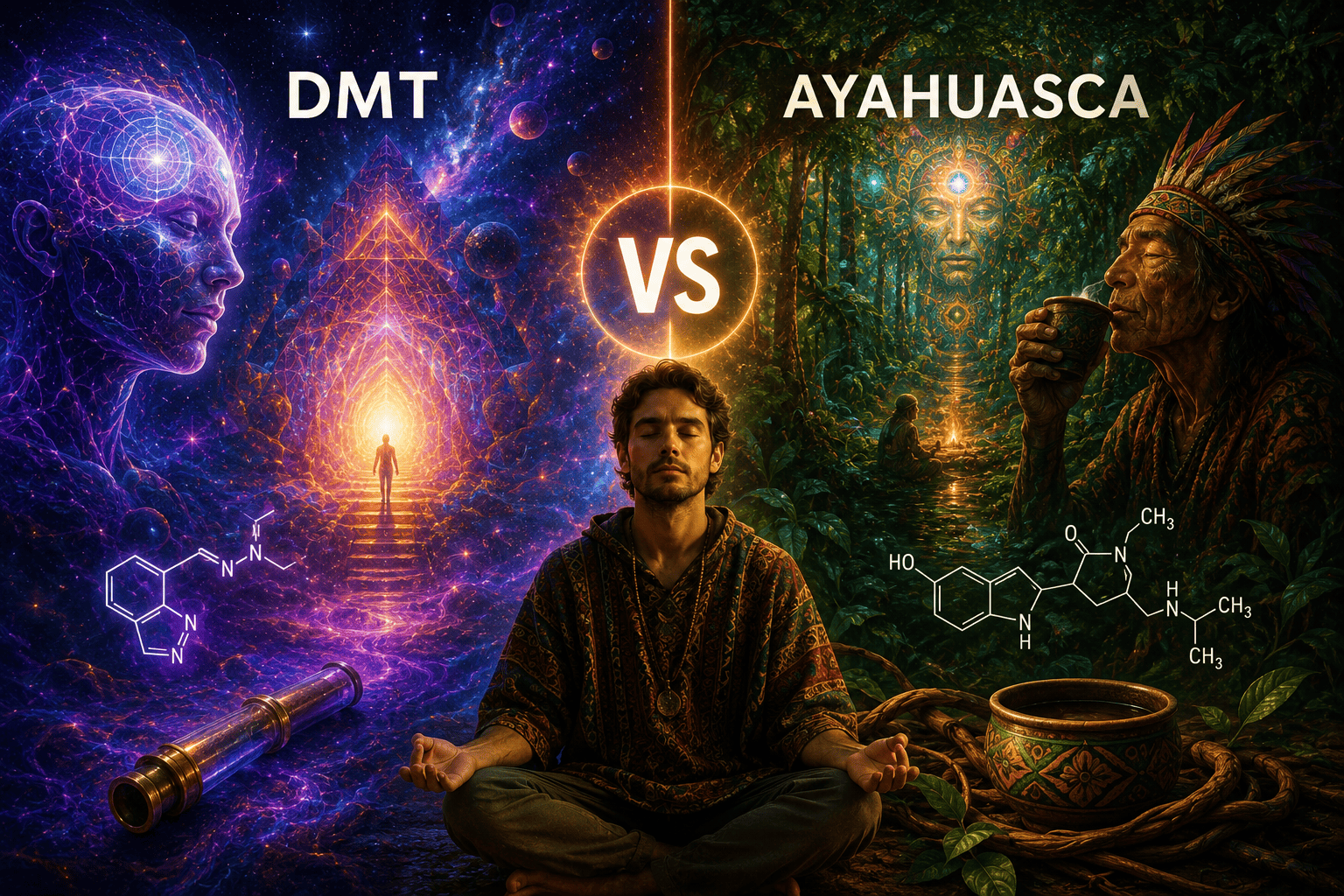
DMT vs ayahuasca presents a fascinating contrast: DMT, a powerful psychedelic, can trigger intensely vivid, short-lived trips when smoked, while ayahuasca – a South American brew containing DMT and MAOIs – leads to longer, more introspective experiences when consumed. Both alter perception and consciousness, but their methods, duration, and settings create strikingly different journeys for those who seek them out.
Introduction to DMT and Ayahuasca
Most people hear about DMT and ayahuasca within the same sentence, yet their experiences couldn’t feel more different. DMT, or N,N-dimethyltryptamine, is famed for pushing consciousness into realms that defy ordinary explanation—minutes become universes, shapes melt into sound, and people often report a feeling of leaving the body behind entirely. Ayahuasca, on the other hand, swirls ritual, plant science, and cultural tradition into a brew that stretches the DMT experience into a deep, sometimes grueling, introspective marathon.
Is it just how long each lasts? Far from it. The contrast runs through their roots, their chemistry, the communities that surround them, and how people talk about life after a trip. So, when trying to understand the difference between DMT and ayahuasca, you can look at four major aspects: the origins, chemical interplay, intensity and duration of effects, and the way experiences unfold, both physically and emotionally.
To make sense of ayahuasca vs DMT, it helps to know not only what they do, but why people keep coming back to these molecules, or avoid them altogether.
Lean more about the following as well:
Ayahuasca vs Psilocybin: What Science Says Is Best For You|
Ayahuasca vs Ibogaine: Key Differences & Side Effects
Ayahuasca vs Peyote: 10 Proven Facts and Unique Experiences
The Origins and Traditions Behind DMT and Ayahuasca
Ayahuasca and DMT have histories that couldn’t be more distinct despite sharing a chemical core. DMT lives in dozens of plants worldwide and is even produced naturally in human bodies—though in minuscule amounts and with functions that remain mysterious to neuroscience. Indigenous Amazonian cultures, notably in Peru, Brazil, Colombia, and Ecuador, are the architects of ayahuasca’s legacy, blending Banisteriopsis caapi vine with Psychotria viridis leaves to create a ritual brew. This isn’t just chemistry—it’s spiritual technology woven deep into shamanic and communal rites. As one common saying goes in ayahuasca circles, “the vine brings the vision, the leaf opens the mind.”
DMT as a standalone experience is a much newer fixture outside traditional context. Western discovery and recreational use exploded after the 1960s. Smoking or vaporizing purified DMT is relatively modern, often stripped of ceremony and conducted privately or in small social clusters. Internet anecdotes reveal millennials in city apartments sharing the so-called “businessman’s trip,” squeezing a life-changing event into a lunch break. Ayahuasca, by contrast, is still mostly sought in communal ceremonies, guided by experienced practitioners—sometimes after days of ritual preparation and personal intention-setting [1].
Pharmacology: Chemical Differences Between DMT and Ayahuasca
The science here is surprisingly simple, yet packed with nuance. Both DMT and ayahuasca revolve around N,N-dimethyltryptamine, but the ayahuasca brew also contains harmala alkaloids—especially harmine, harmaline, and tetrahydroharmine. These act as monoamine oxidase A (MAO-A) inhibitors, blocking an enzyme in the gut that would otherwise destroy DMT before absorption.
On its own, oral DMT gets swiftly broken down by enzymes and doesn’t reach the brain in psychedelic doses. Ayahuasca’s MAOI effect disables this defense and lets DMT slip into systemic circulation, creating a slow-burning, many-hour psychedelic voyage instead of the rocket-like launch people get from inhaled DMT [2].
So, in the ayahuasca vs DMT debate, the actual molecule is the same—but the context for delivery, absorption, and metabolism creates radically different journeys.
DMT vs Ayahuasca: Effects, Duration, and Experiences
All roads lead to altered consciousness, but these paths are not made equal—one’s a leap across a canyon, the other a slow descent into the jungle’s undergrowth.
DMT Trip: Intensity and Common Themes
Smoking or vaporizing DMT launches most users into what sometimes feels like an impossible world. Color, shape, time, even selfhood can dissolve, replaced by overwhelming visual hallucinations that border on the surreal—“machine elves,” abstract fractals, hyperspace: all standard fare in DMT lore. Experiences often last only 5 to 30 minutes, yet feel immeasurably long, sometimes stretching across what seems like whole lifetimes compressed into seconds [3].
Some will tell you that DMT is the most intense and hardest-to-navigate psychedelic out there. People report feeling ejected from their bodies, receiving what feel like divine messages, or encountering strange “entities” that defy rational description. The buzz on online forums circles around this: “If you think you’re ready, you’re not. And if you’re not, you never will be.” It’s not for the faint-hearted.
Ayahuasca Experience: What to Expect
Ayahuasca, in contrast, is an all-night affair—sometimes four, often up to six hours or more. The experience is shaped as much by the brew as by the space in which it’s taken. Most report a rollercoaster of physical sensations: taste that’s bitter and earthy, nausea that rises, and more than a few “purges,” a clinical way of describing vomiting or diarrhea that participants often view as emotionally or spiritually cleansing. The psychological effects swing between vivid, dreamlike visions and intense periods of introspection, sometimes shadowed by waves of anxiety or emotional release [4].
You’ll often hear that ayahuasca doesn’t just show you a new world—it puts you under the microscope, peering into personal memories, traumas, and hopes. There’s a sense of ancient ritual infused into the experience, mixing somber silence with tribal songs (“icaros”) and deep personal reflection. For some, it’s healing. For others, it’s brutally confronting.
Administration Methods: Smoking DMT vs Drinking Ayahuasca
The route of administration isn’t a minor technicality here—it shapes the entire character of the journey.
Differences in Onset and Duration
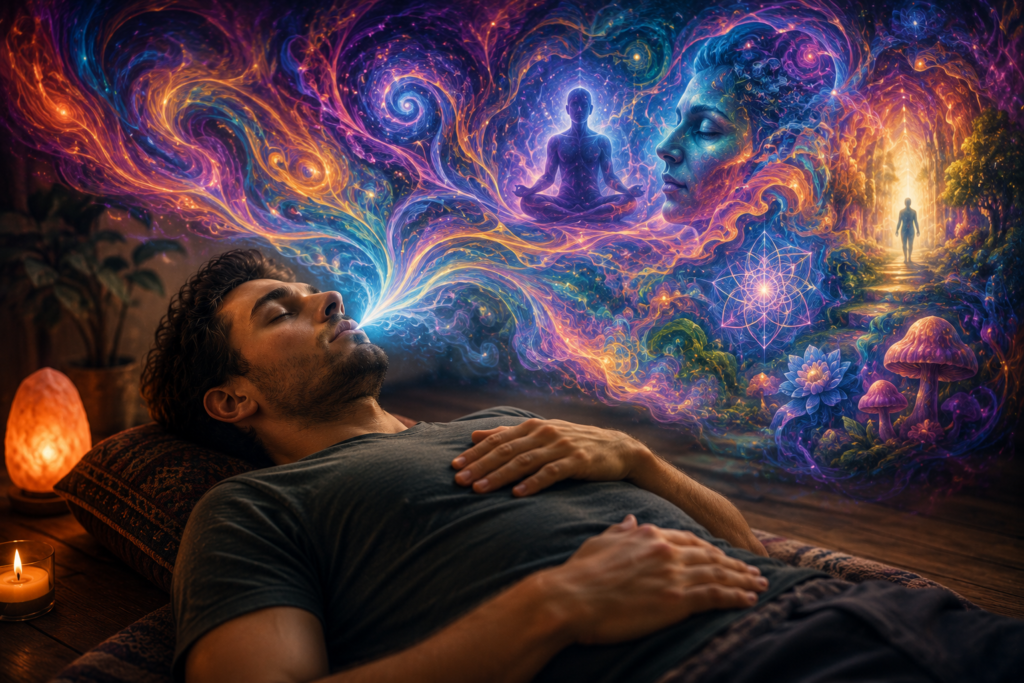
Smoking or vaporizing DMT (sometimes blended into herbal mixtures called “changa”) kicks in within seconds, peaking in a blinding flash, and leaving most users back in baseline reality within half an hour—often disoriented, sweating, and struggling to put words to what just happened. The experience is brief, almost surgical, frequently compared to being “shot out of a cannon” and then dropped back to earth.
Drinking ayahuasca is a marathon by comparison. Effects build slowly over 30 to 60 minutes, with full intensity stretching for hours. The time feels elastic—what happens in four hours can feel like multiple lifetimes stitched together. Preparation rituals, post-session “integration,” and the role of guide or shaman all serve to pace and structure the experience.
Physical and Psychological Safety
Both DMT and ayahuasca bring physical and psychological risks, especially for people with a history of mental illness, cardiovascular disease, or those on certain medications. DMT by itself rarely causes physical harm, but its rapid intensity can trigger panic, agitation, or, in rare cases, psychosis. Ayahuasca’s longer trip involves more risk of vomiting, diarrhea, increased heart rate, and rare hypertensive reactions—especially if combined with certain foods or drugs that interact with MAOIs [5].
Safety concerns are not just medical: doses can vary, plant mixtures are rarely standardized, and the psychological aftereffects can linger for days or even weeks.
DMT Compared to Ayahuasca: Legal Status and Accessibility
In the United States (and most of the Western world), DMT is banned as a Schedule I substance—illegal to possess, sell, or distribute. This applies to both extracted DMT and ayahuasca, since the brew contains the same psychoactive chemicals. Enforcement, though, can depend on context.
Ayahuasca occupies a strange legal gray zone. In some regions, religious or spiritual groups (notably certain Brazilian “ayahuasca churches”) have won legal battles for the right to use the brew in closely supervised ceremonies. Anyone seeking ayahuasca in the US usually finds underground circles or travels abroad to South America, where the practice is legal and regulated differently.
Kentucky Ayahuasca and U.S. Regulations
The “Kentucky Ayahuasca” case drew national headlines in the past decade, as church groups in the Midwest sought legal standing to import ayahuasca for spiritual use. A handful of such organizations are now permitted to use ayahuasca as sacrament under strict guidelines—though this remains the exception, not the norm.
In most of the world, ayahuasca and DMT remain illegal and can carry serious penalties. Accessibility, then, relies as much on law and culture as on chemistry.
Therapeutic Uses: Ayahuasca Therapie and Mental Health Research
Ayahuasca has burst into the mental health spotlight over the past decade, with researchers exploring its possible benefits for depression, PTSD, and even addiction. Early studies and plenty of testimonials hint at powerful therapeutic effects—users report reduced depression and anxiety, increased feelings of connectedness, improved perspective on past traumas, and even reduced substance misuse [6]. The potential comes from both DMT’s effects on serotonin receptors in the brain and from the harmala alkaloids’ MAOI activity.
Modern “ayahuasca therapie” experiments often combine elements of the Amazonian ritual with clinical standards: psychiatric screening, professional guides, and therapeutic integration sessions. DMT itself is being studied for rapid-onset antidepressant action, though efforts are in their infancy.
Potential Benefits and Risks
Reported benefits include not just improved mood but changes in cognitive patterns, greater empathy, and reduced suicidality or harmful behaviors. Long-term users often speak of transformative insights—tools for reflection, not just fleeting highs.
Still, the risks bear repeating: intense negative psychological reactions, persistent perceptual disturbances (“flashbacks”), even temporary psychosis in people predisposed to mental illness. Physically, ayahuasca can cause distressing vomiting, diarrhea, increased blood pressure, and in rare cases, dangerous cardiovascular events—especially if used with other substances or by at-risk individuals.
Ayahuasca Gevaren: Possible Dangers and Side Effects
- Nausea and vomiting (often considered part of the “purge”)
- Diarrhea, abdominal discomfort
- Increased heart rate, blood pressure spikes
- Panic attacks, anxiety, confusion
- Possible psychotic reactions in vulnerable people
- Interactions with antidepressants or stimulants (serotonin syndrome risk)
- Unpredictable effects if the brew is contaminated or misidentified
Community settings and proper screening are believed to reduce (not eliminate) these dangers. Experienced guides continually stress the importance of setting, intention, and aftercare.
Community Insights: Ayahuasca vs DMT Reddit Perspectives
The online world, especially threads on platforms like Reddit, is its own marketplace of opinions—a modern campfire for story-swapping about ayahuasca compared to DMT. An overwhelming pattern emerges: DMT is the “chute” for high-octane psychonauts, while ayahuasca is more about shadow work and healing.
Many say DMT is a ride you take “when you want to see the machine,” but ayahuasca is for “when you want to learn what’s inside yourself.” Some compare DMT to being thrown out of an airplane, while ayahuasca is likened to “spending a night in the jungle with your soul as the only company.” People openly share fears of losing control on high doses of DMT, but others describe ayahuasca as “like a hundred hours of therapy in one night—but with vomiting.”
The range of perspectives highlights just how subjective these experiences are—culture, intention, mental state, and even who’s holding your bucket can shape your view on the journey.
Special Topics in DMT and Ayahuasca Comparison
5-MeO-DMT vs Ayahuasca
5-MeO-DMT, sometimes called “the God molecule,” is a different tryptamine altogether—usually derived from toad secretions or synthetic sources. It works primarily via 5-HT1A and 5-HT2A serotonin receptors, like DMT, but kicks in even faster, lasts 10–20 minutes, and tends to be less visual and more about dissolution of self or “ego death.” Many who try both describe 5-MeO-DMT as less about visions, more about profound, sometimes unsettling states of unity and annihilation.
Compared to ayahuasca, 5-MeO-DMT is shorter, more physically intense, and almost never enjoyed for its “therapeutic” purging or extended introspection. Most agree: these are related, but not interchangeable, experiences [7].
Ayahuasca DMT: What Type of DMT Is in Ayahuasca?
The DMT present in ayahuasca comes mainly from the Psychotria viridis leaf—specifically N,N-dimethyltryptamine. That’s the same form that’s vaporized or smoked as freebase DMT, though botanical impurities mean the trip’s color, taste, and aroma can differ. There’s no “special” DMT in ayahuasca—it’s the MAOIs from the vine that make the difference by letting DMT reach the brain when ingested orally.
Smoking DMT on Ayahuasca: Key Interactions
Here’s where harm reduction wisdom jumps in: combining smoked DMT and ayahuasca (essentially adding a short, intense DMT “overlay” onto a longer ayahuasca trip) risks doubling up on psychedelic intensity and can, in rare cases, increase side effect risks such as hypertensive crisis or serotonin syndrome, especially if other medications are in play.
Some report these overlapping states amplify both visions and emotional content—to exhilarating or terrifying effect. Most experienced guides advise caution, or simply say: “If you’re still asking, you’re probably not ready.”
FAQ: DMT and Ayahuasca
Is DMT the hardest psychedelic?
Many consider DMT the most intense and challenging psychedelic, thanks to its rapid onset, overwhelming visuals, and sometimes complete dissolution of self. Whether it’s “the hardest” depends on personal thresholds, but most agree DMT is not a starter substance.
Is ayahuasca the most powerful psychedelic?
Ayahuasca stands out due to its duration, depth, and emotional impact, but its effects are typically less sudden and overwhelming compared to smoked DMT or 5-MeO-DMT. For many, ayahuasca’s power lies as much in the journey and reflection as in psychedelic potency.
What drug is DMT similar to?
DMT is chemically related to other tryptamines, such as psilocybin (in magic mushrooms) and 5-MeO-DMT. Effects can be reminiscent of high-dose psychedelics, but DMT’s launch and intensity are often unique.
What type of DMT is in ayahuasca?
The DMT in ayahuasca is almost always N,N-dimethyltryptamine, extracted from plants like Psychotria viridis. The presence of MAOIs in the brew allows this DMT to be orally active, shaping the ayahuasca experience.
Conclusion: Key Differences Between DMT and Ayahuasca
The DMT vs ayahuasca comparison reveals a tension between intensity and ceremony, between molecular magic and community tradition. Each substance offers a different lens for exploring consciousness and self.
Summary Table: DMT vs Ayahuasca Comparison
| Aspect | DMT (Smoked/Vaporized) | Ayahuasca (Oral Brew) |
|---|---|---|
| Active Chemical | N,N-dimethyltryptamine | N,N-dimethyltryptamine + Harmala alkaloids |
| Onset/Duration | Seconds, lasts 5–30 minutes | 30–60 min onset, lasts 4–6+ hours |
| Context | Personal, small social setting | Ritual, group ceremony, guided |
| Physical Effects | Rapid heartbeat, sweating, mild nausea | Strong nausea, vomiting, diarrhea (“purge”), increased heart rate |
| Subjective Experience | Extreme visuals, “entity” encounters, time distortion | Introspection, emotional release, memories, visions |
| Legal Status (US) | Illegal (Schedule I) | Generally illegal, some religious exemptions |
Final Thoughts and Recommendations
To sum up, DMT offers an intense, brief, and often bewildering encounter that suits thrill-seekers or seasoned psychonauts willing to test the furthest edges of consciousness. Ayahuasca, rooted in community and ritual, opens a slower, often more emotionally complex path—one that can act as both medicine and mirror, depending on how it’s prepared and respected. People considering either should weigh not only legality and physical health but also emotional readiness and support systems. For most, ayahuasca versus DMT isn’t just about effects—it’s about what kind of transformation, challenge, or understanding you’re really searching for.
Looking ahead, research into these substances and their therapeutic uses will continue. Anyone drawn to these experiences should stay updated on evolving laws, safety guidance, and emerging clinical data. The worlds of DMT and ayahuasca may seem strange—but for many, they offer insight no ordinary mirror can reflect.
References
- Alcohol and Drug Foundation. Ayahuasca. Published June 2025. https://adf.org.au/drug-facts/ayahuasca/
- PMC11088222. Ayahuasca and Dimethyltryptamine Adverse Events and Toxicity Analysis: A Systematic Thematic Review. Int J Toxicol. 2024;43(3):327–339. https://pmc.ncbi.nlm.nih.gov/articles/PMC11088222/
- Drugs.ie. DMT and Ayahuasca. https://www.drugs.ie/drugtypes/drug/dmt_and_ayahuasca
- American Addiction Centers. Facts and Info on Ayahuasca (DMT). Last Updated Oct 2024. https://americanaddictioncenters.org/psychedelics/ayahuasca
- Alcohol and Drug Foundation. Mixing ayahuasca with other drugs. https://adf.org.au/drug-facts/ayahuasca/
- Science Vs. Ayahuasca: WTF is up with DMT? Spotify Podcasts. Dec 2023. https://podcasts.apple.com/fr/podcast/ayahuasca-wtf-is-up-with-dmt/id1051557000?i=1000638542450
- Reset Restore MD. Ayahuasca, Ibogaine, and 5-MeO-DMT. https://www.randrmd.com/HowKetamineWorks/psychoactiveagents



 Your personalized retreat result