

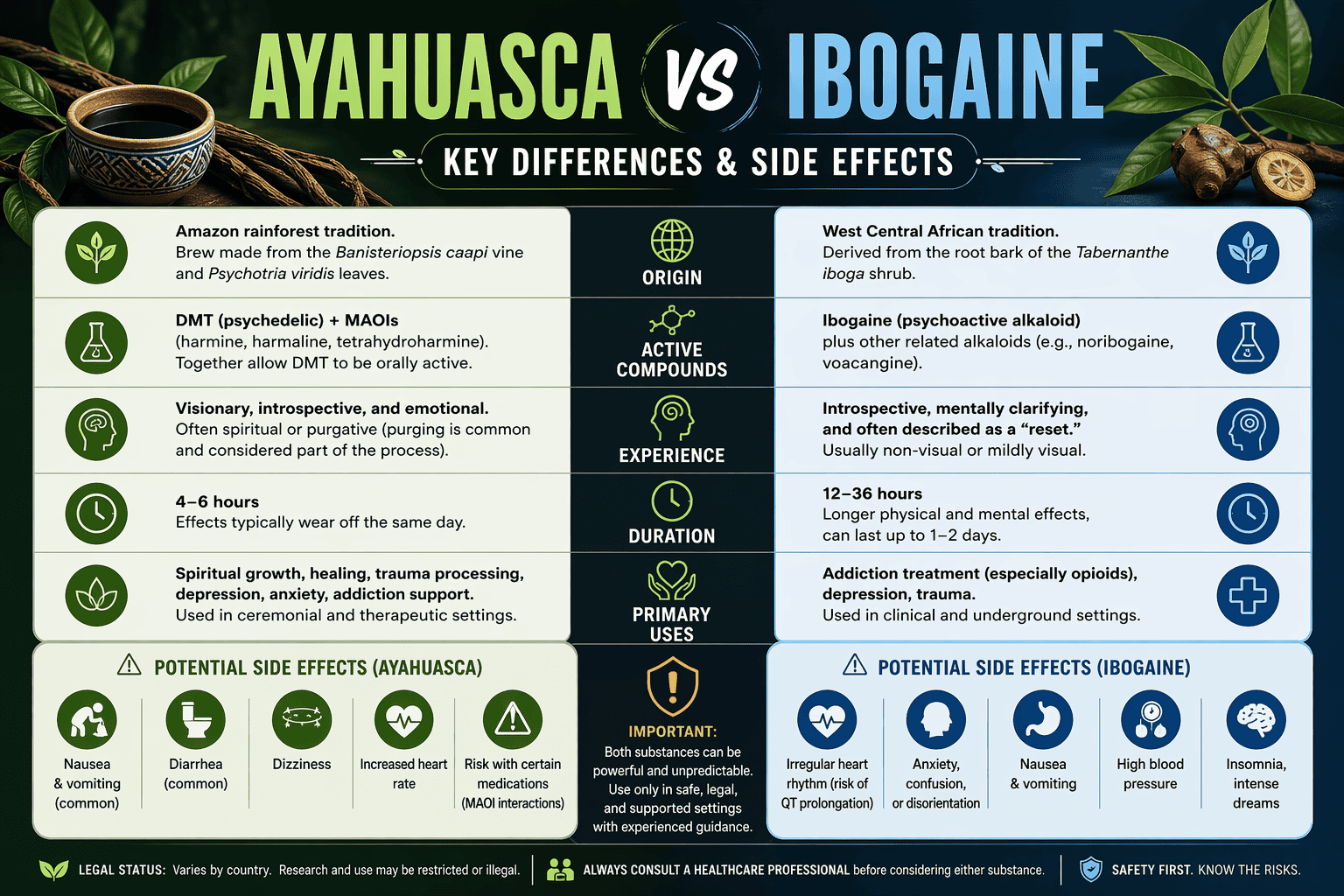
Few topics in psychedelic medicine spark as much debate as ayahuasca vs ibogaine. Both sit at the crossroads of tradition and modern therapy, yet they feel like different roads entirely. One is often described as a spiritual teacher that works through emotion and insight. The other is closer to a physiological reset that can quiet withdrawal and cravings in a way most people do not expect.
Key comparison in 45 words. Ayahuasca combines DMT and MAOIs and tends to produce visionary, emotionally cathartic experiences over 4 to 8 hours. Ibogaine and its metabolite noribogaine act widely in the brain and body, often easing withdrawal over 18 to 36 hours but with stronger cardiac risk profiles [2].
Ayahuasca vs Ibogaine: Key Similarities and Differences
Core similarities in purpose and outcomes
Ayahuasca and ibogaine share three big themes that explain why people compare them so often. Both have deep Indigenous roots and are used in ceremonial contexts. Both can catalyze powerful self-reflection that reframes behavior. Both also appear to support neuroplastic changes linked to new patterns and long-term healing, which is why they show up in conversations about addiction, depression, and trauma recovery [1][3].
- Each is a psychoactive plant medicine used for healing and insight, not just recreation [1][3].
- Both are associated with significant introspection and meaning making during and after the experience [1].
- Both require preparation, screening, and skilled support to translate the experience into real-world change [1][2].
Major differences in effects, duration, and physiology
Under the hood, these two medicines diverge. Ayahuasca relies on a DMT plus MAOI brew that opens a visionary, emotionally charged window across a single night. Ibogaine spans a longer arc and creates a state many describe as waking dreams, with a metabolite that lingers and continues to modulate mood and cravings. The body experience differs as well, especially for the heart.
| Feature | Ayahuasca | Ibogaine |
|---|---|---|
| Primary pharmacology | DMT with MAOI beta-carbolines | Ibogaine with long-acting noribogaine |
| Typical duration | 4 to 8 hours per ceremony | 18 to 36 hours, often with prolonged after-effects |
| Core subjective tone | Visionary, emotional, often purgative | Dreamlike review, introspective, physically demanding |
| Key medical concern | MAOI interactions with meds and diet | Cardiac risks, QT prolongation, bradycardia |
These differences show up in how people use them. Ibogaine is often framed as a fast reset for active dependence, while ayahuasca is often pursued for stepwise emotional processing across repeated sessions [1][2][3].
Who each may suit best
- Ibogaine may suit people seeking rapid interruption of opioid or stimulant withdrawal and cravings, with full medical screening and monitoring in place [1][2].
- Ayahuasca may suit people focused on trauma processing, grief, or meaning making, who can safely pause incompatible medications and follow MAOI precautions [1][2].
- Some combine them in sequence, never together, using ibogaine to stabilize dependence and ayahuasca later for emotional and spiritual work under careful guidance [1].
Curious about how other substances compare? Check out: Ayahuasca vs Peyote: 10 Proven Facts and Unique Experiences
Main Effects and Subjective Experience
Ayahuasca main effects and after-effects
Ayahuasca typically brings waves of visual imagery, autobiographical memory, and strong affect. Physical purging through vomiting is common and is often framed as cleansing. In a large global survey, nausea and vomiting were reported by about 62 percent of respondents, while about 2 percent sought medical care after a ceremony, which underscores the need for screening and safe settings [2].
After-effects can include improved mood, feelings of connection, and insight that unfolds over days or weeks. People often describe a “meaning reset” that helps change habits when combined with integration work. Challenging psychological content is common and can include loneliness or disturbing thoughts during the acute state, which points to the importance of skilled facilitation and post-session support [2].
Ibogaine main effects and after-effects
Ibogaine usually opens with a long phase of closed-eye visions and memory sequences. Many people describe it like watching scenes of their lives in detail, then receiving plainspoken insights. Physically, it is taxing. Restlessness, ataxia, and long hours in bed are common. Yet a distinct benefit emerges for many in active addiction. Opioid or stimulant withdrawal can be dramatically reduced, and cravings can quiet for weeks to months as noribogaine continues to work in the background [2].
After-effects include a long “gray day” where sleep is difficult and energy is low, followed by a period of clarity. For some, this window is when change sticks if structure and support are already in place. Reports of reduced depression and anxiety symptoms after ibogaine are noted in clinical and observational accounts, though careful framing is needed given the medical risks [3].
Duration, onset, and intensity profiles
| Parameter | Ayahuasca | Ibogaine |
|---|---|---|
| Onset | 30 to 90 minutes, often in waves | 1 to 3 hours to full effect |
| Peak | 2 to 4 hours | 6 to 12 hours, sometimes longer |
| Total session length | 4 to 8 hours | 18 to 36 hours |
| Afterglow and integration window | Days to weeks | Weeks to months due to noribogaine |
Intensity feels different. Ayahuasca is more wave-like and relational. Ibogaine is more continuous and internal. People often say, “Ayahuasca takes you out, iboga brings you in,” which captures the quality as well as the tempo of each experience [3].
Pharmacology and Mechanisms of Action
Ayahuasca chemistry and MAOI/DMT dynamics
Ayahuasca combines dimethyltryptamine with plant-based monoamine oxidase inhibitors, usually beta-carbolines from Banisteriopsis caapi. The MAOIs make oral DMT active by preventing its breakdown in the gut and liver. Together they engage serotonin receptors and sigma-1 receptors, which may relate to anti-inflammatory and neuroprotective effects, with beta-carbolines also linked to increased brain-derived neurotrophic factor in preclinical work [2][3].
This synergy helps explain why a single dose can produce antidepressant effects in controlled trials, with larger changes emerging as context and integration add weight to the experience [3].
Ibogaine and noribogaine mechanisms
Ibogaine is a polypharmacologic compound that interacts with transporters and receptors across multiple systems. Reported actions include effects at opioid and dopamine systems, sigma receptors, glutamate receptors, and nicotinic receptors. The long-lived metabolite noribogaine appears central to lasting mood and craving changes after a flood dose, extending the therapeutic window beyond the acute session [2].
Neurotrophic upregulation has been described, including possible increases in glial cell line-derived neurotrophic factor and brain-derived neurotrophic factor, which are theorized to support neural remodeling during recovery periods. These findings are promising yet still part of a developing evidence base [3].
Tolerance, cross-tolerance, and drug interactions
- Ayahuasca. The MAOI component raises interaction risk with serotonergic antidepressants and with tyramine-rich foods, which can produce serotonin toxicity or hypertensive reactions. Tapering and washout periods are standard in reputable settings [2][3].
- Ibogaine. Cardiac conduction is the primary concern. Many medications that prolong the QT interval or slow conduction can raise risk during ibogaine. Medical screening and medication review are nonnegotiable in clinical programs [2].
- Cross-tolerance. Classic cross-tolerance patterns seen between some serotonergic psychedelics are less relevant here because ayahuasca involves MAOI pharmacology and ibogaine’s effects are driven by multiple systems and a unique metabolite. Conservative timing between modalities is wise and often required [1][2].
Therapeutic Uses: Ibogaine vs Ayahuasca for Addiction, Depression, and PTSD
Ibogaine vs ayahuasca for addiction
For addiction, ibogaine and ayahuasca occupy different lanes. Ibogaine is repeatedly described as interrupting withdrawal and blunting cravings for opioids and stimulants. This acute shift can open a critical window for stabilization and structured recovery, which is why many clinics focus on medically monitored detox plus integration [1][2]. Reported outcomes include long-term abstinence for a portion of participants, based on observational and program reports that deserve continued confirmation [3].
Ayahuasca does not function as a detox in the same way. It helps some people confront underlying pain, shame, and habit loops. In both human and animal studies reviewed by providers, anti-addictive effects are reported, likely due to combined serotonergic and MAOI action, though this tends to unfold across repeated ceremonies and post-ceremony support rather than a single reset [3].
Ibogaine vs ayahuasca for depression
Ayahuasca has been examined in controlled settings for depression, with reports of rapid symptom reductions even after a single dose, supported by both psychological and hormonal pathways like cortisol modulation in some studies cited by clinicians [2][3]. The subjective experience often includes intense emotional processing that, when paired with integration, can reframe depressive narratives.
Ibogaine and noribogaine are associated with mood improvements in observational work, including reports of reduced depressive symptoms among people treated primarily for addiction. The likely contributors include sigma receptor activity and neurotrophic changes. These accounts are compelling but still sit earlier in the research arc than depression-focused ayahuasca work [2][3].
Ayahuasca vs ibogaine for PTSD
PTSD is complex, and both medicines are used off-label in this space. Providers describe improvements in anxiety, cognitive function, and suicidality after ibogaine in cohorts where trauma and addiction overlap, though stronger trials are needed [3]. Ayahuasca is hypothesized to help through emotional processing and meaning making, supported by early trials and surveys that suggest relief for some participants, again with the caveat that setting and support are central to outcomes [3].
Safety, Risks, and Contraindications
Cardiovascular and neurological risks with ibogaine
Ibogaine’s biggest safety headline is cardiac. The drug can prolong the QT interval and trigger dangerous arrhythmias, as well as bradycardia. These effects explain the need for pre-treatment ECGs, lab work, and continuous monitoring from experienced staff during dosing. People with structural heart disease, conduction abnormalities, or electrolyte imbalances face elevated risk and are commonly excluded from reputable programs [2].
Neurological side effects include ataxia and insomnia during the acute and post-acute periods. Medical oversight reduces risk by managing fluids, electrolytes, and rest, while timing booster doses conservatively [2].
MAOI interactions, SSRIs, and ayahuasca precautions
Ayahuasca’s MAOIs complicate medication lists and diet. Serotonergic antidepressants, some migraine medications, and other agents can raise the risk of serotonin toxicity when combined with MAOIs. Tyramine-rich foods can increase blood pressure during the active period. Reputable facilitators rely on medical screening, careful tapers, and washouts to lower risk. The Global Ayahuasca Survey also highlights frequent physical and psychological side effects, which should be anticipated with support plans in place [2].
Medical screening, medications, and who should avoid each
- Likely to avoid ibogaine. People with heart disease, uncontrolled hypertension, known long QT, serious liver disease, or current medications that prolong QT or slow conduction. People unable to access medical monitoring should avoid ibogaine entirely [2].
- Likely to avoid ayahuasca. People who cannot safely stop SSRIs or other serotonergic agents, or those with a history of psychosis. People with poorly controlled cardiovascular disease should also be cautious given transient changes in blood pressure and heart rate [2][3].
- Universal rules. Full disclosure of medical history and medications. Clear emergency protocols. A plan for integration that includes therapy or coaching and community support once home [1][2].
Legal Status, Access, and Cost in the United States
Ayahuasca legality and religious exemptions
As of 2025, ayahuasca and DMT remain Schedule I under federal law in the United States. Limited, case-specific religious exemptions exist for certain churches through court decisions and federal permissions. These exemptions do not generalize to the public and are tightly controlled [editor-verified].
Ibogaine legality and clinic availability
Ibogaine is also Schedule I at the federal level in the United States. Clinical treatment typically occurs in countries where ibogaine is not prohibited. Some U.S. states are funding research pathways, yet treatment access remains primarily international, with reputable centers emphasizing hospital-adjacent monitoring and strict protocols [1][2].
Treatment costs and insurance considerations
| Service element | Ibogaine program | Ayahuasca retreat |
|---|---|---|
| Typical cost | About 12,000 to 17,000 dollars for 7 to 10 days | About 5,000 dollars for 7 days at experienced retreats |
| Included care | 24/7 medical staff, ECGs, labs, monitoring | Varies widely, often non-medical settings |
| Insurance | Generally not covered | Generally not covered |
These figures reflect program descriptions from a clinic operator and are meant as a planning benchmark rather than a quote. Travel, integration support, and additional therapy often add to total costs [1].
Treatment Settings, Preparation, and Integration
Ibogaine treatment vs ayahuasca ceremony protocols
Ibogaine treatment reads like a medical admission. Patients undergo cardiac screening, labs, and medication review before dosing, then stay under observation through the acute phase and into early recovery. Booster doses may be used later with caution. The goal is a safe, stable reset and a handoff to structured aftercare [1][2].
Ayahuasca ceremonies are often group based, with facilitators or shamans guiding participants through the night with support staff. Screening still matters, yet the environment is more communal and symbolic. Programs may span multiple nights with repeated dosing. Integration circles or coaching help convert insight into action once home [1][3].
Preparation, set and setting, and support teams
- Screening. ECGs and labs for ibogaine. Medication tapers and MAOI-safe diet for ayahuasca [1][2][3].
- Set and setting. Quiet, low-stimulus medical rooms for ibogaine. Ritual space with clear procedures and watchful support for ayahuasca.
- Team roles. Physicians and nurses are standard for ibogaine. Experienced facilitators and assistants are standard for ayahuasca. Some retreats add medical staff, though this varies widely [1][2].
Integration strategies and aftercare timelines
The real work often starts after the session. For ibogaine, the noribogaine window gives weeks to install routines. Daily structure, peer support, therapy, and sleep hygiene keep momentum. For ayahuasca, journaling, therapy, and mindful practice help make sense of visions and emotions. In both cases, communities that “get it” shorten the distance from insight to habit [1][2][3].
Ayahuasca vs Ibogaine vs DMT, Mushrooms, and Peyote
Ayahuasca vs ibogaine vs DMT
Smoked or vaporized DMT produces an intense, brief state that peaks within minutes and resolves within about 20 minutes. Ayahuasca extends DMT’s window into hours and adds the beta-carboline tone. Ibogaine stands apart with its multi-receptor profile, metabolite, and long time course. The differences in duration and tone shape why people choose each modality [2].
Ibogaine vs ayahuasca vs mushrooms
Psilocybin mushrooms are serotonergic psychedelics with a 4 to 6 hour arc and a gentler body load than ibogaine. Many find psilocybin easier to integrate for depression with therapist support. Ayahuasca sits between, often more emotional and purgative than psilocybin. Ibogaine remains the outlier with unique benefits for withdrawal and a higher safety bar [editor-verified].
Ibogaine vs ayahuasca vs peyote
Peyote contains mescaline and produces a long, heart-centered experience with visual and bodily effects that can last 10 to 12 hours. Traditional Native American Church use centers on prayer and community. Compared to peyote, ayahuasca tends to be more visionary and purgative, while ibogaine is more physically demanding and clinically oriented in current practice [editor-verified].

Ibogaine and 5-MeO-DMT vs Ayahuasca
5-MeO-DMT vs ayahuasca experiences
5-MeO-DMT is often short and profound, with peak effects within minutes and a rapid return to baseline. Reports include ego dissolution and strong emotional release. By contrast, ayahuasca builds and recedes across hours, with more narrative imagery and relational content. Early research notes possible rapid reductions in depression and anxiety after 5-MeO-DMT in observational studies, though clinical data remain limited [2].
Ibogaine vs 5-MeO-DMT key differences
- Time course. Ibogaine lasts a day or more with a long after-effect window. 5-MeO-DMT is measured in minutes to an hour [2].
- Body risk. Ibogaine carries cardiac risks that require monitoring. 5-MeO-DMT can raise blood pressure and heart rate but is not associated with the same QT concerns in the small published trial at vaporized doses up to 18 mg [2].
- Use case. Ibogaine is often tied to addiction interruption. 5-MeO-DMT is explored for mood and existential distress in research and guided practice settings [2].
Real-World Experiences and Outcomes
Ayahuasca vs ibogaine Reddit insights
Community forums surface patterns that echo clinical descriptions. People comparing ayahuasca versus ibogaine often say ayahuasca “opens the heart” and helps with trauma, while ibogaine “shows the truth” and presses pause on withdrawal. Threads highlight how ibogaine’s demands on the body contrast with ayahuasca’s emotional waves, and how outcomes hinge on preparation and integration rather than the substance alone [5].
One short story says a lot. A man shared that the floor felt like a boat for half a day on ibogaine, but the day after his mind felt quiet for the first time in years. Another wrote that ayahuasca put grief in front of her with the smell of rain and the sound of her mother’s voice. Different doors. Different rooms. The same house.
Evidence quality, outcomes, and expectations
The evidence base is growing yet uneven. Ayahuasca has controlled depression studies and large surveys that describe benefits and risks. Ibogaine has clinical rationale and extensive program experience, along with known cardiac risks and observational outcomes that need larger trials. The strongest throughline is practical. Screening, medical safety for ibogaine, MAOI management for ayahuasca, and long-term support make the difference between insight and sustained change [1][2][3].
Methodology. This comparison synthesizes program descriptions from a clinic operator, a medical practice explainer, and a practitioner education resource to outline mechanisms, risks, and use cases. Where claims rely on provider reports or surveys, they are framed as such and not as definitive proof [1][2][3][5].
FAQs
Is ayahuasca and ibogaine the same thing?
No. Ayahuasca is a plant brew that combines DMT with MAOIs and typically produces a 4 to 8 hour visionary state. Ibogaine is a single alkaloid from the iboga shrub that lasts 18 to 36 hours and carries distinct cardiac risks. Their mechanisms, settings, and use cases differ sharply [2][3].
What drug is similar to ibogaine?
There is no close one-to-one. In clinical conversation, ibogaine is sometimes contrasted with 5-MeO-DMT and classic psychedelics to highlight differences. Ibogaine’s long metabolite action and cardiac profile set it apart from psilocybin, mescaline, and DMT-containing ayahuasca [2].
Who should avoid ayahuasca?
People on serotonergic antidepressants or other interacting medications without a safe taper and washout. People with a history of psychosis. People with cardiovascular disease that would make transient blood pressure and heart rate changes unsafe. A qualified medical review is recommended before considering ayahuasca [2][3].
What drug is ayahuasca similar to?
Ayahuasca is most similar in subjective tone to other serotonergic psychedelics, yet the MAOI component gives it a distinct body feel and emotional arc. Smoked DMT shares the same primary compound yet is much shorter and often more intense per minute [2].
Conclusion: Key Takeaways and Next Steps
Here is the clean comparison. Ayahuasca versus ibogaine reflects two very different tools. Ayahuasca couples DMT with MAOIs to open an emotionally charged, visionary window that can help with depression and trauma work when paired with skilled support. Ibogaine engages many systems at once and, through noribogaine, can mute withdrawal and cravings long enough to build new routines, while demanding rigorous cardiac screening and monitoring.





 Your personalized retreat result