

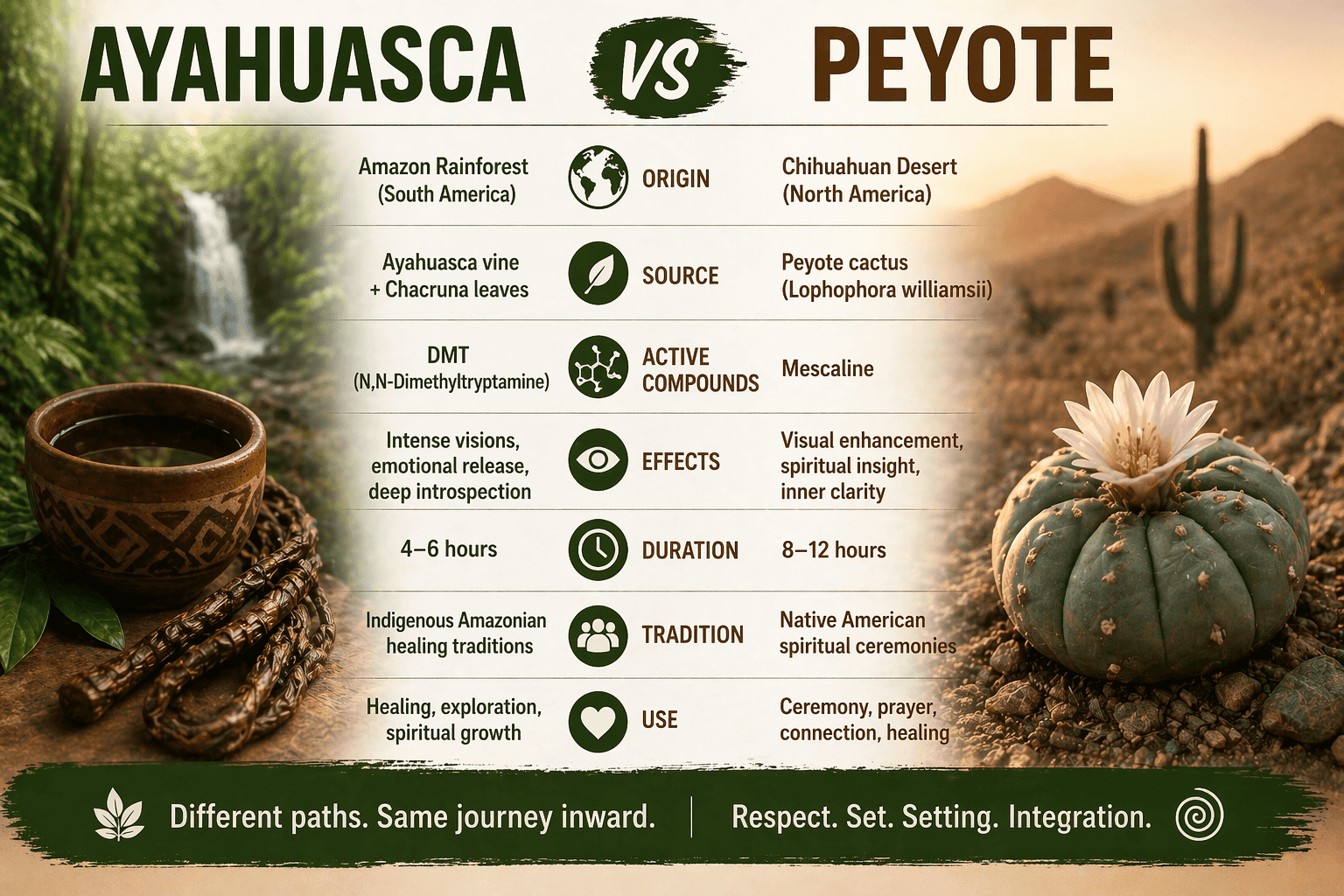
People ask how ayahuasca vs peyote compare in practice. Both are sacred medicines with long histories, distinct chemistries, and unique ceremonies. Quick answer. Ayahuasca is a DMT brew activated by MAOIs and often brings strong visions and purging. Peyote is a mescaline cactus that tends to feel gentler, more heart centered, and longer lasting. Laws, safety, and cultural duties differ in meaningful ways [2][3].
Ayahuasca vs peyote at a glance: key similarities and differences
Ayahuasca and peyote comparison summary
| Aspect | Ayahuasca | Peyote |
|---|---|---|
| Main psychoactive | DMT combined with MAOIs from B caapi | Mescaline from Lophophora williamsii cactus |
| Traditional regions | Amazon Basin in South America | Northern Mexico and U.S. Southwest |
| Core ceremony vibe | Visionary, purgative, inward | Grounded, communal, prayerful |
| Typical duration | About 4 to 6 hours | About 8 to 12 hours |
| Legal status in U.S. | Schedule I due to DMT. Some churches have RFRA protection | Schedule I. Religious use protected for Native American Church members |
Notes. Time ranges and tone are editor-verified based on reported ceremonial norms and published summaries [2][3].
Core differences between ayahuasca and peyote
- Chemistry. Ayahuasca combines a tryptamine with MAOIs. Peyote centers on a phenethylamine called mescaline [2][3].
- Onset and feel. Ayahuasca often comes on within an hour with waves and vivid inner imagery. Peyote tends to build slower with open-eye color and texture shifts and a warm emotional tone [3].
- Purge. Ayahuasca often brings vomiting or diarrhea called la purga. Peyote can bring nausea, yet purging is less central to the ritual arc [2][3].
- Legal access and ethics. Ayahuasca access in the U.S. hinges on church exemptions. Peyote has religious protection for Native American Church members and faces conservation concerns in the wild [2][3].
Typical setting, duration, and intensity
| Factor | Ayahuasca | Peyote |
|---|---|---|
| Setting | Shaman or facilitator led night ceremony with icaros and silence [2][3] | All night prayer circle with songs and drumming, often around a fire [3] |
| Onset | About 20 to 60 minutes | About 1 to 2 hours |
| Peak | Strong visionary peak with emotional catharsis | Steady, heart opening plateau with nature attunement |
| Afterglow | Reflective, dreamlike integration period | Calm clarity and connection to place and people |
Origins and traditions: ayahuasca and peyote in cultural context
Amazonian ayahuasca lineages and practices
Ayahuasca belongs to Amazonian medicine systems rooted in Peru, Brazil, and Colombia. Tribes such as the Shipibo-Conibo and Ashaninka maintain practices that blend plant dietas, healing songs, and cosmology passed through family lineages [3]. The brew weaves vine and leaf knowledge with ritual care, and the ceremony space is designed to guide internal vision and cleansing [3].
Modern churches like Santo Daime and União do Vegetal adapt elements of these traditions alongside Christian symbols, hymns, or structured hymnal work. In both indigenous and syncretic settings, elders or maestros lead through songs known as icaros and through precise dosing and timing to shape the experience arc [2][3].
For more info, check out: 10 Best Ayahuasca Retreats in Peru: Proven Safe Journeys
Indigenous peyote ceremonies and the Native American Church
Peyote has been used for thousands of years among peoples of Northern Mexico and the U.S. Southwest and Plains. Present day practice often centers in the Native American Church, where all night ceremonies support prayer, healing, and community bonds [2][3]. Drumming, sacred songs, and shared intention hold the circle through the night while a roadman or leader tends to the fire and the well being of participants.
Because peyote grows slowly and faces harvesting pressure, many leaders now emphasize sustainable use, ethical sourcing, and the importance of protecting wild habitat. Church protections in the United States reflect the spiritual and cultural standing of peyote in these communities [2][3].
Chemistry and pharmacology: ayahuasca plant vs peyote cactus
DMT and MAOIs in ayahuasca
Ayahuasca is usually prepared by boiling Banisteriopsis caapi vine with a DMT containing leaf such as Psychotria viridis. The vine contains harmala alkaloids that inhibit monoamine oxidase in the gut. This temporary inhibition makes oral DMT psychoactive and shapes the timing, depth, and emotional quality of the brew [2][3]. Reported effects include intense imagery, time shifts, and meaning rich narratives that many describe as teachings from plant spirits or archetypal forces [2][3].
Mescaline in peyote and related cacti
Peyote contains mescaline as the primary psychoactive molecule. Mescaline is known for gentle yet vivid visual patterns, tactile nuances, and a grounded sense of joy and connection. Many compare it to a slower, more embodied style of classic psychedelic effect with stronger color and geometry but less inner movie like narrative than DMT brews [2][3]. Other mescaline bearing cacti exist, yet peyote holds a unique role in the cultures that protect and practice with it [2].
Preparation, dosing, and ceremony formats
Ayahuasca brew methods and facilitator roles
Traditional ayahuasca is brewed by long boiling vine and leaf, then reducing to a thick tea. Facilitators or shamans lead with songs, map the flow of the night, and manage staggered pours. The role includes spiritual guidance and practical safety such as screening, sitting participants, and tending to purging and emotional intensity [2][3]. Dosage is not standardized and depends on vine strength, leaf choice, and the individual. Ethical leaders avoid bravado and watch for interactions that can cause harm [3].
Peyote dosing, buttons, and ceremonial structures
Peyote is shared as dried buttons or tea made from the cactus. Ceremonies begin at dusk and close at sunrise. The leader sets the prayer, songs guide the night, and helpers support anyone who needs steady attention. Dosing is titrated over hours to match the prayer and the needs of the circle rather than a single strong spike. Respect for the plant, for the land it comes from, and for the community is at the center of the form [3].
Ayahuasca vs peyote effects: onset, visuals, and afterglow
| Dimension | Ayahuasca | Peyote |
|---|---|---|
| Onset and arc | Wave like, with clear peaks and internal visions | Slow build, long plateau, steady clarity |
| Visuals | Complex inner scenes, entities, and symbolic narratives | Enhanced colors, geometry, nature detail |
| Somatic tone | Purge common. Body can feel hot or cold with emotional release | Body warmth, mild nausea early, often calm breath and soft euphoria |
| Afterglow | Reflective, sensitive, sometimes tender the next day | Open hearted, grounded, grateful, with gentle fatigue |
Descriptions reflect reported ceremonial norms and published overviews of effects [2][3].
Somatic and psychological effects compared
- Ayahuasca. Strong inner visuals, emotional catharsis, and reprocessing of memories are common. Nausea and vomiting often mark energetic clearing. People report insights on life patterns and relationships [2][3].
- Peyote. Warmth, empathy, and appreciation for landscape and song often stand out. Visual texture and color shifts feel woven into the space around you. The effect is long yet manageable with a stable mood for many [2][3].
Peyote vs ayahuasca experience
Comparing ayahuasca and peyote experience comes down to pace and feel. Ayahuasca often feels like entering a teaching dream where the brew has a voice. Peyote often feels like a prayer that keeps opening the heart while your senses gently brighten. Both can be profound, yet they work in different ways that match their cultural homes [2][3].
What people say online: reddit peyote vs ayahuasca
Public forums like Reddit often show two themes. First, ayahuasca is described as intense and visionary with heavy emotional work. Second, peyote is described as steady, tender, and nature focused with a long gentle arc. These are anecdotal patterns and should be treated as personal reports rather than clinical data. Editor-verified summary of common user themes.
Peyote versus ayahuasca: safety, risks, and contraindications
Medical interactions and who should avoid
- Ayahuasca can interact in dangerous ways with SSRIs, SNRIs, certain antidepressants, stimulants, and other MAO related medicines. People with uncontrolled cardiovascular disease or psychotic disorders should avoid unless cleared and closely supervised [3].
- Peyote can raise heart rate and may not be suitable for people with serious cardiac conditions. Psychological intensity can surface trauma and requires informed consent and support [2][3].
- Mixing substances adds risk for both. Alcohol and other drugs should not be combined with either medicine [3].
Screening, preparation diets, and harm reduction
- Share a full health and medication list with the leader. This helps prevent dangerous interactions [3].
- Follow preparation guidance. Many facilitators advise light meals and avoiding tyramine rich foods before ayahuasca to reduce nausea and risk [3].
- Set intention and plan integration. Journal prompts and support calls help turn insights into daily changes.
- Secure aftercare. Rest, hydration, and a calm day after ceremony support the nervous system.
- Respect dose. Trust ceremonial pacing rather than chasing intensity.
Peyote vs ayahuasca: legality, access, and ethics in the United States
Federal and state frameworks for ayahuasca
Because ayahuasca contains DMT, it is treated as a Schedule I substance under federal law. Some religious groups, including União do Vegetal and Santo Daime, have gained protection to use ayahuasca as a sacrament under the Religious Freedom Restoration Act. A 2006 Supreme Court ruling affirmed such protection for UDV, which shaped the modern legal path for churches that meet strict criteria [2]. Local and state approaches vary, and not all groups have legal cover. Seek clear documentation before attending services in the U.S. [2].
Peyote protections, conservation, and access
Peyote and mescaline are Schedule I under federal law in the U.S. Religious use is protected for members of the Native American Church, who hold peyote as a sacred medicine. Access for non members is not protected under federal law. Conservation groups and many church leaders caution that peyote is slow growing and threatened by overharvest and habitat loss, which calls for strict respect and sustainable practice [2][3].
Respectful participation and cultural reciprocity
- Honor the hosts. Learn the history and the rules of the community or church before you attend.
- Do not buy wild peyote or pressure communities for access. Support conservation and cultivation efforts led by Indigenous groups [3].
- For ayahuasca, seek facilitators with clear lineage, safety protocols, and legal status. Support centers that give back to local communities [3].
Comparing ayahuasca and peyote to other psychedelics
Ibogaine vs ayahuasca vs peyote
Ibogaine is often tied to addiction interruption protocols and carries unique cardiac risks that require medical oversight. Ayahuasca leans toward emotional processing and vision work. Peyote aligns with extended prayer and heart opening over a long night. These profiles point to very different safety needs and settings. Editor-verified synthesis for high level orientation.
Ayahuasca vs peyote vs mushrooms
Psilocybin mushrooms tend to sit between the two. Mushroom effects range from soft to visionary with a time window often near six hours. Ayahuasca can be more purgative and directive. Peyote can feel warmer and more social across a longer span. All three require thoughtful screening and integration. Editor-verified synthesis based on reported user experiences.
Choosing your path: ayahuasca compared to peyote for different intentions
Healing, creativity, and spiritual inquiry
- For deep emotional healing with a strong inner narrative, ayahuasca may fit when proper medical screening is in place [3].
- For connection with prayer, land, and community, peyote may fit when invited within lawful and ethical structures [3].
- For creative reframing, both can open insight in different ways. Ayahuasca shifts inner images while peyote can sharpen presence and color.
Solo retreats, groups, and integration support
- Define your goal. Healing, learning, or connecting will point to the right container.
- Choose lawful, lineage based settings. Ask about medical screening, emergency plans, and integration [2][3].
- Plan integration. Schedule time for journaling, therapy, or community circles to translate insight into action.
- Check sustainability. Support centers and churches that protect plants and give back to communities [3].
FAQ: ayahuasca and peyote comparison
Is ayahuasca the most powerful psychedelic?
Some writers describe ayahuasca as more powerful than peyote or LSD due to its DMT visions and the sense of breakthrough. Power depends on set, setting, dose, and readiness. The brew is intense for many and should be approached with respect and safety in mind [2].
Why shouldn’t you do ayahuasca?
You should not drink ayahuasca if you take SSRIs or other interacting medicines, if you have certain heart or psychiatric conditions, or if you lack safe, legal, and skilled support. Mixing drugs or skipping screening can raise serious risks [3].
What drug is ayahuasca similar to?
Ayahuasca shares some features with other serotonergic psychedelics, yet the combination of DMT with MAOIs and the ceremonial container make it distinct. People compare elements to psilocybin or smoked DMT, but the oral brew has its own profile [2][3].
Can you legally grow peyote in the US?
Under federal law, peyote is Schedule I. Cultivation and possession are generally illegal except for religious use by members of the Native American Church subject to specific protections. State laws and enforcement vary. This is an editor-verified summary and not legal advice.
Conclusion: making an informed, ethical choice
Key takeaways and next steps
- Ayahuasca versus peyote differs most in chemistry, ceremony, and felt sense. Ayahuasca leans visionary and purgative across 4 to 6 hours. Peyote leans grounded and heart centered across 8 to 12 hours [2][3].
- Safety hinges on medical screening, lawful access, skilled leadership, and aftercare. Culture and conservation matter, especially with wild peyote [2][3].
- Next steps. Clarify intention, verify legal standing, confirm screening, and set up integration support. If you cannot meet those checks, wait until you can.
Methodology and sources. This comparison draws on published summaries and legal history notes, plus editor-verified synthesis of ceremonial norms. Key sources include Discover Magazine’s explainer on peyote and ayahuasca and a retreat center overview that details chemistry, ceremonies, and safety. Claims without direct citation are labeled as editor-verified and avoid precise figures [2][3].
Choosing between ayahuasca and peyote is not a rush decision. Take time to study, speak with trusted leaders, and care for your health. When ready and invited, step with humility. That care shapes the experience as much as the medicine. If you are still comparing ayahuasca vs peyote, start by writing your intention, then vetting a lawful, safety first container, and plan your integration path.
References
- Hrodey M. Peyote vs. Ayahuasca: What Is the Difference? Discover Magazine. Published October 25, 2023. Accessed April 24, 2026. https://www.discovermagazine.com/peyote-vs-ayahuasca-what-is-the-difference-44740
- Levers J. Peyote vs. Ayahuasca: Key Differences Explained. Nimea Kaya Retreat Center. Published July 7, 2025. Accessed April 24, 2026. https://www.nimeakaya.org/peyote-vs-ayahuasca-key-differences-explained/
- Banyan Treatment Center. Peyote vs. Ayahuasca: Differences & Similarities. Accessed April 24, 2026. https://www.banyantreatmentcenter.com/blog/peyote-vs-ayahuasca-differences-similarities/
- Reddit. r/Ayahuasca. Peyote vs ayahuasca. Accessed April 24, 2026. https://www.reddit.com/r/Ayahuasca/comments/1f0hcqx/peyote_vs_ayahuasca/



 Your personalized retreat result