


Shamanic breathwork is a conscious breathing practice rooted in ancient healing traditions, designed to support emotional release, spiritual growth, and altered states of consciousness through rhythmic and connected breathing, often accompanied by music or drumming. Most people who seek shamanic breathwork are looking for deeper self-awareness, healing trauma, or spiritual connection, and the experience differs for everyone—sometimes subtle, often surprising.
Ask someone who’s tried shamanic breathwork, and you’ll probably hear about powerful music, deep breathing, and emotional intensity that lingers. Some recall vivid visions or body tingling; others feel a quiet shift they can’t put into words. The main thing that sets shamanic breathwork apart is how it blends modern psychology, conscious connected breathing, ancient shamanic rituals, and somatic release—all in a space designed for transformation, not just relaxation.
Right out of the gate, it’s good to know this isn’t simply about “breathing better.” Shamanic breathwork is more like a ceremony—a guided practice that invites you to lie down, focus on breath in a continuous rhythm, set an intention, and open yourself to whatever the process brings. People ask, “What happens?” It’s a mix of guided breathing, evocative music, and the space to welcome visions, emotions, or insights that might arise. The technique welcomes everyone from beginners to experienced seekers, but each person’s first session is truly its own adventure.
What Is Shamanic Breathwork?
Definition of Shamanic Breathwork
Shamanic breathwork is a transformational breathing practice that combines rhythmic, connected breath with guided sound, intention setting, and rituals drawn from shamanic traditions. The process aims to facilitate deep emotional release, healing, and expanded states of awareness. It blends ancient indigenous methods with contemporary therapeutic insights, honoring both psychological growth and spiritual experience.1
Unlike simple breathing exercises for stress relief, shamanic breath work intentionally leads participants into altered states of consciousness—states similar to what people sometimes describe during deep meditation, trance drumming, or visionary plant medicine ceremonies (though drug-free). These sessions are typically guided by a trained facilitator who holds safe space and provides support for participants as old patterns and unresolved experiences rise to the surface.
Origins and History
The roots of shamanic breathwork reach back to indigenous and tribal cultures on every continent. For centuries, shamans treated the breath as a link to spiritual guidance and healing power. They used various methods of conscious breathing, often accompanied by rhythmic drumming, chanting, and ritualized movement, to enter trance states and receive visions, guidance, or soul healing for themselves and their communities.1
Fast-forward to the late 20th century, when modern breathwork pioneers like Stanislav Grof (holotropic breathwork), Leonard Orr (rebirthing), and Linda Star Wolf (shamanic breathwork) blended these traditional practices with depth psychology and somatic experience. Linda Star Wolf formally developed the Shamanic Breathwork™ method in the 1990s, combining Native American wisdom, modern counseling frameworks, music, and energetic bodywork.1
The Connection Between Breathwork and Shamanic Traditions
In nearly every indigenous ceremony, breath is more than just an automatic process—it’s sacred medicine. In shamanic traditions, breath opens the doors to altered awareness, visionary insight, and even the retrieval of lost soul parts. Shamans often use breath alongside drumming, singing (sometimes called icaros), and ritual to travel into the spirit world or to facilitate healing for others.1,2
Contemporary shamanic breathwork honors these traditions, using conscious connected breathing as a primary tool for entering transformational states, sometimes referred to as shamanic journeys. By consciously engaging the breath in a ceremonial setting, people today can experience personal insight, healing, and a sense of reconnection to something greater—just like their ancestors.
How Modern Shamanic Breathwork Developed
Modern shamanic breathwork as a formal practice grew out of the synthesis of ancient ritual and modern psychological approaches. Linda Star Wolf, a psychotherapist and spiritual teacher, played a central role in formalizing this method, inspired by her own experiences in Native American ceremony, integrative breathwork, and counseling settings.1
Key to its development was the recognition that trauma, unprocessed emotions, and spiritual disconnection often manifest in physical symptoms or stuck energy. By combining conscious breathing with musical journeys (often chakra-attuned), active imagination, bodywork, and integration practices, shamanic breathwork creates a powerful container—both safe and catalytic—for healing.
How Shamanic Breathwork Works
The Role of Conscious Breathing
At the heart of all breathwork shamanic approaches is the simple—but strangely profound—act of breathing consciously and continuously. Instead of passive, automatic respiration, participants maintain an active focus, connecting every inhale to every exhale in an unbroken rhythm. This connected circular breathing, often through the mouth, invites more oxygen into the system and signals the nervous system to transition from everyday awareness to something deeper.3
If you’ve ever sat in on a session, you’ll notice the facilitator’s cues: “No pauses, let the breath flow like water, continuous…” It might sound simple, but the sustained, rhythmic breath often brings up sensations—tingling, warmth, emotional responses—that suggest shifts happening far beyond mere physiology.
Altered States of Consciousness
Altered states are the centerpiece of shamanic breathwork. As breath deepens, and music or drumming sets a trance-like atmosphere, most participants find themselves slipping out of ordinary thinking. Colours shift behind closed eyes, time distorts, and unexpected feelings or memories can bubble up.1,4
This isn’t accidental—the combination of repeated breath and evocative sound is designed to quiet the “thinking brain” and activate deeper subconscious layers, triggering theta or even delta brainwaves similar to those in meditation, hypnosis, or light sleep. The resulting shift lets people access inner wisdom, old wounds, or visionary states that are inaccessible in daily consciousness.
Breath, Emotions, and the Nervous System
Breath acts like a lever for the nervous system. Quick, shallow breaths signal the body for stress or danger, while slow, rhythmic breathing calms the system. Shamanic breathwork intensifies the breath—usually faster and deeper than standard breathing—causing a physiological response: a spike in oxygen and a drop in carbon dioxide. This shifts the balance between sympathetic and parasympathetic nervous activity.3
People often describe cathartic emotional releases—crying, laughing, expressing anger, or feeling immense love—precisely because the breath lowers defenses and allows suppressed feelings to move. Sometimes the body shakes, tingles, or clenches as “stuck” energy (muscle memory, old emotion) comes to the surface. The process isn’t always comfortable, but it’s rarely dangerous when guided safely.
The Mind-Body Connection
Most are surprised just how physical shamanic breathwork can be. The technique is rooted in the understanding that mind and body aren’t separate. Unresolved emotions, old trauma, and limiting beliefs often “live” in the body—tense shoulders, fluttering stomach, racing heart. Conscious, connected breathing activates the body’s natural wisdom, breaking down barriers between thought and feeling.1,3
Participants often report that emotional release is followed by a sensation of lightness or groundedness. A person might relive a childhood memory as the breath animates it, then experience gentle shaking or even involuntary movement as the body “processes” what comes up. This mind-body synergy is why many see shamanic breathwork as a powerful adjunct to both therapy and spiritual practice.
Why People Experience Visions, Memories, and Insights
Ask anyone why shamanic breathwork often feels like a psychedelic experience (but without anything ingested), and the short answer is: the breath itself changes brain chemistry and opens consciousness. Once the prefrontal cortex quiets down, the subconscious gets a rare chance to talk back—often in the language of images, feelings, and memories.1,4
Music, ritual, and intention help “prime” the psyche for meaningful insight. Sometimes a vision or memory feels almost random; more often, it’s deeply relevant to whatever the person is working through. Many people walk away with new perspectives on old problems, creative flashes, or a sense that they’ve touched something truly sacred in themselves.
What Happens During a Shamanic Breathwork Session?
Preparing for the Experience
A typical shamanic breathwork session starts off quietly, with facilitators taking care to create a sense of safety and ceremony. Smells of sage or sweetgrass, dim lighting, and quiet music help set the mood. Mats and blankets are laid out. Participants are invited to find a comfortable lying-down position, and often, personal items or crystals may be placed on a group altar to anchor intention. The environment tends to feel meditative, sometimes tinged with the familiar anticipation of “not knowing what’s ahead.”1,4
Setting Intentions
Before the breathing begins, people are encouraged to set an intention—whether it’s healing grief, gaining clarity on a life decision, or simply “being open to whatever happens.” Some choose to share their intention with the group, while others keep it private. Either way, intention acts as a lighthouse during the sometimes-stormy journey of the session. “Why are you here today?” isn’t just a question; it’s a way to give meaning to whatever emerges.4
The Breathing Process
When the breathing starts, facilitators often guide participants into a connected, circular pattern—no pauses between inhale and exhale, breathing through the mouth, and keeping the rhythm steady. The music (sometimes tribal, sometimes electronic, typically intense) builds and shifts with the energy in the room. Sessions can last anywhere from 30 minutes for beginners up to two hours for more experienced participants.1,4
Breathing can feel intense. Many notice sensations—tingling in the fingers, warmth spreading, a subtle sense of floating or being “out of time.” Some sessions include breath retention, toning (vocal sounds), or guided movement. The facilitator may offer verbal encouragement or gently support with hands-on bodywork if uncomfortable feelings arise.
Music, Drumming, and Sound
Sound is a central pillar in breathwork of shamanic flavor. Carefully chosen playlists, live percussion, rattles, and vocal chants (sometimes called icaros) evoke different moods and activate the body’s energy centers. Some facilitators select chakra-attuned music to “move” energy through the different levels of awareness.1,4
The result? Music often propels the breath up to a peak, then brings it to resolution—just as a good story crests and resolves. “The music did half the work,” as one participant put it, and there’s truth in that: sound helps bypass critical thinking, allowing the body and emotions to respond more freely.
Emotional Release
What happens when the breath unlocks things you never knew were there? Emotional release in shamanic breathwork sessions can be dramatic: tears, laughter, shouts, or simple waves of relief as bound-up feelings move through. Sometimes memories surface—painful or joyful. At other times, there’s an outpouring of gratitude or forgiveness, even if only towards oneself.3,4
This release is seen as a sign of healing, not dysfunction. In group settings, it’s normal to hear someone sobbing nearby, another letting out a triumphant whoop, or a person quietly lying very still. Emotional expression isn’t forced; it arises (or doesn’t) in its own way, supported by the group container.
Integration and Reflection
When the breathing subsides, music softens and facilitators guide everyone back with gentle cues. Afterward, participants usually have time for quiet reflection, journaling, artwork, or group sharing. Some facilitators lead integration circles where people can talk about their experience—even if the only words that come are “I have no words.”1,4
This integration is considered crucial. The “downloads” during breathing need time and grounding to become lasting insights. Art, writing, body movement, and simple conversation are all encouraged to “anchor” the experience. Some people even notice changes days later, as the insights and shifts settle in.
What the First Session Typically Feels Like
For most, the first shamanic breathwork session oscillates between curiosity and vulnerability. Initially, there might be nervous laughter or uncertainty—“Am I doing this right?”—quickly replaced by sensation as the breath takes over. Physical responses, like tingling or cold hands, may seem odd but are common.4
Vivid visuals often appear behind closed eyelids—flashes of light, swirling colors, or scenes from memory. Emotional swells come and go. Some leave their first session in tears; others in quiet awe. Most agree: it feels both deeply personal and oddly universal, as if joining a very old, very human ritual.
Common Techniques Used in Shamanic Breathwork
Conscious Connected Breathing
This is the main engine behind many shamanic breathwork techniques. Conscious connected breathing means inhaling and exhaling in a smooth, unbroken cycle, typically through the mouth. There’s no pause at the top or bottom of the breath, creating a circular rhythm.1
The point isn’t to hyperventilate—facilitators guide the group to keep breath deep but steady, inviting ongoing awareness. It’s remarkable how this basic shift from automatic to conscious breathing creates profound changes in awareness and emotion.
Circular Breathing
Circular breathing is a specific method of keeping inhale and exhale linked, like a slow wave rolling in, then out. It’s the same foundation used in other breathwork styles, but in shamanic breathwork it’s often paired with intention, ritual, and sometimes vocal toning or sound.3
Circular breathing can last from minutes to hours, depending on the group. Over time, it encourages the nervous system to “let go” and opens the door for emotional or visionary experience.
Rhythmic Breathing
Incorporating rhythm—not just in the breath, but in the music—makes shamanic breathwork distinctive. Some sessions feature slow but deliberate rhythms; others mimic the beat of the drum, moving faster as energy builds. Matching breath to the drum or music helps participants sink into the altered state, almost as if the breath starts “dancing” with the sound.3,4
Breath and Movement
Some facilitators invite simple movement—arm sweeps, hip rolls, even spontaneous dance—while breathing. Moving with the breath can shake out stuck energy, and for some, helps bypass mental resistance. It’s not about choreographed moves; it’s about letting the breath guide the body as it wishes.4
Often, gentle bodywork is included—facilitators might press lightly on the shoulders, feet, or chest to support deeper release, always with permission.
Breath and Sound
Vocalizing, whether through simple “ahhh” sounds, toning, or full-on chants, often forms part of the experience. Letting sound move through the body seems to amplify emotional release—a kind of “sonic exhale.”4
In certain traditions, facilitators use songs or guided vocalizations (icaros) to “direct” energy or healing to specific needs, echoing ancient shamanic methods.
Guided Visualization
Shamanic breathwork practice frequently includes guided visualization. Facilitators may lead you to imagine entering a forest, meeting a spirit animal, or traveling through personal memories. Visualization amplifies the transformative potential of the breath, giving the subconscious a map to follow.1,4
This technique also helps with integration—images or “downloads” received during breathing can be explored further during closing reflection or journaling.
Shamanic Journeying
This technique is both literal and metaphorical: using the breath to “journey” beyond everyday awareness. Participants often use visualization, music, and intention to travel inward—meeting archetypal guides or retrieving personal truths. Some call it a waking dream; others see it as a direct encounter with the deeper self.1
In traditional cultures, shamans would enter trances and bring back wisdom for the community. Today’s shamanic breathwork ceremony aims for the same: transformation that’s not just for the individual but ripples outward, benefitting others.
Benefits of Shamanic Breathwork
Emotional Healing
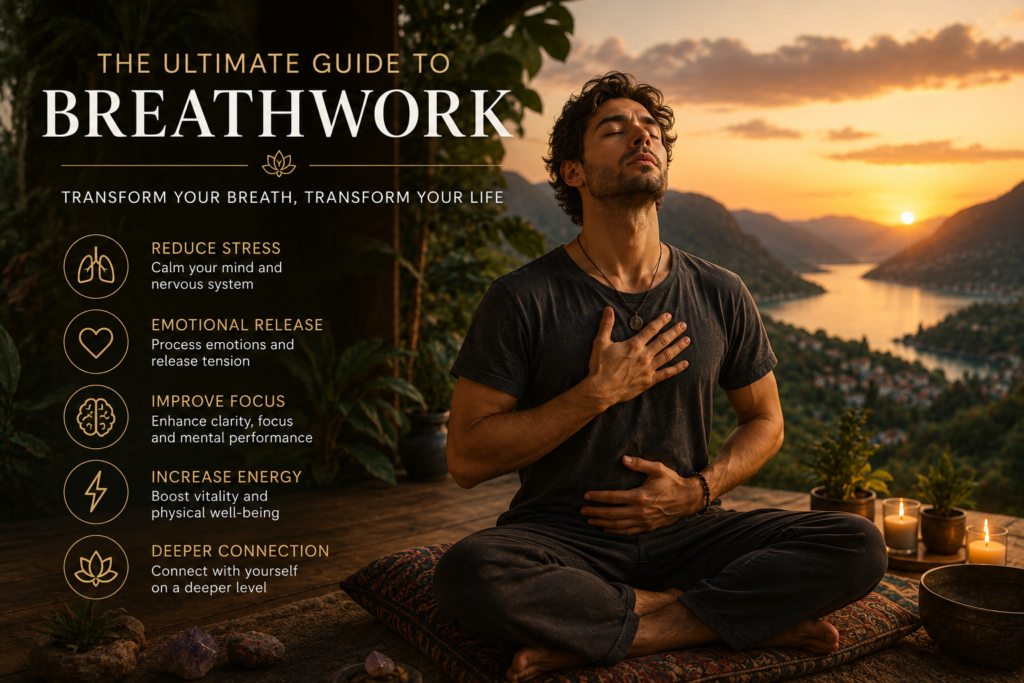
Probably the most widely cited benefit of shamanic breathwork is its capacity to unlock emotional healing. The breath bypasses the analytical mind, allowing buried grief, anger, or fear to surface. When processed in a supportive environment, this can bring genuine relief and an unburdening that lasts long after the session ends.3,4
Stress Reduction
The rhythmic, deep breathing patterns used in shamanic breathwork trigger the body’s calming response. Stress hormones drop, tension eases, and many participants leave with a sense of renewal, sometimes describing it as a “reset” for the mind and nervous system.2,4
Trauma Processing
Because shamanic breathwork can induce non-ordinary states in a safe, contained setting, old traumas often rise up—not as overwhelming flashbacks, but as manageable waves. This opens the door for integration and healing, especially when guided by an experienced facilitator.1,3,4
Increased Self-Awareness
Most people come away from a session with new awareness—about why they react a certain way, where a belief formed, or how a pattern got established. Self-insight expands rapidly when the mind is quiet and the body’s wisdom comes to the foreground.3,4
Spiritual Growth
Spiritual seekers flock to shamanic breathwork for good reason. The altered states accessed often include feelings of unity-with-all, connection to nature or ancestors, and experiences that defy rational explanation. These can build a sense of trust in life and one’s own spiritual path.1,4
Improved Mental Clarity
The stillness and perspective gained in breathwork can help clear mental clutter. People often describe walking into sessions with troubling questions and leaving with surprising insight, an “aha” moment, or simply quieter internal chatter.2,4
Greater Emotional Resilience
Regular practice is said to build emotional resilience by helping people trust their capacity to feel, process, and move through strong emotions. What once seemed overwhelming becomes “just another wave” to be welcomed, rather than feared.1,3
Releasing Suppressed Emotions
Suppressing emotions takes energy. Over time, this can show up as fatigue, irritability, or even physical symptoms. Breathwork shamanic allows those hidden layers to express themselves safely and fully—making room for more authentic presence in everyday life.1,3,4
Feeling More Connected to Life
After a powerful session, people often say they feel “plugged back in”—to their bodies, to nature, to a community, or to a purpose larger than themselves. This is the elusive sense of connection many seek in both old and new spiritual practices.1,4
Enhanced Creativity and Intuition
As the “default mode network” of the brain quiets down, creative ideas and intuitive insights can bubble up. Artists, entrepreneurs, and everyday problem-solvers alike have described insights that come out of nowhere during or after breathwork. Sometimes the best ideas are the ones that surprise the conscious mind.1,3
The Spiritual Side of Shamanic Breathwork
What Is a Shamanic Journey?
A shamanic journey is a spiritual “trip” experienced in a trance or altered state, often facilitated by rhythmic breathing and sound. While shamans once used ritual and drumming to access non-ordinary realms for healing or guidance, modern shamanic breathwork lets people experience their own journeys—often encountering archetypes, spirit guides, or symbolic landscapes.1,3
Unlike psychedelic journeys, there’s no external substance required—just breath, intention, and support.
Spirit Animals and Archetypes
During journeys, participants may “meet” animals, ancestors, or archetypal beings—sometimes called “power animals,” other times simply guides. These encounters can feel surprisingly vivid, even to skeptics. The symbolism of a wolf, eagle, or snake often holds personal or collective meaning, offering messages or a sense of protection.1
Symbolic Experiences
The subconscious loves symbolism. Images or sensations that arise during shamanic breathwork are rarely literal—they’re often metaphors for personal transformation, healing, or awakening. Interpreting the meaning of a bright forest, a crumbling wall, or a mountain peak reached in the mind can provide powerful clues to what’s shifting inside.1,3
Mystical States of Consciousness
Some experiences during breathwork defy explanation—feelings of union, timelessness, or extraordinary peace can surface. Mystical states, whether fleeting or prolonged, have been documented for thousands of years. Shamanic breathwork creates a legal, safe context for such experiences without the legal or physiological risks of plant medicine.3,4
Connection with Nature
Many traditional shamans see healing as inseparable from nature, and shamanic breathwork continues this philosophy. Visualizations may include forests, rivers, or animals—participants often report feeling “at home” in nature, even if lying in a windowless room.1,3
For some, this leads to real-world shifts, such as starting a nature-based practice or simply taking more walks in the woods.
Energy and Spiritual Healing
Energy workers and sensitives often report tangible flows, tingling, or sudden warmth or coolness in different parts of the body during sessions. Some feel blockages “clear” as the breath moves energy through the chakras. Others experience emotional healing interwoven with physical sensations, as if the inner and outer body are healing in tandem.1,4
Personal Transformation
Ultimately, the spiritual dimension of shamanic breathwork is about authentic transformation—from the inside out. Returning to old habits may come with new awareness, and relationships often deepen or shift as people integrate their experiences. The phrase “awakening the shaman within” captures the aim: living with more wisdom, courage, and compassion, both for oneself and others.1,4
The Science Behind Shamanic Breathwork
What Research Says About Breathwork
Scientific investigation into breathwork is growing, though shamanic breathwork specifically hasn’t been as rigorously studied as mainstream clinical interventions. There is robust evidence, however, that conscious, patterned breathwork can reduce stress, lower blood pressure, and support mood regulation.editor-verified
Some research also suggests that breathwork can support trauma recovery, enhance emotional regulation, and improve mental well-being—outcomes closely aligned with what practitioners and participants describe.1,3
Effects on the Brain
Functional imaging and EEG studies on related breathwork practices (like holotropic breathing) show shifts in brainwave patterns from beta (alert waking) to theta (meditation, dream states) and even delta (deep relaxation). Blood flow can redistribute to emotion-processing regions, while the “default mode network” quiets. This mirrors subjective reports of time distortion, vision, and creative insight.editor-verified
Effects on the Nervous System
Sustained connected breathing creates short-term hyperventilation—raising oxygen and lowering CO2, shifting nervous system tone. Heart rates may rise temporarily, but parasympathetic activation (the “rest and digest” state) often follows, leading to deep relaxation after the session.editor-verified
People with sensitive nervous systems may experience body shakes, tingling, or heat, all of which typically resolve with rest and supportive aftercare.
Breathwork and Emotional Regulation
Research into breathwork’s influence on emotion shows that deliberate, deep breathing can modulate amygdala (fear center) activity and increase prefrontal cortex regulation. In practice, this means emotions can arise safely and be “processed” instead of getting stuck in cycles of suppression or reactivity.editor-verified
Breathwork and Trauma Recovery
Recent therapeutic trends have highlighted somatic (body-based) approaches for trauma, with breathwork gaining support as a trauma-informed healing tool. Carefully facilitated shamanic breathwork lets old trauma surface in manageable ways, offering integration and meaning. Caution is needed, however, for those with acute trauma or PTSD, as the intensity of the process can sometimes be overwhelming.1,4
Current Limitations of Research
While anecdotal evidence is abundant, large-scale clinical trials specifically on shamanic breathwork remain rare. Most published studies focus on related methods like holotropic or yogic breathing. There is still a need for peer-reviewed, controlled studies examining both benefits and risks, especially for vulnerable populations.editor-verified
What the research does show, though, aligns well with the lived experiences reported in shamanic breathwork communities—a nice case where evidence and human story often agree.
What Does Shamanic Breathwork Feel Like?
Physical Sensations
First-timers are often struck by the sheer physicality of breathwork shamanic practice. Expect tingling in hands and face, a warm (or cool) sensation washing over the body, sometimes mild numbness, and, on occasion, involuntary movements. Many notice their heart rate rise, or muscles twitch and relax. It’s a sensory palette that runs somewhere between a strenuous workout and a power nap.4
Most sensations subside within minutes after the session, but the feeling of “having used your body differently” tends to linger.
Emotional Experiences
Emotional states in shamanic breathwork range from calm neutrality, to bouts of intense sadness, joy, rage, or gratitude. Many report crying, laughing, or feeling an inexplicable rush of love towards themselves, humanity, or nature. Not all emotions surface during every session—sometimes the process is peaceful, other times turbulent. Either way, the overarching experience is one of safety and release.3,4
Visual Experiences
With eyes closed and breath flowing, vivid visuals are common—colors swirling, light forms, geometric patterns, or even fully-formed scenes and symbolic images. Some describe reliving real memories with surprising clarity, others report fantastical visions that seem dreamlike or archetypal. Whether these are pure brain artifact or spiritual insight is, at times, a matter of perspective—but for the participant, they often carry meaning.1,3
Spiritual Experiences
Countless stories circulate about profound connection to “source,” encounters with guides or ancestors, and moments of oneness or transcendence. These mystical experiences can feel deeply personal—sometimes changing a person’s spiritual outlook for good.1,3,4
Why Every Experience Is Different
No two sessions are alike. Factors include the intention set, the participant’s current emotional landscape, the facilitator’s approach, the choice of music, and the presence of a group or solo practice. “Same breath, completely different outcomes,” is a frequent refrain. Even the same person will report unique experiences across different sessions. This variability is both a challenge and a gift: the technique meets each person exactly where they are.
Shamanic Breathwork vs Other Breathwork Styles
Shamanic Breathwork vs Holotropic Breathwork
Both approaches use connected breathing and evocative music to induce altered states and support emotional/spiritual healing. Holotropic breathwork, developed by Stanislav Grof, tends to be more rigid in structure and usually doesn’t include explicit shamanic ritual or archetypal journeying. Shamanic breathwork incorporates ritual, intentional journeying, and may blend more with intuitive energy work.1
Shamanic Breathwork vs Rebirthing Breathwork
Rebirthing breathwork, created by Leonard Orr, focuses primarily on clearing birth trauma through gentle, connected breathing. The context is often less ceremonial, with less emphasis on soundscape or ritual. Shamanic breathwork, meanwhile, places greater focus on collective transformation and spiritual journeying, rather than just therapeutic birth integration.1
Shamanic Breathwork vs Wim Hof Method
Wim Hof Method uses cycles of deep, fast breathing followed by breath retention, typically with a focus on building physical resilience and cold exposure. Though powerful, it does not center on healing, ceremony, or journeying. Shamanic breathwork is less about performance and more about surrender, healing, and spiritual exploration.editor-verified
Shamanic Breathwork vs Neurodynamic Breathwork
Neurodynamic breathwork is a recent innovation, focusing on emotional expression and brainwave synchronization through music and breath, but with a more secular framing. Shamanic breathwork leans heavily on ritual, archetypes, and communal process, offering a spiritually charged environment.editor-verified
Shamanic Breathwork vs Conscious Connected Breathing
Conscious connected breathing is the foundational pattern underpinning many breath-based practices. Shamanic breathwork builds on this foundation, weaving in ceremonial elements, music, group sharing, and shamanic journeying to create a distinct and layered experience.3
Shamanic Breathwork vs 9D Breathwork
9D Breathwork often refers to a structured, multi-sensory approach with digital soundscapes and neuroacoustic tools, marketed for personal development. While both employ breath to shift states, shamanic breathwork roots itself in ancient ritual, live-facilitated group experience, and archetypal story rather than relying on technology.editor-verified
Shamanic Breathwork vs Plant Medicine
Similarities
Both shamanic breathwork and plant medicine ceremonies aim for altered states, emotional healing, and spiritual insight. Shared elements include ritual, intention, music, and skilled facilitation. The journey often includes symbolic or visionary content, and the container is carefully held to support safety and deep process.1,4
Key Differences
The obvious distinction? No substances are ingested in breathwork. The mechanism is the body itself—breath, consciousness, sound. This makes shamanic breathwork accessible to people who may not want or are unable to use psychedelics. Plant medicine can bring more intense or unpredictable effects, as well as certain legal and medical risks.1
Which Is More Intense?
Intensity is subjective. Plant medicine journeys can be longer, and often more overwhelming for unprepared participants—sometimes lasting several hours or more. Shamanic breathwork sessions typically last 1–2 hours and, while intense, are easier to stop if needed. Many describe breathwork as “just as deep, but more controllable.”1,4
Which Is Better for Beginners?
Most beginners find shamanic breathwork less daunting, given the absence of mind-altering substances or physical side effects beyond normal breath-induced sensations. The experience is also easier to integrate into everyday life, as there is no recovery period or risk of difficult “come-down” effects.editor-verified
Breathwork vs Ayahuasca
Ayahuasca ceremonies, rooted in Amazonian tradition, can bring deep insights and intense purging, but come with medical considerations and legal restrictions in most parts of the US. Shamanic breathwork welcomes similar archetypal experiences, but through breath and intention alone, offering access to states of expanded consciousness in a way that is legal, safe, and suited to more people.1,4
Breathwork vs Psilocybin
Psilocybin mushrooms evoke visions and emotional breakthroughs but remain restricted by law in most areas. Shamanic breathwork is legal, works through non-ordinary breath rather than ingestion, and offers a controlled, supportive process with fewer unpredictable effects.1
Who Is Shamanic Breathwork For?
Beginners
Beginner-friendly, shamanic breathwork doesn’t require prior breath training or spiritual background. Facilitators guide every step and adapt the intensity as needed. The biggest challenge for newcomers is often “letting go” into the experience.1,4
Spiritual Seekers
People looking to explore consciousness, connect with spirit, or deepen their intuition find shamanic breathwork especially aligned with their path. Unlike dogmatic systems, it invites direct experience, not belief.1
Individuals Processing Grief
Grief can get “stuck” in the body, and the breath provides a safe outlet for its release. Many have described moving through loss or old wounds with more ease after sessions that allowed tears and emotions to flow.1,3
People Experiencing Stress or Burnout
Burnout, anxiety, and chronic stress all respond to the body’s natural relaxation response—triggered by controlled, rhythmic breathing. The process can “reset” stress, offering a calm that persists for days or weeks.3,4
Trauma Survivors
Shamanic breathwork is increasingly recommended as a trauma-informed modality, with proper facilitation. It allows trauma to surface gradually, rather than flooding the participant. Safety and integration are emphasized.3,4
Those Seeking Personal Growth
Whether for self-insight, breaking limiting patterns, or creative inspiration, shamanic breathing opens new doors for personal growth. When approached regularly, it becomes a way to check in with the deeper self—and grow from the inside out.1,3,4
Who Should Avoid Shamanic Breathwork?
Cardiovascular Conditions
People with significant heart conditions—such as arrhythmias, recent heart attack, or severe hypertension—should consult a healthcare professional before any breathwork practice. The intensity of deep, rapid breathing may temporarily increase heart rate and blood pressure.editor-verified
Epilepsy
Because altered states and intense breathing can precipitate seizures in those with epilepsy or seizure disorders, participation is generally discouraged without the advice of a neurologist.editor-verified
Pregnancy
Pregnant individuals, especially in the first trimester or with pregnancy complications, should avoid shamanic breathwork. The physical and emotional intensity, as well as breath-holding, may not be suitable.editor-verified
Severe Mental Health Conditions
Untreated psychosis, schizophrenia, or certain severe mood disorders may be destabilized by the intensity or altered states of breathwork. For those in psychiatric treatment, medical clearance and ongoing support are recommended.editor-verified
Recent Surgeries or Medical Concerns
Major surgery, recent injuries, or unstable medical conditions require a period of rest before participating. Always check with a relevant healthcare professional.editor-verified
When to Consult a Healthcare Professional
If you have any doubts or ongoing medical issues, always get clearance before trying shamanic breathwork. Reputable facilitators will screen for contraindications and will not hesitate to recommend pausing or adapting the technique to suit your needs.editor-verified

Risks and Side Effects of Shamanic Breathwork
Hyperventilation Symptoms
Because the technique uses deep, rapid breathing, there is a risk of hyperventilation—tingling, lightheadedness, or muscle cramping. These are usually temporary and resolve with slower breathing or rest.4
Emotional Overwhelm
Intense emotion may arise, sometimes more than expected. Proper facilitation prevents overwhelm, but occasionally emotional flood can be distressing. Immediate support (grounding, water, rest) is usually effective.4
Temporary Physical Discomfort
Muscle tension, chills, tears, or voice strain from toning can all occur during sessions. Such symptoms are usually benign and fade quickly with aftercare.4
Repressed Memories
Latent memories sometimes surface, which can be intense. Integration and reflection afterwards are essential. For those with severe trauma, additional therapeutic support is recommended.1,4
Spiritual Emergencies
Rarely, participants may have mystical or existential experiences that are destabilizing—e.g., loss of sense of self, confusion, or distress after visionary content. Most resolve quickly with integration, but ongoing support may be needed.editor-verified
The Importance of Proper Facilitation
Risks are minimized with skilled, trauma-informed facilitators. As with any potent practice, having trained, ethical guides present makes all the difference between healing and harm.1,4
Is Shamanic Breathwork Dangerous?
Common Concerns
Most participants find shamanic breathwork safe when practiced with skilled guidance in a properly screened group. Major concerns include triggering intense feelings, rare accidents (such as falling if standing), or medical contraindications. Reports of harm are uncommon.editor-verified
Safety Guidelines
- Screen for relevant health conditions before starting.
- Do not practice unsupervised if new to breathwork or with a complex medical history.
- Always have water, warm blankets, and aftercare on hand.
- Keep facilitators informed of any discomfort during sessions.
- Avoid heavy meals or intoxicants immediately before sessions.
How to Minimize Risks
Risks can be minimized by ensuring the facilitator is certified, the environment is safe and comfortable, and participants are screened for medical concerns. Listening to your own body’s signals and never forcing the process are key.editor-verified
Choosing a Qualified Facilitator
Seek out facilitators with established training, accreditation (such as Venus Rising), and experience managing both group energy and emergencies. Reputable providers will always answer your safety questions and offer pre-session consultations.1
How to Prepare for a Shamanic Breathwork Session
Mental Preparation
Approach with an open, curious mindset—releasing expectations about what “should” happen is helpful. Many find that anxiety before their first session quickly shifts into engagement once the breathing begins.4
Physical Preparation
Wear loose, comfortable clothing and bring a light blanket or shawl. Hydrate well, but avoid caffeine or heavy meals that might cause discomfort during breathing.4
What to Eat Before a Session
A light meal an hour or two before is best. Heavy or greasy foods can cause stomach upset, while fasting can make the body lightheaded or distractingly hungry. Stick to simple, nourishing foods.editor-verified
What to Bring
- Comfortable mat or pad
- Blanket and eye mask
- Water bottle
- Journal and pen (for integration)
- Any personal altar items, crystals, or intention objects
- Open heart and mind
Setting Realistic Expectations
Let the process be what it is. Sometimes the most meaningful sessions are gentle, not dramatic. Measure progress by how you feel in daily life, not just what happens during the session.1,4
What to Do After a Session
Integration Practices
Post-session integration is crucial—take time to reflect and let feelings settle. Don’t jump straight back into busyness; quiet time strengthens insights gained.1,4
Journaling
Write about your experience, even if it seems hard to capture in words. Draw images, capture phrases, or sketch the symbols and themes that arose. Reading back weeks later, most find new meaning in what they wrote immediately after.editor-verified
Rest and Recovery
Fatigue is common after intense breathwork, especially if deep emotions surfaced. Give yourself grace—nap, rest, or just move quietly for the rest of the day.editor-verified
Nature Walks
Spending time in nature—barefoot if possible—helps “ground” the energy and bring insights into body and mind. Even a short walk around the block settles the system.editor-verified
Talking With a Facilitator
Don’t hesitate to reach out if you feel unsettled or confused post-session. Good facilitators welcome questions or reflection and can help reframe challenging experiences.1
Ongoing Self-Reflection
Finally, check in with yourself in the days and weeks after: What new feelings or shifts persist? What patterns feel easier to let go? Integration is the bridge between the breathwork journey and daily life.3,4
How Long Does It Take to See Results?
After One Session
Many notice immediate shifts—relief from longstanding emotional tension, a feeling of clarity or “lightness,” or simply a sense of accomplishment. Rarely, one session is enough for major change, but the effects often ripple out over days.1,4
After Several Sessions
Deeper transformation tends to emerge with regular practice. Patterns become easier to spot, emotional waves are less overwhelming, and a sense of confidence develops in facing whatever arises.1,3
Long-Term Benefits
Long-term practitioners often credit shamanic breathwork for building self-trust, spiritual connection, resilience, and creativity. Community connections may deepen as group work builds bonds over time. Slow, steady engagement outpaces dramatic, one-off breakthroughs for most people.3,4
Online vs In-Person Shamanic Breathwork
Advantages of Online Sessions
Remote sessions increase access—people anywhere in the country (or world) can find a facilitator, and group energy can still be strong over video. Privacy, convenience, and the ability to “go at your own pace” rank high for online practice.editor-verified
Advantages of In-Person Sessions
In-person events offer powerful group synergy, immediate facilitator support, physical presence, and immersive sound. Shared energy often nudges participants deeper, especially those new to altered states.1,4
Which Option Is Best?
It depends on personal preference, comfort, and local availability. Beginners or those with medical concerns may benefit from in-person guidance, while experienced breathers might enjoy both contexts for different reasons.editor-verified
Shamanic Breathwork Retreats
What Happens at a Retreat?
Retreats run from a single immersive day to a week-long gathering. Days often mix group breathwork sessions, integration circles, nature walks, creative art, ritual, and social time. The group container strengthens, making it easier for deep work to occur and be safely held.1
Typical Retreat Structure
- Opening circle and intention setting
- Daily breathwork sessions—sometimes paired with movement, sound, or dance
- Integration activities (art, journaling, group sharing)
- Solo or guided nature experiences
- Closing ritual and take-home integration plan
Meals, shared lodging, and ritual meals are often included. Each retreat creates its own rhythm, with facilitators adapting to the group’s unique needs.1
Benefits of Multi-Day Experiences
Immersion removes the distractions of daily life, allowing participants to go deeper. Trust builds over several days, collective themes emerge, and what is learned or released can settle more fully. Many describe retreat experiences as “resetting the compass” for major life transitions.1,4
How Much Do Retreats Cost?
Costs range widely. As of 2025, single-day workshops in the US typically range from $100–$300, while 3–7 day retreats, with lodging and meals, may cost $500–$2,000+. Sliding scales and work-trade options sometimes available.editor-verified
How to Choose the Right Retreat
- Check facilitator credentials and reputation
- Assess the location for comfort and accessibility
- Contact prior participants if possible
- Match the retreat approach (e.g., creative arts, deep healing, spiritual growth) with your intention
- Ask about the group size—smaller groups often mean more personalized support
Good retreats leave plenty of time for rest, self-care, and integration.1
How to Choose a Shamanic Breathwork Facilitator
Certifications and Training
Venus Rising’s certifications and programs—founded by Linda Star Wolf—are among the most respected in the field. Other reputable programs include training in trauma-informed care and ethics, as well as accredited breathwork techniques. Ask to see a facilitator’s training lineage and ongoing education.1
Experience Level
Experience matters—a lot. Look for facilitators with several years of personal practice, group facilitation, and crisis management. Real-world experience navigating both gentle and intense group dynamics sets the best apart.1
Safety Protocols
Ensure your facilitator conducts pre-session screenings, discusses contra-indications, and has plans for handling emotional or medical emergencies. Transparent communication about risks and safe boundaries is a good sign.editor-verified
Questions to Ask Before Booking
- How do you handle difficult or overwhelming experiences?
- What’s your background in trauma-informed practice?
- How many sessions have you personally facilitated?
- What follow-up or integration support is offered?
- Are you certified in basic first aid or CPR?
Red Flags to Watch For
- Facilitators who dismiss concerns about risk or trauma outright
- Pressure to sign up without adequate screening
- Lack of transparent pricing or clear boundaries around sexual or emotional interactions
- Overpromising “miracle cures” or fast results
- Refusal to answer questions about training, lineage, or process
Your safety and peace of mind always come first. Trust your “gut”—and check references and reviews.editor-verified
Frequently Asked Questions
Is shamanic breathwork real?
Shamanic breathwork is an established form of conscious breath practice, developed from both ancient shamanic techniques and modern therapeutic approaches. Its emotional, psychological, and spiritual benefits are well-documented through decades of facilitator experience and participant testimony.1,4
Can shamanic breathwork cause hallucinations?
It can trigger vivid visual or sensory experiences, sometimes similar to mild hallucinations, but these occur naturally through breath, intention, and music—not through drugs or external substances. For most, these are brief, non-dangerous, and meaningful.1,3,4
How often should I practice?
Some prefer monthly sessions, others find benefit weekly. Intensity and integration needs vary; beginners may want to space out sessions to process and reflect, while seasoned participants may join ongoing groups or retreats for deeper work.3
Can beginners do shamanic breathwork?
Absolutely. Trained facilitators welcome all levels and adapt support to suit participants’ needs. The beginner’s mind (open, wondering) is often the best attitude to bring.1,4
Is shamanic breathwork the same as holotropic breathwork?
They’re similar in breath pattern and altered state induction, but shamanic breathwork incorporates more ritual, archetypal journeying, and hands-on facilitation. Holotropic breathwork is often longer in duration and less focused on ceremony.1
Can shamanic breathwork help with anxiety?
Evidence and participant reports consistently show reduction in anxiety and stress, both short- and long-term. The process invites safe exploration of feelings and supports nervous system regulation.3,4
Can shamanic breathwork help with trauma?
For many, it’s a profoundly healing modality—but must be trauma-informed and matched with integration support. Serious trauma history may require additional therapeutic oversight.1,3,4
Can I practice alone?
Experienced breathers sometimes practice alone, but new participants are strongly advised to seek guided sessions at first. Solo practice lacks the support and safety net of a group or facilitator.1,3
How much does a session cost?
Prices vary by region and facilitator. In the United States, costs usually range from $40–$100 for a single session, with discounts for packages. Retreats and facilitator trainings are priced higher.editor-verified
What should I expect after a session?
Expect a period of increased sensitivity, deep calm, or subtle shifts in mood and awareness. Journaling, rest, and gentle movement support integration. For some, new insights, emotional clarity, and creative ideas arise in the days that follow.3,4
Summary takeaway: Shamanic breathwork stands out as both ancient medicine and modern transformational practice, offering an accessible, drug-free approach to healing, insight, and spiritual connection. If you’re called to try it, take the leap with an open mind, a trained facilitator, and patience for the process—real growth comes as much from integration as from the session itself. Exploring breath is the beginning; where it leads is entirely your own adventure.
References
- Venus Rising. Shamanic Breathwork | Venus Rising. https://www.shamanicbreathwork.org/shamanic-breathwork
- Daughtry Lopez K. The Transformative Benefits of Shamanic Breathwork — Breath of Hope. https://breathofhopecounseling.com/blog-of-hope/the-transformative-benefits-of-shamanic-breathwork
- The White Arrow. Shamanic Breathing — The White Arrow. https://www.thewhitearrow.net/shamanic-breathing
- Mankani S. I tried a 3-hour long shamanic breathwork session, and this is what happened. Vogue India. https://www.vogue.in/beauty/content/i-tried-a-3-hour-long-shamanic-breathwork-session-and-this-is-what-happened