

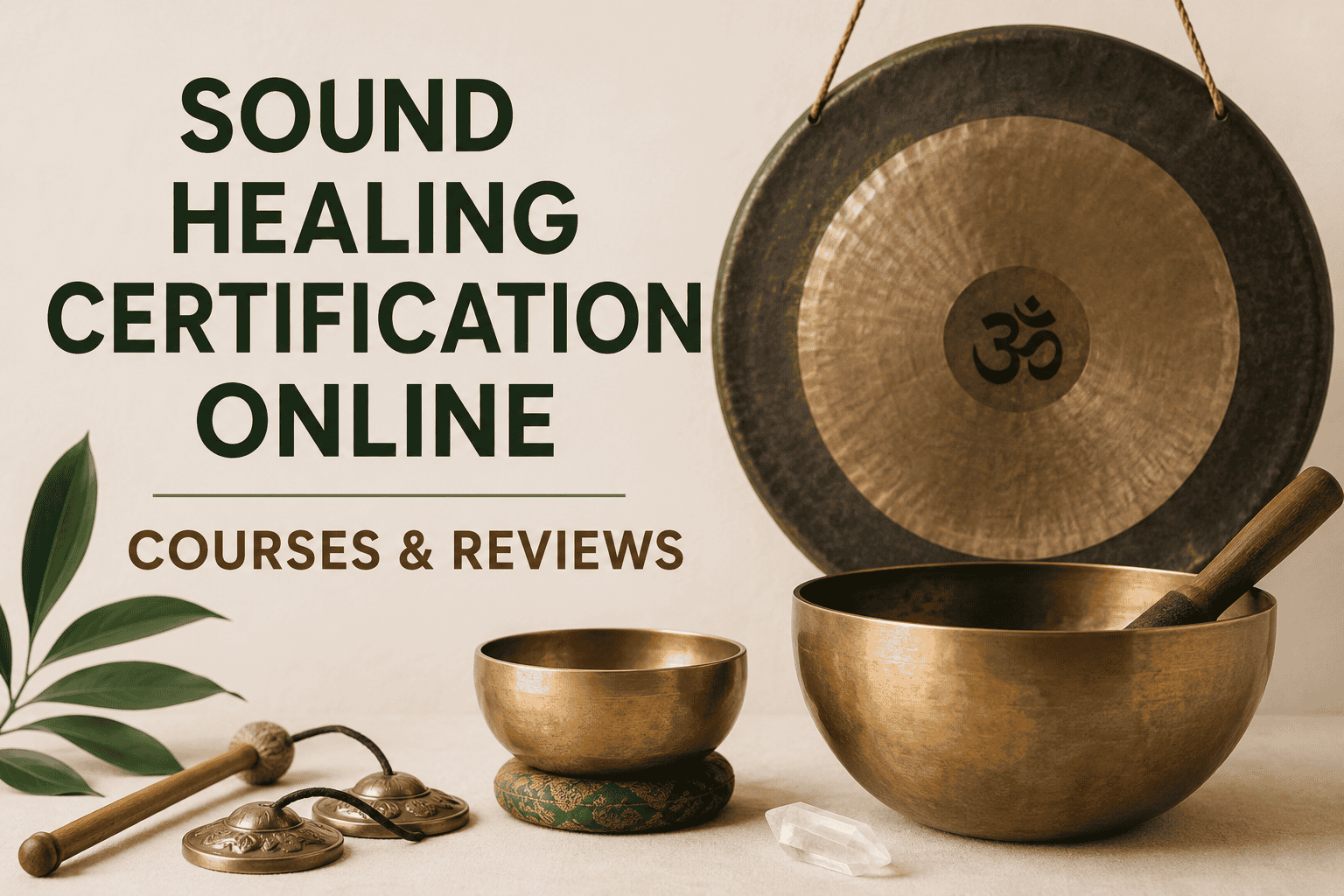
Looking for a sound healing certification online? The best online sound healing certification programs let you master sound healing methods, gain hands-on experience with instruments, and earn recognized credentials—entirely from home. These courses typically cover core science, session guidance, safety, and business development, all guided by experienced practitioners, with flexibility for every schedule.
Introduction: What Is an Online Sound Healing Certification?
There’s something unforgettable about lying in a room filled with the hum of singing bowls and gongs—the air seems to thicken, senses sharpen, and stress melts away. Fast-forward to today, and that soothing experience is no longer confined to yoga studios or retreat centers. Now, with sound healing certification online options growing by the month, just about anyone can learn to skillfully share these therapeutic sounds, right from their own home.
To put it simply, an online sound healing certification is an organized program of study that teaches the science, history, instruments, and ethics of sound healing, culminating in a certificate that affirms your training to clients, peers, or future employers. This isn’t just about learning to play bowls or gongs, but about understanding principles like frequency, resonance, and how to guide safe, meaningful sessions for real people.
The Growth of Sound Healing as a Wellness Practice
Ask anyone working in wellness, and you’ll hear the same thing—sound baths and frequency-based therapies have exploded in popularity. Over the past decade, sound healing has shifted from niche to mainstream, popping up in yoga classes, meditation apps, group therapy sessions, and even hospital programs. People are searching for new ways to unwind, manage anxiety, or enrich their spiritual lives, and the tactile, immersive nature of sound healing hits all the right notes.
It’s not just about relaxation. There’s a growing appreciation for the potential of sound and vibration to support mental clarity, emotional regulation, and even community connection. One could say sound healing moved from fringe territory to a widely respected, research-backed wellness tradition.
Why More People Are Choosing Online Sound Healing Training
Here’s where it gets interesting. While in-person training still has its place, online sound healing certification now makes up a huge part of how new practitioners get started. The reasons stack up fast: online programs are far more flexible for working adults, people with family obligations, and anyone living outside major cities. There’s also more choice—students can now compare dozens of different philosophies, instruments, and teaching styles, rather than signing up for whatever’s offered locally.
Online training isn’t just a pandemic-era solution; it’s a long-term trend. Thanks to recorded video lessons, Zoom feedback, and even virtual practice clinics, today’s digital programs can actually surpass the engagement and mentorship of many traditional classroom experiences. The proof? Graduates who’ve gone on to build practices in everything from sound baths in Atlanta to private one-on-one healing in Arizona or Massachusetts.
Who This Guide Is For
This overview is for anyone scanning through lists of online sound healing certification options, whether you’re a yoga teacher eyeing new studio offerings, a therapist or coach seeking fresh tools, or simply a curious beginner. Sound healing’s appeal has grown beyond health professionals—retreat leaders, corporate wellness organizers, and musicians are all signing up for training. And yes, there’s space for complete beginners, too.
Many people find themselves asking: “Which certification is best for me?”, “Does online really work for skill building?”, or “How much is this actually going to cost?” Having a trustworthy, honest guide is increasingly necessary, since the number of options (honestly, sometimes overwhelming) just keeps rising.
What You Will Learn Before Choosing a Certification
Sorting through all the marketing promises, a strong online sound healing certification should teach you more than just how to strike a bowl or lead a meditation. Expect exposure to the science of vibration and resonance, ethical approaches to healing, session planning, and real-world client scenarios. The curriculum typically blends ancient wisdom, neurology, and hands-on exercises with business basics and session safety. Some courses even go into specialty areas—trauma-informed practices, spiritual frameworks, or advanced instrument techniques.
By reading further, you’ll uncover what separates recognized certifications from quickie workshops, how to tell if a course is beginner-friendly, which programs offer the most bang for your buck, and what it’s really like to launch a sound healing practice after training. Turns out, not all “certifications” are created equal—a recurring sore spot in the field.
What Is Sound Healing Certification?
Definition of Sound Healing Training
Sound healing training refers to structured instruction in the methods, science, and philosophy of using sound as a wellness tool. A proper sound healing certification course online combines instructional modules, demonstration, supervised practice, and often mentorship, resulting in a certification or diploma acknowledged by peers or certain industry bodies. The main difference between mere “classes” and certifications comes down to assessment and scope—a certification generally proves you’ve learned both theory and the core practical skills needed to work with clients or groups[1].
Difference Between Learning Sound Healing and Becoming Certified
Here’s the real distinction: anyone can experiment with sound healing—buy a singing bowl, watch a few YouTube videos, lead a session for a few friends. Becoming certified, however, means following a curriculum with benchmarks: theory, ethics, practice sessions, and typically a formal assessment of your proficiency. Certification signals professionalism in the public eye and, increasingly, legitimizes your services in the world of wellness.
Think of it like driving—learning to steer is one thing, earning your license is another.
What a Sound Healing Practitioner Does
A certified sound healing practitioner uses specific instruments (singing bowls, gongs, tuning forks, voice, and more) to facilitate experiences that can support stress reduction, nervous system regulation, deep rest, and in some traditions, even spiritual insight. Practitioners may work one-on-one, with groups, or in combination with yoga, meditation, or other wellness services. Responsibilities go beyond instrument play—they include session planning, safety screening, and sometimes client aftercare.
Picture a practitioner setting up for a group sound bath: tuning bowls, gauging mood, checking acoustics. They’re as much a facilitator as a musician—holding space, responding in real-time to participants’ needs, and debriefing after the experience. It’s a role blending technical skills, intuition, and people sense.
Why People Choose Certification
More people are seeking certification for credibility, professional development, and—let’s be honest—a sense of personal achievement. Studios, retreat centers, and even some corporate wellness programs may now require recognized credentials before listing you as a facilitator. Beyond institutional requirements, having formal training simply builds confidence; you’ll know your approach is grounded in both science and tradition, and your sessions are safe for all participants.
Is Sound Healing Certification Necessary?
Here’s the thing—a certificate isn’t always legally required (at least not currently in the U.S.), but it’s quickly becoming the gold standard for demonstrating skill and ethical practice. As with other complementary modalities (think yoga, breathwork, Reiki), a “certified” status signals to clients and employers that you’ve studied core topics like session safety, energetic boundaries, and trauma sensitivity. While there’s no universal governing board, certifications from respected schools or associations (like the International Sound Therapy Association, ISTA) hold real weight in the field[2].
Still, some leaders argue experience and presence matter more than paper credentials. Most agree, though, that organized certification opens more professional doors and often results in higher-quality facilitation.

What Do You Learn in an Online Sound Healing Certification?
History and Origins of Sound Healing
Every respected online sound healing certification begins by grounding students in the long lineage of sound as a healing art. Ancient cultures from Tibet to Greece, Egypt to India, all recognized the power of sound—whether through chanting, ceremonial drumming, or the harmonic resonances of singing bowls. Students trace these origins not just for historical flavor, but to appreciate cultural context and avoid appropriation. “Sound always has a story,” as one instructor aptly put it.
The Science of Sound and Vibration
You won’t just learn folklore. Modern courses teach the physics behind how vibration travels, how resonance works, and why certain frequencies sync with brainwaves or nervous system states. Expect modules unpacking entrainment, overtones, harmonics, and even basic psychoacoustics—the mind’s response to sound[3]. Some of the stronger programs tie in references from neuroscience, showing why and how people physically and emotionally respond to tonal shifts.
Understanding Frequency and Resonance
Frequency is the heartbeat of sound healing practice. Students explore how low, sustained frequencies differ in effect from higher, shimmering tones, and why bowls or gongs placed just so can create visceral, full-body sensation. Courses typically teach how to “tune the space”—not just with instruments, but with intention, placement, and timing.
Hands-on modules ask students to calibrate instruments, identify harmonics, and even blend frequencies to target specific energetic or emotional states.
The Relationship Between Sound and the Nervous System
If there’s a “secret sauce” in sound healing, it’s found here. Effective certifications map out how sound can influence the vagus nerve, produce parasympathetic (rest-and-digest) responses, and provide relief for anxiety or chronic stress. This isn’t fluffy talk—students learn to recognize when people have gone too deep (emotional release, tears, or even minor agitation can surface) and how to confidently guide safe journeys[4].
These insights separate pros from hobbyists. Managing client nervous system states is as much a science as an art, and the best programs treat it that way.
Energy and Spiritual Approaches to Sound Healing
Many online sound healing certification programs address energy, subtle body systems, and even spiritual frameworks. For those drawn to chakras, meridian theory, Buddhist or Vedic perspectives, specialty modules explore how sound can “shift energy” or unlock blocked emotions. Teachers walk a line here—stressing the importance of grounded, culturally sensitive practice while providing space for spiritual exploration.
Creating Sound Healing Sessions
It’s one thing to play an instrument, and quite another to lead a session. You learn session structure—opening, intention-setting, sequencing instruments, and bringing participants back gently. Programs break down group vs. private sessions, timing, pacing, and creative use of silence. There’s even focus on practical logistics: acoustics, room setup, and participant comfort.
Working With Clients Safely
All strong programs spend time on safety. This means both physical (contraindications for certain health conditions, proper instrument placement) and psychological (trauma awareness, consent, grounding techniques) safety. Prospective practitioners walk away knowing how to assess client needs, handle strong emotional releases, and ethically refer people out when a situation exceeds their scope. It’s not just about “good vibes”—it’s about care and responsibility[5].
Best Online Sound Healing Certification Courses
Comparing online sound healing certification programs can feel like searching for the right instrument in a giant, echoing shop. The following list brings together respected, highly rated certifications, based on curriculum depth, support, cost-value, and community consensus.
The Sound Healing Academy
One of the most recognized global schools, The Sound Healing Academy sets itself apart with a multi-level pathway (Level 1 Foundations, Level 2 Diploma) and strong tutor support[1]. Its sound healing online certification options include multi-instrument, voice, drums, tuning forks, and specialized pathways for sound bath facilitation. Courses are self-paced but include personalized mentor feedback, community groups, and a formal assessment for certification. The Academy’s online sound healing certification is ISTA-approved with pathways for both entry-level and advanced practitioners.
Pros:
- Comprehensive, evidence-based curriculum
- Active tutor guidance and community
- Global recognition; ISTA-compliance
- Strong practitioner/business training modules
Cons:
- Not the cheapest ($298–$2,600 as of 2025, depending on level)
- Some may find the Level 1 coursework rigorous for casual learners
Seasons of Sound Healing Certification
The Seasons of Sound program stands out for its live-energy video approach—bringing the feel of a group training into your home. Focused on inclusivity and trauma sensitivity, these Yoga Alliance-approved courses blend science, spiritual tradition, and hands-on practice. Personal feedback is a hallmark, and many participants highlight the real community feel[6].
Pros:
- Inclusive, trauma-aware curriculum
- High-quality video demonstrations
- Yoga Alliance approval
- Supportive, interactive instructor team
Cons:
- Best suited for those interested in a rounded, spiritual perspective
- Slightly less focus on business pathways
Sound Medicine Academy
Known for its in-depth, accredited 200-hour sound healing certification program online, the Sound Medicine Academy merges rigorous science (physics, overtones, music theory) with hands-on labs and specialized “PhD singing bowls” modules. Accredited by ISTA, IICT, and CMA, this course is especially valued by those wanting advanced bowl technique, research-based practice, and professional insurance options[7].
Pros:
- Rigorous science and technique modules
- ISTAA, CMA, IICT accreditation
- One-on-one mentorship and detailed assessments
- Includes professional liability insurance (for some tiers)
Cons:
- Breadth may feel overwhelming for beginners
- Bigger time investment than many entry-level programs
Nada Yoga Sound Healing Certification
Specializing in vocal sound healing training and the yoga of sound (Nada Yoga), this certification goes deep into voice, mantra, and subtle body systems. It’s valued for people seeking a rich spiritual context or wishing to work with chanting, toning, and meditative voice work. Courses focus on session composition, safe energetic practice, and cross-cultural understanding. This route suits facilitators who want to move beyond the “instrument workshop” model.
Pros:
- Rich in spiritual and energetic practice
- Deep exploration of voice, chanting, and mantra
- Roots in authentic tradition; cultural sensitivity
Cons:
- Less focus on physical instruments like gongs or bowls
- At its best for those invested in yoga/meditation fusion
Skinny Beats Sound Healing Practitioner Certification
A favorite among those seeking accessible, practice-oriented training. Skinny Beats offers smaller group training, practical assignment reviews, and progressive learning through live-streamed workshops and recorded modules. Its practical focus—getting people “up and running” as practitioners—makes it a magnet for hands-on learners.
Pros:
- Affordable entry-level courses
- Friendly, practical support for new facilitators
- Live demonstration and community mentoring
Cons:
- Smaller-scale recognition compared to schools like Sound Healing Academy
- Not always ISTA-certified or “accredited”
Other Online Sound Healing Training Programs
- British Academy of Sound Therapy (BAST): Academic, research-driven, strong practitioner focus
- YogaRenew: Blends intuitive instrument work with practical-theory modules; excellent for yoga instructors[8]
- Sound Ceremony: Free, beginner-focused classes for personal practice, and deeper journey into voice and daily sound healing[9]
- Udemy Sound Healing Diploma: Affordable, self-paced option covering multiple instruments and business basics[10]
- Globe Institute: 186-hour, college-level Certificate in Sound Healing and Therapy, emphasizing both scientific and energetic foundations[11]
Sound Healing Certification Comparison Table
| Program | Best For | Hours/Format | Accreditation | Typical Price (2025) | Key Features |
|---|---|---|---|---|---|
| The Sound Healing Academy | Comprehensive professional training, career builders | Level 1: 30+ hrs self-paced; Level 2: 200+ hrs with case studies | ISTA, global | $298–$2,600 | Multi-instrument, mentor support, business modules |
| Seasons of Sound | Inclusive, trauma-informed, group facilitators | 30 hrs, on-demand/live cohort | Yoga Alliance | $545 | Trauma-aware, video-rich, inclusive |
| Sound Medicine Academy | Bowl specialists, academic/clinical tracks | 200 hrs, self-paced/live | ISTA, IICT, CMA | $990–$1,500 | “PhD bowl lab”, liability insurance, mentor feedback |
| British Academy of Sound Therapy | Academic, research-based practitioners | 100–200 hrs, cohort with assessments | ISTA | $1,600–$3,000 | Group/indiv., research focus, hands-on |
| YogaRenew | Yoga teachers, beginner practitioners | 20+ hrs, self-paced | N/A | $149 (2025) | Yoga & sound blend, accessible pricing |
| Skinny Beats Certification | Entry-level, hands-on practice | 10+ hrs, live & recorded | N/A | $275 | Live demos, community |
| Sound Ceremony (Free Mini Courses) | Personal practice, cost-conscious beginners | Flexible, variable (mini courses) | N/A | $0 | Voice, daily self-care, no certificate |
Best Overall Certification
The Sound Healing Academy scores highest for depth, support, international recognition, and value for prospective professionals. Its multi-instrument Level 1 & 2 diploma pathway covers the bases from beginner skills to clinical-level facilitation.
Best Certification for Beginners
Looking for accessible learning with real feedback? YogaRenew and Skinny Beats are favorites—affordable, well-produced, and welcoming for total newcomers or yoga instructors branching out[8].
Best Budget-Friendly Option
For those who want to start learning sound healing without a big investment, Sound Ceremony’s free online mini courses are open-access and offer a strong foundation in daily sound work and basic instrument use. While these won’t lead to certification, they help you decide if a full program is right for you[9].
Best Professional Practitioner Training
For those intent on a clinical or advanced practice (think: private clients, medical-wellness collaborations, high-end retreats), Sound Medicine Academy’s 200-hour ISTA-accredited diploma brings rigorous science, deep practice, and professional insurance support.
Best Trauma-Informed Training
Seasons of Sound is well regarded for its inclusive, trauma-aware curriculum, weaving in safety, accessibility, and diversity training as core values. Yoga Alliance approval enhances credibility for facilitators working with sensitive populations[6].
Best Spiritual Sound Healing Training
Nada Yoga Sound Healing Certification excels for those invested in the spiritual, voice-based, or mantra-rich aspects of sound therapy—ideal for practitioners anchoring in meditation or consciousness work.
Types of Sound Healing Certifications Available Online
Singing Bowl Certification
Singing bowl specialization teaches both Tibetan (metal) and crystal bowls. Expect deep dives into overtones, chakra protocol, and session sequencing. Certification often requires practice hours—some programs even include instrument micro-acoustics (“bowl lab” work).
Crystal Bowl Certification
Crystal singing bowls get their own focus due to special acoustic properties and rising popularity. Training covers tone quality, care, chakra matching, and group sound bath structuring. Many online schools provide bowl-specific modules for sound healing online certification.
Gong Practitioner Training
Gongs have a larger learning curve—online certifications typically cover playing technique, session pacing, and safe use, especially in group environments. Programs from the Sound Healing Academy and BAST are strong in this area.
Sound Bath Facilitator Certification
Those captivated by group sessions will find sound bath facilitator certification courses. Emphasis is on multi-instrument blending, participant screening, and creating timed sessions with smooth arcs from start to finish.
Vocal Sound Healing Training
For the voice-focused (Nada Yoga, mantra, toning), certifications explore sacred chanting, overtones, and vocal toning. Online courses include safety around trauma release and emotional “voice opening.”
Tuning Fork Certification
Tuning fork courses go deep into frequency selection, energy balancing, and protocols for targeted therapeutic work. Integral Sound Healing’s programs are especially recognized for their tuning fork training.
Chakra Sound Healing Certification
Aligning sound with chakra models, these certifications blend instrument and voice work matched to each energy center. Modules teach both theory (color, frequency charts) and applied session guidance.
Shamanic Sound Healing Training
Programs in this category incorporate drumming, rattles, and sometimes guided visualization. Training includes space-holding, ceremonial structure, and working respectfully within shamanic traditions (or with modern, secular adaptations).
Yoga and Sound Healing Certification
Many yoga teacher trainings now bundle sound healing modules. These cover session timing, integrating sound into movement or meditation, and yoga philosophy-based sound practice.
How Does Online Sound Healing Training Work?
Self-Paced Online Courses
Today’s most popular format. Students learn through pre-recorded modules, quizzes, and assignments, progressing at their own pace. This works brilliantly for full-time workers or parents—training adapts to your schedule instead of the other way around.
Live Online Training
Some certifications blend weekend live streams with access to recordings. Live Q&A, small group practice, and peer interaction simulate the workshop feel. This both builds community and offers real-time feedback.
Video Lessons and Modules
Nearly all programs center on high-quality demonstration videos—note the difference between “watch and forget” passive classes and interactive lessons requiring student response. Better certifications embed feedback, quizzes, and sometimes forum activity.
Assignments and Practice Sessions
Expect practical homework: recording yourself, mixing sounds, planning a mock session. Many programs require submissions for feedback, which dramatically raises skill retention and confidence.
Student Feedback and Mentorship
Forget the “lone student” model—top sound healing certification program online options assign a mentor, facilitate community groups, or run live feedback calls. This keeps motivation high and learning grounded in real-world practice.
Final Assessment and Certification
Before earning a sound healing online certificate, you generally submit practice recordings, case study reports, or complete a live review. Those who pass receive a digital or physical certificate, often ready for insurance or practitioner directory listings.
What Instruments Do You Learn in Sound Healing Certification?
Tibetan Singing Bowls
The classic “om” tone. Training covers bowl selection, playing technique (rimming, striking, water bowls), body placement, and session integration. Many find the tactile buzz in the palms unforgettable.
Crystal Singing Bowls
Rising stars in the wellness scene, crystal bowls produce shimmering, high-intensity tones. Programs teach safe handling, tone stacking, care, and how to work with participant sensitivity to high pitches.
Gongs
Immersive, sometimes overpowering, gongs call for nuanced training in mallet control, session duration, and creating safe energetic “arcs.” Online instruction often uses multi-camera footage to capture the physicality of gong play.
Tuning Forks
Small but powerful, tuning forks demand precise handling and frequency knowledge. Certification covers everything from anatomical placement for physical work to energetic use in auric fields.
Drums
Shamanic and frame drums add a rhythmic, primal layer. Beyond simple beats, courses teach protocol for group rhythm, intro/outro sequencing, and hands-on bodywork (placement and intensity).
Voice and Chanting
Human voice is the oldest instrument. Trainings in Nada Yoga or similar schools go deep into toning, overtone singing, mantra techniques, and emotional safety.
Chimes
Often used in transition or for a “sparkle” at session openings/closings. Certification shows how to select, care for, and sequence chimes, avoiding overuse.
Other Sound Healing Instruments
Think monochord, ocean drum, rainstick, shruti box, and more. Programs provide sampler lessons so you can discover what calls you—helpful before investing in more expensive tools.
Benefits of Becoming a Certified Sound Healing Practitioner
Start Offering Sound Baths
A certification opens doors for leading group experiences at studios, community centers, and private events. Many students find their first regular clients through public sound baths, especially when partnered with local yoga teachers.
Build a Wellness Practice
With proper credentials, graduates can add sound healing to coaching, therapy, or integrative wellness practices. Some even open dedicated sound studios or offer mobile services for retreats and corporate wellness programs.
Add Sound Healing to Existing Services
Yoga teachers, massage therapists, and counselors now regularly incorporate basic sound healing into classes, workshops, or one-on-one client work, often setting themselves apart in crowded markets.
Deepen Your Personal Practice
Surprising, but true: plenty of certified practitioners never intend to “go pro.” They train for personal growth, meditation depth, and improved self care, often reporting better sleep and stress management in their own lives.
Work With Groups and Individuals
Sound healing bridges solo and group work. Certification means you’ll graduate able to handle both settings, equipped with planning tools and safety know-how for larger sessions or sensitive one-on-one work.
Create Retreat Experiences
Retreat leaders value the credibility and expanded toolkit certification brings. Whether it’s a local day retreat or a far-flung immersion in Bali, sound healing is now a centerpiece draw.
Expand Your Healing Skills
Adding sound healing opens up new dimensions for practitioners in massage, Reiki, breathwork, or meditation. Cross-pollination is everywhere—sound baths with breathwork or “restorative sound yoga” are far more common than ever.
Who Should Take an Online Sound Healing Certification?
Yoga Teachers
Perhaps the largest group jumping into online sound healing certification. Yoga teachers find sound healing integrates effortlessly with classes, meditation, and even business-building. Studio owners increasingly prefer certified practitioners for add-on offerings[8].
Meditation Teachers
For meditation guides, sound expands the palette for inducing deep states or managing group energy. Meditation centers are booking sound bath specialists as a way to attract wider audiences.
Breathwork Facilitators
Sound and breath are natural companions. Many breathwork leaders now blend rhythmic bowls or gongs into sessions, harnessing the synergy for emotional processing and grounding.
Therapists and Coaches
Counselors increasingly add sound healing as a “somatic” option or as part of nervous system regulation techniques. The evidence base is still emerging, but informed, certified facilitators help bridge science with experiential practice.
Wellness Professionals
Nutritionists, health coaches, energy workers, and other wellness specialists benefit from expanding their scope. Sound is an easy way to “stand out” in a crowded field.
Musicians
Professional and amateur musicians often fall in love with the subtlety of sound healing, and certification gives a way to transform music skills into a more intentional healing practice.
Spiritual Practitioners
People on spiritual or shamanic paths use certification to build ritual leadership skills, deepen energetic awareness, or host sacred space for others.
Beginners Interested in Sound Healing
No experience required—most solid programs guide you from A to Z, combining technical sessions, guided practice, and feedback designed for newbies as well as advanced students.
Who Should Avoid Sound Healing Certification?
People Looking for Instant Results
This isn’t a magic bullet for life’s stresses—sound healing training requires study, self-reflection, and consistent practice. Chasing instant transformation is a quick path to disappointment (and possibly client harm).
People Who Do Not Want to Practice
Certification includes practice assignments and assessments. If you’re only interested in theory with zero intention of “playing” or leading, a general sound healing course (non-certification) may fit better.
People Expecting a Medical Qualification
A sound healing certificate isn’t a medical degree. No reputable program claims to “heal diseases”, and trying to practice outside a complementary scope (i.e., making medical claims) gets practitioners—and their clients—in hot water.
People Not Interested in Working With Others
Sound healing is relational. Even if working solo, safety and feedback loops matter. If working with people triggers strong discomfort, or if you dislike group settings, the practice may not be a good fit (or at least, not at the practitioner level).
How Much Does an Online Sound Healing Certification Cost?
Free Sound Healing Courses
Free sound healing classes (like Sound Ceremony’s mini courses) offer a risk-free start. These focus on daily practice, voice, or basic bowl technique, but don’t result in official certification—think of them as a taste-test before you commit[9].
Beginner Certifications
Entry-level certifications typically run $99–$600 as of 2025. YogaRenew ($149), Skinny Beats ($275), and similar schools hit the sweet spot between professionalism and affordability. These often provide “certificate of completion” for studio or private work, minus the rigors of clinical assessment.
Professional Practitioner Certifications
If aiming for insurance, clinical work, or high-end business, expect $900–$2,600 for Level 2 or 200-hour diplomas (Sound Healing Academy, Sound Medicine Academy). These may include specialty mentorship, live assessment, and business modules. The investment signals real commitment—most practitioners report recouping costs within their first six months of sessions[7].
Advanced Diploma Programs
Research-based diplomas from schools like BAST or the Globe Institute can approach $3,000 or beyond, depending on live cohort inclusion, supervision hours, and external assessments. These target advanced practitioners, wellness clinic owners, or people cross-training from allied medical/therapy fields.
Factors That Influence Pricing
- Program accreditation and tutor involvement
- Hours and depth of curriculum
- Instruments included (some kits are bundled in)
- Business and mentorship add-ons
- Professional liability insurance perks
Are Expensive Certifications Worth It?
In wellness training, price doesn’t always guarantee quality—yet “bargain” programs often skip supervision, feedback, or rigorous assessment. Most practitioners find well-priced, supported certifications are “worth it” when launching public practice or building a full- or part-time business. For personal practice only, lower-cost or even free courses can work just fine.
How Long Does It Take to Become Sound Healing Certified?
Short Weekend Certifications
Some programs promise a “fast-track” certificate over a few live sessions or weekend workshops (usually 10–16 hours). These can be a solid introduction but rarely carry insurance eligibility or true professional standing. Great for testing your interest.
4–8 Week Programs
Many blended online programs (20–40 hours) are designed for completion over 4–8 weeks, letting you progress at your own pace but with plenty of feedback checkpoints.
3–6 Month Practitioner Training
For comprehensive certification—especially those with mentorship, supervised practical hours, and live sessions—expect 3–6 months of consistent study and practice. This timeline gives students space for assignment feedback and real session experience.
Long-Term Professional Pathways
Advanced routes, such as BAST or Globe Institute’s diploma tracks, can stretch over a year, particularly if combined with in-person retreats or case study portfolios. These become deeper professional commitments or career pivots rather than side interests.
Online vs In-Person Sound Healing Certification
Advantages of Online Training
Flexibility is king—study at your own pace, rewind demonstration videos, ask questions anytime, compare instructors from around the world. Online sound healing training works well for people balancing jobs, family, or remote living. Plus, the best programs have built-in mentorship for real-time guidance.
Advantages of In-Person Training
Some skills benefit from in-person correction (instrument grip, group session “flow”). Community building, peer jam sessions, and physical experience with rare instruments still make workshops in places like Bali, New York, or Arizona appealing. Hands-on practice is hard to replicate, especially when it comes to subtle energetic or group dynamics.
Learning Instruments Remotely
You can absolutely learn to play bowls, create sound arcs, and guide basic sessions remotely. However, there’s no substitute for in-person feedback on subtleties like pacing, volume dynamics, and room acoustics.
Building Confidence as a Practitioner
Here’s a little secret: most online programs require sending in practice session videos for evaluation—so you’re still “seen” by an expert. For some, the home environment actually beats the pressure of in-person review. That said, real-world group practice post-certification will always deepen your skills.
Which Option Is Better for Beginners?
For most, a hybrid is ideal—start online, then seek out a live workshop or local sound bath to hone your new skills. Online options are unbeatable for accessibility; in-person may be best for those who thrive with hands-on group learning.
What Makes a Good Sound Healing Certification?
Experienced Teachers
Seek out programs led by teachers with real practice—ask about lineage, teaching history, and active session work. Certification should never be 100% automated; mentorship matters.
Practical Training
Theory is vital, but competent programs require session planning, practice with instruments, and real assignment feedback. A certificate without hands-on assessment is little more than a participation ribbon.
Real Client Practice
The best programs require—or at least strongly encourage—practice with real people, not just self-recordings. Some Level 2 certifications insist on documented case studies or live video sessions.
Clear Curriculum
A well-organized curriculum blends history, science, ethics, practical modules, and session structure. Avoid schools with too much “mystery” or unclear milestones.
Safety and Ethics Training
Every legitimate certification covers contraindications, scope of practice, boundaries, and trauma-awareness tools. This separates real training from “just play some bowls and see what happens.”
Mentorship and Support
Responsive tutors, active peer groups, and opportunities for feedback transform online learning from passive to interactive. Most students cite active mentorship as the reason they finish and feel confident.
Recognized Certification
Global or national recognition (e.g., ISTA approval) boosts your credibility and insurability. Well-recognized certificates hold up when you apply to studios, retreat centers, or add “sound healing practitioner” to your website.

Can You Become a Sound Healing Practitioner Online?
What Skills Can Be Learned Online?
Most foundational skills—instrument technique, session design, ethics, safety—translate well in digital format. Modern platforms now enable real-time feedback via video submissions or live practice clinics.
What Requires Personal Practice?
Personal energy management, intuition, group facilitation confidence, and handling strong emotional releases only come with lived experience. Certification is a stepping stone; genuine confidence grows with every real session you guide or attend (online or IRL).
Building Confidence Before Working With Clients
Mentored assignments, peer practice swaps, and small group rehearsals help build comfort before going public. Many practitioners “practice” on friends and family before charging for their work—a natural step in the process.
Creating Your First Sound Healing Session
Your program will guide you through structuring an opening, sequencing instruments, pacing, and closing a session. Over time, you develop your unique style—sometimes blending sound baths with movement, meditation, or partner practices.
How to Start a Sound Healing Business After Certification
Offering Private Sessions
The bread-and-butter for new practitioners. Start with low-cost demos for friends, then transition to paid private work. Don’t underestimate the power of word-of-mouth—one satisfied client often brings three more.
Hosting Group Sound Baths
Community classes in yoga studios, libraries, or outdoor venues open doors fast. Group sound baths are easier to scale and market compared to private therapy, and many practitioners run monthly or biweekly sessions.
Working With Retreat Centers
Approach retreat organizers with your credentials, demo videos, and description of your unique flavor of sound healing. These partnerships often grow into regular income streams or meaningful collaborations.
Combining Sound Healing With Yoga
Leverage your dual skills—offering yoga and sound workshops is a proven client draw. Studios love facilitators who can safely combine movement and sound bath relaxation in single experiences.
Combining Sound Healing With Breathwork
Many new businesses build entire curricula around this synergy—sound healing helps participants integrate breath journeys or process the emotion that emerges. Breathwork facilitators easily add value by incorporating bowls, gongs, or tuning forks.
Creating Online Sessions
Zoom and other platforms have normalized remote sound baths and one-on-one healing. While in-person resonance is tough to replicate, a surprising number of clients prefer the “home comfort” experience—if your audio tech is up to par.
Marketing Your Practice
Start locally—flyers at gym, yoga studio, therapist’s office. Referrals via past clients are gold. Cultivate an authentic online presence (brief demo videos, session info, testimonials), and consider partnering with other practitioners for visibility.
Sound Healing Certification vs Other Healing Certifications
Sound Healing Certification vs Breathwork Certification
Breathwork and sound healing share nervous system aims—regulation, stress relief, emotional processing. Breathwork requires careful physical facilitation, while sound healing is more focused on instruments and auditory cues. Many practitioners combine both, but sound healing presents fewer contraindications and a gentler entry point for many.
Sound Healing Certification vs Yoga Teacher Training
Yoga teacher training provides a comprehensive approach to movement and occasionally incorporates sound, but rarely digs into the nuance of vibration, frequency, and instrument technique. Adding a sound healing certification online is increasingly popular for RYT-200+ instructors eager to expand their toolkit and market appeal.
Sound Healing Certification vs Reiki Certification
Reiki is primarily hands-off energy work, rooted in Japanese tradition, with emphasis on “universal life force energy.” Sound healing is more somatic—participants actually “hear and feel” the therapeutic effect. The certifications can be complementary, yet appeal to slightly different audiences.
Sound Healing Certification vs Meditation Teacher Training
Meditation teacher training focuses on guiding stillness and inward attention, sometimes with voice or limited sound cues. Sound healing’s emphasis is on external stimuli—wave-like sounds that often induce meditative states. Many students later report that adding sound healing makes their meditation offerings more grounding and versatile.
Sound Healing Certification vs Music Therapy
Music therapy is a licensed clinical field, often requiring a master’s degree, with a research-heavy and clinical approach to treatment using music. Sound healing, while therapeutic, is not a clinical medical intervention. Instead, it works as a complementary modality within wellness settings. Trying to blend the two without proper credentials is a common yet risky misstep.
What Happens After Completing a Sound Healing Certification?
Practicing Your Skills
The real journey starts after your certificate arrives. Practitioners are urged to “practice, not just perform”—running sessions for family, friends, and peer groups before opening to wider audiences.
Building Experience
People talk about “finding their groove”—session by session, you get a feel for timing, flow, group energy, and even handling the inevitable “what if” moments (crying, laughter, snoring). Each client is a learning opportunity.
Finding Your First Clients
Start with your own networks, offer donation-based or sliding scale practice, and actively collect feedback/testimonials. Word spreads faster than you’d expect—especially in local yoga or meditation communities.
Continuing Education
Lifelong education is normal—many practitioners add new instruments, attend workshops, or explore advanced offerings as the field evolves.
Developing Your Unique Style
Over time, practitioners blend what calls them—voice, instruments, movement, or even unique storytelling. The most memorable facilitators are often those who let personality and passion shine through disciplined practice.
Common Mistakes When Choosing a Sound Healing Certification
Choosing Only Based on Price
Price matters, but focusing on the cheapest option risks skipping out on depth, mentorship, or recognition. The “you get what you pay for” warning rings true here.
Not Checking Teacher Experience
Too many courses hide behind impressive websites but lack hands-on instructors. Dig into faculty bios and ask for lineage or practical training background.
Avoiding Practical Training
It’s easy to be drawn to “just watch and learn” options, but real skill comes from guided practice—and programs with feedback loops.
Buying Too Many Courses
Jumping from one certification to the next without embedding skills leaves many with impressive certificates but little real-world competence. Completion and integration matter more than quantity.
Expecting Certification Alone to Build a Career
A certificate unlocks the door—success comes from continued practice, client relationships, and learning from real-life challenges. Longevity in the field is built on people skills as much as playing technique.
Is Sound Healing Certification Worth It?
Benefits of Becoming Certified
Certification opens career pathways, adds legitimacy, and deepens personal growth—plus, many students report profound shifts in their own well-being. Many actually recoup the course investment within the first year, thanks to growing demand for certified facilitators.
Limitations of Certification
It doesn’t confer medical qualifications, or guarantee instant clients. Some programs are better recognized than others; “diploma fatigue” is real if you chase every new title rather than skills. The field remains unregulated, so responsibility for quality falls on the practitioner.
Career Opportunities
From building a solo practice, joining a wellness center, or leading workshops at festivals, the diversity of options is impressive. Teachers, coaches, and studio owners all report an expanding menu of work for certified sound healing practitioners.
Personal Growth Benefits
For many, certification leads to an unexpected side effect—deeper self-awareness, improved stress management, and continual restocking of one‘s personal well-being toolkit.
Who Gets the Most Value From Training?
Those ready to take responsibility for their learning, commit to real practice, and engage with a community—at whatever level—find the greatest long-term value.
Frequently Asked Questions About Online Sound Healing Certification
What is the best online sound healing certification?
There’s no universal “best”—but The Sound Healing Academy consistently ranks high for curriculum depth, recognition, and support. Seasons of Sound and Sound Medicine Academy are popular with those seeking trauma-informed, advanced, or spiritual-centered training.
Can I become a sound healer online?
Yes. With structured training, video feedback, practice modules, and mentor support, online certifications can fully equip you for real-world private or group sessions. Seek programs with practical assessment, not just video content.
Do I need musical experience?
Not at all. Most successful practitioners enter with zero music background—training covers instrument technique, session pacing, and foundational rhythm, often from the ground up.
Do I need instruments before starting?
Some entry programs let you observe or use basics (voice, breath), and recommend purchasing as you progress. Expect to invest in at least one entry-level instrument (often included in higher-priced certification fees).
How much does sound healing certification cost?
As of 2025, programs range from $0 (free mini courses) to $3,000+, with most strong certifications in the $298–$2,600 bracket. Higher fees generally relate to live assessment, mentorship, or recognized accreditation.
How long does certification take?
Anywhere from a weekend (intro level) to six months (Level 2/professional diplomas), depending on course rigor and your schedule.
Is sound healing certification recognized?
Top programs—especially those accredited by organizations like ISTA, IICT, or Yoga Alliance—are recognized globally by wellness studios, retreat centers, and insurance providers.
Can I make money as a sound healer?
Yes—many practitioners build part- or full-time practices, supplement existing work, or lead sought-after workshops and retreats. The field has grown quickly; demand is strong, though competition can be high in major cities.
Can beginners become sound healing practitioners?
Yes. Well-structured programs guide absolute beginners to skilled, safe practice in stages, usually pairing video instruction with feedback and support.
What instruments should I learn first?
Start with what draws you—Tibetan or crystal bowls are user-friendly, gongs for the committed, voice for minimalists. Many begin with bowls, then add tuning forks, drums, or chimes as practice grows.
References
- The Sound Healing Academy. Certified Online Sound Healing Courses. Academy of Sound Healing. https://www.academyofsoundhealing.com/onlinecourses. Accessed July 2026.
- International Sound Therapy Association. Education & Programs. ISTA. https://istasounds.org/education-programs/. Accessed July 2026.
- Meditation Music Library. 10 Best Sound Healing Online Courses – Meditation Music Library. https://meditationmusiclibrary.com/blogs/wednesday-wisdom-blog/10-best-sound-healing-online-courses. Accessed July 2026.
- Meditation Music Library. 10 Best Sound Healing Online Courses – Meditation Music Library. https://meditationmusiclibrary.com/blogs/wednesday-wisdom-blog/10-best-sound-healing-online-courses. Accessed July 2026.
- Sound Healing Academy. USA Sound Healing Training Workshops. Academy of Sound Healing. https://www.academyofsoundhealing.com/usa-sound-healing-training-workshops. Accessed July 2026.
- Meditation Music Library. 10 Best Sound Healing Online Courses – Meditation Music Library. https://meditationmusiclibrary.com/blogs/wednesday-wisdom-blog/10-best-sound-healing-online-courses. Accessed July 2026.
- Sound Medicine Academy. Sound Healing Teacher Training Certification. https://www.soundmedicineacademy.com/courses/sound-healing-teachers-training-online. Accessed July 2026.
- YogaRenew. Sound Healing Training. https://www.yogarenewteachertraining.com/workshops/sound-healing/. Accessed July 2026.
- Sound Ceremony. Free Online Sound Healing Courses. https://www.sound-ceremony.com/free-online-mini-courses. Accessed July 2026.
- Udemy. Sound Healing Practitioner Diploma. https://www.udemy.com/course/sound-healing-practitioner-diploma/. Accessed July 2026.
- Globe Institute. Certificate in Sound Healing and Therapy. https://soundhealingcenter.com. Accessed July 2026.



 Your personalized retreat result