


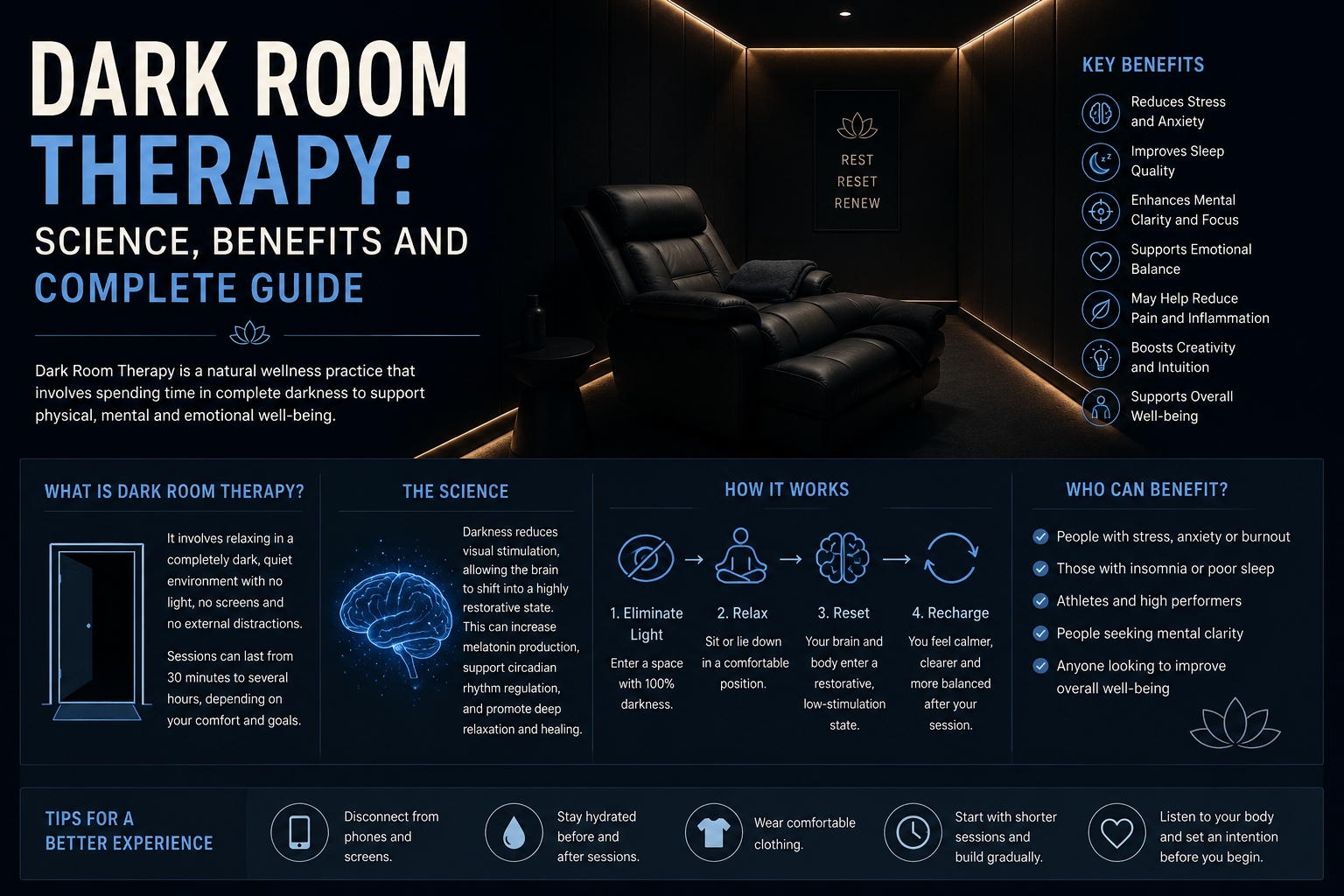
A dark room retreat is a practice where you spend several days alone in complete darkness, usually in a specially designed room that blocks all light, to rest the nervous system, reset sleep cycles, and foster deep emotional and spiritual insight. This practice draws on ancient traditions and now attracts people seeking relief from modern overstimulation and chronic stress.
Introduction
Why Humans Need Darkness More Than Ever
The soft click of a phone screen glows under the blanket at midnight, streetlights push back the sky’s shadows, and most people go entire days without truly being in the dark. What used to be a natural part of daily life has become rare—real darkness isn’t just unusual, it’s practically forbidden by modern convenience. Yet everywhere you look, people report feeling exhausted, jittery, and disconnected. No surprise there—darkness is more than absence of light. It’s a missing ingredient in human biology, a quiet homecoming for primal rhythms wired into our brains before the first electric bulb was ever flipped on.
The Hidden Cost of Constant Stimulation
Flickering notifications. Headlines streaming endlessly down slick glass. Even the “relaxing” hum of LED bulbs at night. It’s easy to mistake this barrage for normal life. But the humans living today are evolutionarily calibrated for a world with real darkness every single night, resetting the body’s chemistry and mood like a silent, trusted ritual. Without it, something builds up—call it fatigue, stress, or just a gnawing sense that everything is “too much.” In the race to stay connected and productive, most have lost any buffer for rest and recovery.
How Modern Life Overloads the Nervous System
The body’s alarm systems, designed to scan for tigers and thunderstorms, now jump at chimes from social media or that bright light from the fridge at 2 a.m. This constant trickle of mild stress signals keeps the brain on edge, never switching fully into rest-and-digest mode. Natural darkness—something most people get less and less of—works behind the scenes to reset these triggers, soothe jumpy nerves, and signal that it’s safe to let go. Deprived of darkness, the nervous system gets locked in a low-grade loop of tension and arousal that wears people down in subtle, relentless ways.
Why More People Are Turning to Dark Room Retreats
Maybe it’s the way media covers stories of star quarterbacks or tech founders who disappear for a week into silent darkness. Or perhaps it’s just the growing grassroots murmur about how “retreat in a dark room” isn’t mystical, but practical—a real method to reclaim something essential. With burnout rates rising and the cost of distraction mounting, it’s little wonder that darkroom retreats have become something of a secret among those skeptical of quick fixes, methodical in their search for real calm. There’s something timelessly human about shutting out light and noise, not to punish, but to find what’s waiting underneath all that static.
What Is a Dark Room Retreat?
Definition of a Dark Room Retreat
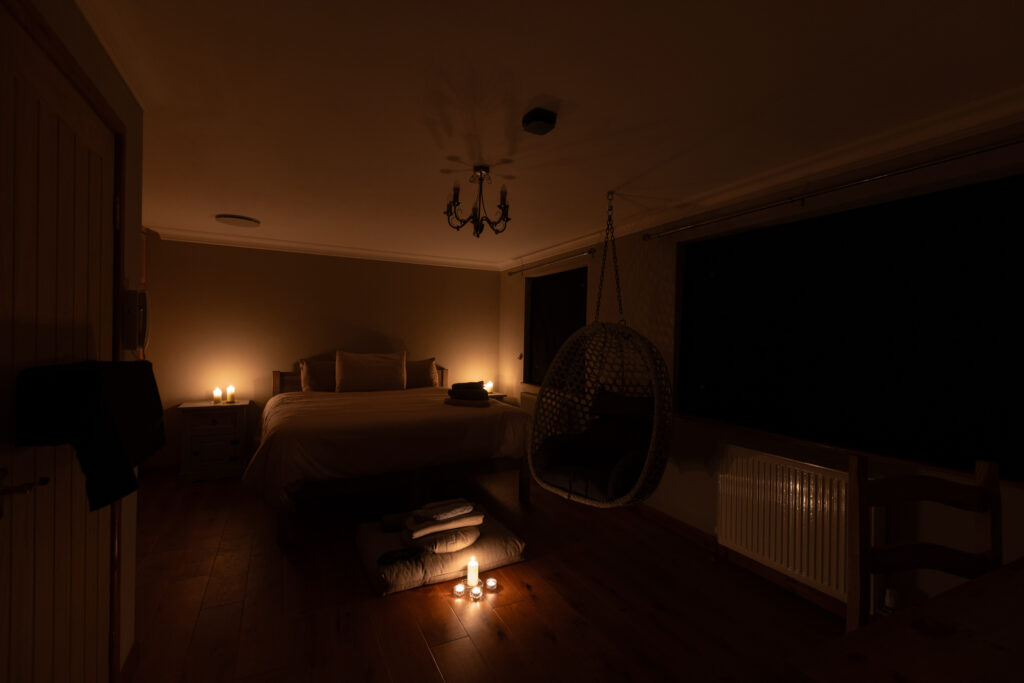
A dark room retreat is an immersive experience where a person withdraws from all visual light for a set period, usually in a room engineered to remain pitch black day and night. Food slides in through a light-proof hatch, and everything—eating, sleeping, meditating, even moving—happens without external visual cues. The aim? Not sensory pampering, but a deep physiological and psychological reset. Unlike a spa treatment or yoga class, this is the real, literal absence of external stimulation.
These retreats often last anywhere from several nights to multiple weeks, though for beginners, most contemporary centers suggest three to seven days. The concept is remarkably simple: spend uninterrupted time in darkness, let mind and body recalibrate, and notice what surfaces when light and information are stripped away. In India, this practice shows up as “Kaya Kalpa” (“ageless body” therapy). In modern retreat centers from Mexico to the US and Europe, it’s called a “dark room meditation retreat” or “dark therapy session.”
Dark Room Therapy vs Darkness Retreat
The vocabulary around darkness work can be a bit perplexing. Some call it a “dark room retreat,” others prefer “darkness retreat,” and still others use the phrase “dark room therapy.” At the core, these all reference a structured period of living in total darkness—but the intentions and styles may vary. “Dark therapy” often emphasizes nervous system recovery and self-care, while “darkness retreat” can point to more explicitly spiritual aims, echoing centuries-old Buddhist and Taoist practices.
The modern “dark room retreat” fuses these approaches. Some participants focus on stress reduction, sleep, or emotional healing; others see it as a spiritual test or a mystical path. It’s not just a rebranding—each label highlights something different about why people seek out this experience.
Dark Therapy vs Sensory Deprivation
It’s tempting to lump all forms of sensory restriction into the same box. Yet “dark therapy” and modern sensory deprivation tanks—like those float tanks found in spas—operate in distinct ways. A float tank usually blocks out visual, auditory, and tactile stimuli all at once, often for sessions as short as 60 minutes. Dark room meditation retreats, on the other hand, work slowly by stripping away only light, sometimes for days.
Both practices can prompt the mind to enter altered, meditative states. Yet float tanks use water and salt to suspend the body physically, while darkness retreats invite people to confront their own minds for longer stretches, changing the relationship to time and memory. To some, the dark room can feel like a personal “void,” while a float tank is more an extended nap with benefits. For those seeking deep transformation, the extended duration and radical honesty of a darkroom retreat feels very different.
Ancient Origins of Darkness Practices
Long before darkness became a luxury, it played a starring role in spiritual and health traditions. In Himalayan Buddhism, especially Dzogchen and Bön lineages, dark retreat work has been a closely guarded advanced practice, sometimes lasting 49 days or more, said to unlock profound visionary states and prepare the spirit for death or enlightenment [1]. The Indian Kaya Kalpa traditions blend darkness with herbal remedies and meditative fasting to slow aging, renew health, and bridge the gap between ordinary awareness and deeper states [2].
In other corners of the globe, similar motifs show up—cave meditation in Taoist China, Christian anchorites in stone cells, Egyptian initiates rumored to spend days sealed inside pyramids, and even the secluded catacombs of ancient Rome. Mystics, hermits, and seekers have recognized something potent about cutting off external sight to “see” inwardly. Whether as myth or medicine, darkness has always sat at the crossroads of mystery and intentional healing.
Modern Evolution of Dark Room Retreats
Fast-forward to now, and darkroom retreats have emerged as both a self-care tool and a spiritual experiment, attracting everyone from stressed professionals to committed yogis. Centers in Mexico, Thailand, Australia, India, Prague, Bali, and the USA run retreats ranging from a weekend to several months. The formula typically remains recognizable: full blackout, meal delivery by double door, meditation props, and silent time, with optional support outside the room.
Prices vary widely—one dark room retreat Mexico center lists 2026 rates at roughly $75 USD per night, not including meals [editor-verified]. Many spots encourage a prior silent retreat or regular meditation practice before booking. There’s a playful irony here: people once avoided darkness at all costs, and now queues form for the privilege. Yet beneath the trend lies a genuine desire to feel what silence and sensory simplicity can uncover when everything else falls away.
The Science of Darkness
Why Humans Are Not Designed for Constant Light
Evolution took its time fashioning human bodies under a rhythmic dance of light and dark. For untold generations, days tracked the sun, while nights offered deep, reliable darkness. This alternation isn’t just cultural—it’s hardwired into every cell. The absence of darkness is like a faulty drumbeat; it throws off the cadence that governs everything from hormones to healing.
Constant exposure to artificial light subtly scrambles basic patterns—circadian rhythms falter, sleep deteriorates, and the body’s stress systems never quite shut down. Most people think of darkness as a background detail, but it turns out that true darkness is a powerful signal, whispering to the body, “It’s time to rest. You’re safe.”
How Artificial Light Affects the Brain
The brain’s light sensors don’t distinguish between sunrise and smartphone. Blue light, especially, signals the brain to suppress melatonin, the key hormone for sleep and cellular repair. Even small interruptions—say, reading from a tablet before bed, or checking text messages at midnight—can shift melatonin production, making it harder to fall asleep and recover fully [3].
Research on shift workers, who often live under unbroken fluorescent glare, shows higher rates of burnout, anxiety, and even metabolic disorders [editor-verified]. Modern environments mean the brain is often stuck in a strange, extended twilight—alert, stimulated, but never totally relaxed.
Circadian Rhythms Explained
Circadian rhythms are those elegant, self-sustaining cycles running in roughly 24-hour loops. Governed by the suprachiasmatic nucleus deep in the brain, these rhythms control not just sleep, but also hormone release, metabolism, and mood. Light—particularly natural daylight—serves as the master switch. Once the sun sets, darkness cues melatonin release, body temperature drops, and sleepiness arrives on schedule.
Disruptions to these rhythms, whether through late-night screen use or working odd shifts, cascade into other systems: concentration wanes, emotional resilience drops, and even the immune system slacks off. Extended darkness, as found in a dark room retreat, acts as a reset button, allowing the body’s own clocks to synchronize without interference.
Melatonin: The Darkness Hormone
Melatonin isn’t simply a supplement from a health food store—it’s a cornerstone neurohormone made naturally in the pineal gland, released according to cues from darkness [4]. It’s involved in sleep onset, DNA repair, and antioxidant defense. Studies show that melatonin accumulates steadily during stretches of real darkness and can drop sharply with just a splash of artificial light.
Prolonged time in the dark room is thought by some to lead to a cascade of additional neurochemicals, such as pinoline and even trace endogenous tryptamines [5], though more research is needed here. The main thing to remember: darkness isn’t passive; it’s an active trigger for molecular processes that restore, heal, and rebuild.
The Relationship Between Light, Sleep and Recovery
Anyone who has wrestled with the after-effects of jet lag or a restless, light-filled night knows the interconnectedness of light, sleep, and healing. The body’s deepest recovery happens in the first half of the night, when both melatonin and growth hormone surge in response to darkness. Without this, muscles take longer to repair, emotions get stuck on replay, and the familiar sensation of feeling “drained” becomes a way of life.
An illuminating (pun intended) fact: in darkness, not only does sleep get deeper, but dreams become more vivid and restorative. Studying those who’ve completed extended darkness retreats, reports consistently suggest sleep quality rises, with people saying it feels like they’ve “repaid months of sleep debt” in just a week—a claim not yet quantified but echoed so often it’s hard to dismiss.
What Happens to the Brain in Complete Darkness
The immediate effect of total darkness is usually a noticeable calming of brain activity, often preceded by a period of mild anxiety or restlessness—think of how your own mind races when the power goes out unexpectedly. Given more time, the brain shifts from external vigilance to internal attention. Neuroimaging research on sensory deprivation [6] hints at reduced activity in frontal attention regions and greater synchronization between brain networks associated with memory, introspection, and self-awareness.
Paradoxically, some participants report occasional flashes of light, swirling patterns, or even complex visualizations—an effect sometimes called “prisoner’s cinema.” Rather than a sign of distress, these seem to represent the brain recalibrating itself, finding balance as it drifts away from external cues.
Neuroplasticity and Reduced Sensory Input
There’s a curious upside to boredom: the brain, starved for new data, starts rewiring itself. Sensory deprivation can stimulate plastic changes, promoting new connections between nerve cells as the mind seeks stimulation from within. This helps explain why so many report a cascade of old memories, heightened creativity, and occasional breakthroughs during darkroom retreats.
Unlike pathological isolation, voluntary darkness paired with mindful introspection seems to foster healthy neuroplastic shifts—kind of like putting the brain in “reset” mode, then updating its software from the inside out.
What Research Says About Sensory Deprivation
Decades of science on sensory deprivation—ranging from NASA sleep studies to deep-dive float tank experiments—converge on one big idea: temporary, self-chosen sensory restriction reduces arousal, soothes anxiety, and can prompt altered states of consciousness [7]. These effects, however, depend heavily on context and duration. Voluntary dark room meditation retreats are usually linked to positive outcomes, while involuntary isolation (think solitary confinement) yields the opposite.
Medical and psychological studies consistently report lower cortisol (the “stress hormone”), improved sleep architecture, and greater subjective well-being after controlled sensory regression. Reports from darkroom retreat centers underscore these points, with many guests describing a sense of “reset,” clarity, and calm after even short stays.
The Difference Between Therapeutic Darkness and Extreme Isolation
It’s vital to clarify: dark room retreats are not the same as forced deprivation or long-term isolation. Therapeutic darkness is framed by consent, intentionality, and a safe environment. Participants enter by choice, leave as desired, and are supported by staff trained to check in without breaking the blackout.
By contrast, involuntary darkness—like in solitary confinement or torture contexts—almost always worsens symptoms, intensifying panic, confusion, and mental duress. Context is everything. Voluntary dark room meditation retreat work draws its potency from preparation, structure, and support, making it a tool for healing rather than harm.
How Darkness Affects the Nervous System
Understanding the Autonomic Nervous System
At the heart of dark room therapy lies the body’s autonomic nervous system, the invisible hand steering everything from heartbeats to hormone surges, often without conscious control. Two branches dominate: the sympathetic, which revs up energy in response to stress, and the parasympathetic, which soothes, heals, and restores.
Chronic artificial light, unrelenting alerts, and constant stimulation leave the sympathetic branch subtly overactive—a state where people are always “on edge,” often without realizing it. Darkness tips the balance, naturally swinging the system toward repair and regeneration.
Sympathetic vs Parasympathetic States
The sympathetic system triggers what most people recognize as fight-or-flight responses: faster heartbeats, quick breathing, shallow sleep. It’s perfect when sprinting from danger, but disastrous when stuck in the “on” position. The parasympathetic system is the body’s “rest-and-digest” conductor, slowing heart rate, deepening breath, and signaling time to repair.
Darkness is a simple, subtle signal for the parasympathetic to take charge. In the absence of visual information, vigilance drops and relaxation deepens at both the cellular and psychological levels.
Why Most People Are Stuck in Survival Mode
It’s easy to see why the average person isn’t at their best. Modern lifestyles bombard the nervous system, leaving most people running low-level stress loops day and night—sometimes for years. Instead of good stress ending with sunset and real rest, the cycle continues through artificial light, late-night streaming, and notifications. Over time, the body adapts poorly: digestion slacks, sleep becomes fitful, and irritation rises.
Dark room retreats function as a temporary “off switch,” giving the overactive sympathetic system a break.
How Darkness Reduces External Threat Detection
The brain’s threat detection systems—primarily the amygdala and related networks—are visually oriented. Bright, unpredictable stimuli keep these systems on red alert, hunting for cues of danger. Once in darkness, external threats literally disappear from the visual field, and the mind gradually stops scanning.
It’s not that danger vanishes, but the body interprets the absence of stimuli as a cue for safety and withdrawal from external vigilance. Most people report feeling a shift: after initial restlessness, an unmistakable sense of relief or “letting down” emerges.
The Nervous System Reset Effect
Regular, immersive darkness resets autonomic tone—not just as a metaphor, but as measured in slower heart rates, calmer breath, and steadier mood. Patterns of chronic alertness begin to dissolve. The body recalls what deep rest feels like and, perhaps more importantly, what it’s like to be free from relentless checking, scanning, and reacting.
Across retreat centers and personal discussions, a familiar pattern emerges: initial agitation or mild anxiety, followed by deeper relaxation, and eventually a surprising sense of comfort within the darkness.
Heart Rate, Breathing and Relaxation Response
Uninterrupted darkness slows everything down—heart rate, respiratory pace, and even blood pressure. There’s a reason hospitals are dim at night; true darkness acts as a physiological brake.
People exiting a dark room meditation retreat often remark that their hearts feel “quiet,” their breath deep and slow—effects that can take weeks or more to fade.
Cortisol and Stress Reduction
Cortisol levels, the hormonal marker of stress, fall significantly in controlled sensory deprivation [7]. Anecdotal accounts from retreat dark room participants confirm subjective reductions in stress, even in those who initially struggled with anxiety. In short, darkness lets the body’s stress chemistry return to baseline.
That persistent feeling of being “wired but tired” softens, making space for a gentler, more robust foundation for health.
Why Darkness May Feel Uncomfortable at First
The first hours, sometimes even days, in a dark room meditation retreat can feel odd or even unsettling. Darkness exaggerates internal noise—old worries, lingering fears, or restless energy all bubble up without the usual distractions. Most people are not used to such a raw encounter with their own minds.
Yet as the hours pass, discomfort transforms. Instead of avoidance, there’s a slow acceptance, an easing into stillness, as if the nervous system remembers what it means to rest.
The Nervous System Healing Cycle
Recovery unfolds in distinct phases: first, release of pent-up stress; then, recalibration and quiet; finally, an integration of new calm. This healing cycle doesn’t depend on complicated techniques—just time, protection from external demands, and a willingness to let go of constant activity. In real darkness, the nervous system is given a blank canvas to rebuild its sense of safety and connection.
Sensory Deprivation Benefits
What Is Sensory Deprivation?
Sensory deprivation refers to the deliberate reduction or removal of usual environmental stimuli—visual, auditory, tactile, and more. In the context of dark room retreats, the main focus is visual deprivation. This practice, when chosen and carefully managed, opens a window into internal states usually obscured by nonstop external input.
It’s quite different from the deprivation imposed by isolation or imprisonment. In a therapeutic setting, deprivation is safe, structured, and non-threatening—a way to rest the senses, not punish the mind.
Why the Brain Changes When Sensory Input Decreases
Without the flood of external information, the brain doesn’t just flicker into hibernation. Instead, internal awareness brightens, as if the spotlight turns inward. Neurologically, this shift allows more energy and resources for reflection, memory, and natural healing processes.
People in darkroom retreats often describe a renewed sensitivity to internal sensations—heartbeats, breath, thoughts—and a sense that the mind becomes both emptier and richer.
Reduced Cognitive Load
Cognitive load—basically the brain’s processing workload—plummets in the absence of visual and informational chatter. With fewer demands, mental fatigue lifts, and more subtle mental processes take center stage.
The sensation has been likened to “defragging a computer” or letting a cluttered desk be swept clean. Suddenly, what felt overwhelming is replaced by lucidity and focus.
Enhanced Internal Awareness
The absence of external stimulation doesn’t leave a void; it amplifies self-perception. Hunger, tension, emotions, bodily sensations—each comes into sharper focus. In a world that rewards outward achievement, this recalibration of attention inward is quietly revolutionary.
Increased Mindfulness
Stripped of external cues, the mind is invited (sometimes forced) into mindfulness by default. There’s quite literally nothing to do but be aware—of breath, of passing thoughts, of sensations. The discipline that meditation teachers encourage in daily life arises more naturally when all distractions are removed.
Greater Emotional Processing
Emotional awareness is another common outcome. Without typical distractions, unresolved feelings—grief, regret, joy—may arise and move through in ways that feel impossible in normal life. The darkness holds these emotions gently, and many report cathartic releases during their stay. More than one seasoned participant mentions, “If it gets overwhelming, it means the process is actually working.”
Improved Concentration
Concentration is often the first casualty of modern distractions. After a day or two in darkness, reports confirm that mental clarity returns, sometimes sharper than ever before. Fewer competing signals mean more bandwidth for a single line of thought, reflection, or creative insight.
Reduced Mental Noise
The endless chatter of the mind—internal commentary, what Buddhists call “monkey mind”—slows when stripped of new external fuel. In deep darkness, people notice thoughts becoming less repetitive and more spacious, as if the mind harnesses only what’s actually needed.
Deep Rest for the Brain
True rest for the brain is rare. Even during sleep, modern people carry a tax of unfinished work and late-night entertainment. Retreating to complete darkness, the brain gets a break from constant novelty and vigilance, allowing deeper rest than any afternoon nap could provide.
Some participants liken the “reset” to wiping away years of accumulated strain—again, the comparison to repaying a long-term debt comes up.
Enhanced Creativity and Problem Solving
The creative mind loves the space that follows boredom. Given enough time, old ideas get rearranged and new perspectives bubble up with surprising force. Many artists, writers, and entrepreneurs describe breakthroughs that arrive in the midst of monotony. In darkroom retreats, where boredom is unavoidable, a playful suspension of usual thought patterns unlocks new approaches to stubborn problems.
Increased Self-Awareness
Put simply: less distraction equals more self-knowledge. Without social mirrors or external evaluation, people get a clearer sense of internal habits, personal quirks, and core motivations. This kind of awareness often lingers long after a retreat ends.
Improved Interoception
Interoception, or the ability to perceive internal bodily sensations, grows markedly in darkness. With external sensors idled, more neural bandwidth is available for tracking heartbeats, breath, fullness, or pain. This is more than curiosity: accurate interoception is linked to resilience, intuition, and even better immune function [8].
For more in-depth information, check out: Darkness Retreat Benefits: A Tool for Inner Transformation
Dark Room Therapy for Stress and Burnout
Why Burnout Is More Common Than Ever
If the past decade has been defined by anything, it might be burnout: a phenomenon showing up in meetings, hospital corridors, and late-night text threads. While people once blamed overwork alone, it’s now understood that burnout is as much about relentless stimulation as about long hours.
Information overload, precarious boundaries between work and personal time, and the erosion of regular downtime all conspire to keep modern humans simmering at the edge of exhaustion. No surprise, then, that solutions which seem almost radical—like silent darkness—are moving from fringe to mainstream.
Chronic Stress and Nervous System Dysregulation
Chronic stress works quietly, disrupting the nervous system’s ability to recover after challenges. Over time, the stress axis gets “stuck on,” sidelining the repair-and-regenerate functions. This silent background hum manifests as digestive troubles, insomnia, irritability, or simply the feeling of being “always behind.”
The body’s repair system is not broken but simply out of sync. Extended darkness acts as a trauma-informed time-out for the repair process to catch up.
The Link Between Overstimulation and Anxiety
Many cases of anxiety don’t begin with major trauma, but with too much stimulation and not enough time to process. The brain, barraged by information and minor stressors, starts to anticipate the worst, producing anxiety as a consequence of under-rested, overstimulated circuits.
The antidote isn’t another productivity hack but the right environment—one where stillness is finally possible and new, less reactive patterns emerge.
How Darkness Creates Space for Recovery
In a dark room meditation retreat, all the drives that keep the body alert—watchfulness, responding, anticipating—lose their grip. Recovery is not forced but allowed; the body remembers how to unwind and the nervous system gets the stillness it’s been seeking instinctively.
For the exhausted, the result might seem magical—but really, it’s biology returning to its original programming.
Emotional Exhaustion Recovery
Emotional fatigue sticks around long after a tough week or a sad movie—it lingers because modern life rarely provides enough downtime for full recovery. In darkness, emotional residue is brought to light (so to speak), then given the conditions it needs to process. Tears may come, grief surfaces, and a gentle, nonjudgmental reset occurs. It’s not always comfortable, but it’s the real work of resilience.
Mental Fatigue and Decision Fatigue
Mental fatigue and the endless grind of decisions—what to eat, what to click next—takes a toll few notice until everything seems difficult. With no choices left except when to sleep, stretch, or eat, decision fatigue evaporates in a dark room retreat. The irony is rich: stripping away options gives the mind room to restore.
Digital Burnout and Information Overload
The most insidious burnout often hides in digital clutter. When every swipe opens a new world of color, sound, and opinion, the mind’s “off” switch becomes rusty. Extended digital detox via darkness resets the baseline—people exit the retreat less reactive, more focused, more in control of when and how to engage the online world.
It’s a reboot that can’t be faked by closing a laptop for an hour.
Why Executives and Entrepreneurs Use Darkness Retreats
There’s a reason why darkroom retreats have been quietly embraced by high-flyers—from sports icons like Aaron Rodgers to entrepreneurs in Silicon Valley. The pace of leadership leaves little space for deep rest or honest introspection; even high-performers eventually run into the limits of grit and caffeine.
Reports from dark room retreat centers indicate growing interest among these groups, many of whom credit their best decisions, creative breakthroughs, or returns to well-being to the practice.
Darkness and Sleep Optimization
How Darkness Supports Natural Sleep Cycles
Sleep is not a passive act—it’s actively constructed in the brain, with darkness as the central cue. Complete darkness makes it easier for sleep to start, deepens slow-wave (restorative) sleep, and keeps the body’s circadian rhythms intact.
Modern partial darkness—think dim lamps and phone screens—just doesn’t cut it. That’s why many find that their best, most refreshing sleep occurs only after the nervous system has fully surrendered to total darkness for several days.
Melatonin Production Explained
Melatonin is produced in direct response to darkness, with maximum output reached only after hours of no light exposure. Once produced, it travels from the pineal gland to blood and tissues, lowering body temperature, reducing nighttime alertness, and prompting the body to begin deep cellular renewal.
Even brief light interruptions can reset the cycle, underscoring why high-quality blackout is so central to the darkroom retreat experience.
Why Sleep Quality Often Improves During Dark Retreats
Reports from dark room retreat Bali, Mexico, and USA centers consistently describe rapid improvements in sleep onset and quality, even for those who typically struggle with insomnia. Without artificial light cues, the brain rests deeper, dream cycles synchronize, and the threshold for arousal (how easily the sleeper wakes) rises.
The result: sleep that feels “ancient”—more restoring, less interrupted, and gently re-energizing.
Deep Sleep and Nervous System Recovery
Most physical and psychological repair happens during deep, slow-wave sleep—exactly the stage most disrupted by artificial light and late-night activity. Multiple night stretches in a fully dark environment may be one of the safest, most natural forms of nervous system recovery. Anecdotes from 40 day dark retreat veterans affirm this, and scientists studying chronic fatigue have begun to take note.
Darkness and Insomnia
Insomnia thrives in the presence of late light or unpredictable cues. For many, the experience of a retreat dark room breaks the cycle. By returning control of sleep rhythms to the body’s natural oscillators, many find that insomnia symptoms fade, sometimes for months after the retreat.
Circadian Rhythm Reset
The phrase “circadian reset” gets thrown around liberally these days, but in practical terms, nothing achieves it like full-spectrum darkness. Participants leave a darkroom retreat re-entrained to day-night cycles, often falling asleep earlier, waking more naturally, and needing less “catch up” rest.
Dream Intensity and Dream Recall
One of the stranger, often delightful outcomes of dark room meditation retreat work is the uptick in dream intensity and recall. Many report exceptionally vivid and meaningful dreams, sometimes with recurring motifs or clear narrative arcs. (More than one guest says, “It’s like the inside of my mind got the main stage for once.”)
Lucid Dreaming and Darkness
Reduced external input and heightened melatonin levels can tip the balance toward lucid dreaming—those rare, memorable dreams where some part of waking consciousness observes and even controls the narrative. Experienced meditators sometimes intentionally work with dream yoga practices while on darkness retreat, viewing it as a golden opportunity for insight or even direct spiritual experience.
Why Darkness Can Feel Like Months of Sleep Recovery
Few environments allow sleep debt to be truly paid off. A key surprise is how quickly the body “catches up” when given ideal conditions—blackout, silence, safety. Several retreat facilitators say guests routinely sleep 14-16 hours a day initially, gradually reducing to 8-10 hours as the body senses real rest at last.
The upshot? Many walk away echoing a familiar sentiment: “I feel like I just slept for a year.”
Darkness and Emotional Healing
Why Emotions Surface in Darkness
Remove the distractions, the social mirrors, and the background buzz of daily stress, and something interesting happens: buried emotions pop to the surface with surprising persistence. For some, it begins as listlessness; for others, sudden waves of sadness or unresolved anger become impossible to ignore.
Darkness makes hiding (emotionally, mentally) much harder, and that’s exactly what gives the practice its healing power.
The Role of Distraction in Emotional Avoidance
In the bright and busy normal world, it’s easy to numb discomfort with scrolling, snacking, or endless tasks. Most people don’t notice how often they avoid uncomfortable feelings until those distractions are simply gone. Darkness peels back these layers of avoidance, inviting a new kind of honesty.
Emotional Processing Without External Stimulation
Without visual or social input, emotions cycle through cleanly. Some pass in minutes, others stick for hours—but according to retreat guides, all become more workable in the absence of interference. This explains why emotional breakthroughs—laughter, tears, forgiveness—are so common in darkness retreats.
Trauma, Memory and Awareness
Trauma often waits until safe, still moments to surface. In the calm container of therapeutic darkness, memories and stuck emotions present themselves—not in order to re-traumatize, but to seek integration. Experienced retreat centers emphasize preparation and support for this aspect, encouraging gentle acceptance rather than forced catharsis.
Why Some People Cry During Dark Retreats
Tears arrive unbidden. The darkness holds space for release, letting sadness, regret, or even joy move through without judgment or explanation. It’s not a failure; many facilitators gently point out this is a sign of true healing, not weakness.
As one wellness guide put it, “Something about darkness invites what’s been hiding to finally say its piece.”
Emotional Release vs Emotional Suppression
Suppressing emotion is a learned skill, reinforced by culture and expectations. In darkness, suppression becomes both harder and less necessary. The result is often emotional flow—sometimes gentle, sometimes intensely cathartic, but nearly always followed by relief and lightness.
Learning to Sit With Difficult Feelings
The act of “sitting with” one’s own emotions, a staple of mindfulness and therapeutic traditions, becomes not just optional but required. In the dark, discomfort cannot be ignored, but the mind learns that emotions can be survived, endured, and even befriended.
Over time, this ability carries back into daily life, making future challenges feel just a little less daunting.
Developing Emotional Resilience
True resilience isn’t just bouncing back from adversity, but gaining flexibility in the face of change. Darkness fosters this by creating intense yet safe encounters with the full spectrum of feelings—grief, boredom, gratitude, frustration. Participants report a lasting confidence in their emotional capacity, a sense that “if I can handle a week alone in the dark, I can handle most things life throws at me.”
Digital Detox Benefits of a Dark Room Retreat
The Neurological Impact of Screens
Blue light and endless motion from devices tug at attention and drain mental energy. The brain interprets every flicker of a notification as worthy of immediate investigation—a habit not even conscious choice can fully interrupt. Extended time away from screens during a dark room retreat finally gives neurons a fighting chance to unwind, settle, and reorganize.
Dopamine and Digital Stimulation
Every “ping” triggers small surges of dopamine—the transmitter at the center of motivation and reward. Modern digital life is engineered to provide irregular bursts, training brains to crave the next hit. Extended digital abstinence during darkness helps normalize dopamine sensitivity, making simple pleasures more enjoyable again.
Social Media and Nervous System Activation
It’s not just about information. Social media triggers social vigilance—“What are people thinking? Did anyone like my post?” In retreat dark room practice, the release from social evaluation is palpable. The relief is physical: slower heart rate, relaxed jaw, deeper breath.
Attention Fragmentation
Those who walk out of darkness talk about what happens when attention is no longer hopscotching between apps, news, conversation, chores, and work. Attention, like a muscle, regains stamina and steadiness. The difference is night and day—literally.
The Psychological Benefits of Going Offline
Beyond physical repair, disconnecting for days brings a psychological sigh of relief. People talk about sharper thinking, fresher perspective, and the clarity to separate passing hype from what really matters.
Rebuilding Focus and Attention Span
Focus is a casualty of the digital era. After several days without input, the mind stretches back into its natural capacity for sustained attention, with less impatience or urge for distraction.
Why Boredom Is Therapeutic
“Boredom is the threshold to creativity,” as the saying goes. In the stark quiet of darkness, boredom transforms into a fertile ground for self-discovery, insight, and play. It turns out that life without constant distraction isn’t empty—it’s abundant with new ways of seeing and feeling, once the first tide of restlessness subsides.
Reconnecting With Yourself
It’s a cliché with teeth: people are “too busy to know themselves.” In darkness, the only company left is one’s own mind and sensations. The eventual result is less alienation, more self-connection, and greater ability to navigate both loneliness and community.
Living Without Notifications
Silence returns, not as absence but as relief. The body relaxes, the brain resets, and the old pressures around immediate response fade—making space for new priorities to take root once screens are reintroduced.
The Surprising Cognitive Benefits of Darkness
Improved Mental Clarity
When the external world no longer bombards the senses, clarity isn’t just a metaphor—it’s an actual sensation. Many describe the end of a dark room meditation retreat as if stepping out from a fog, thoughts razor-sharp and untangled.
Enhanced Creativity
Monotony, so dreaded in ordinary life, acts as a catalyst for new ideas when endured with intention. Many artists report that after an initial blank stretch, creative images, melodies, or solutions spring up, seemingly from nowhere.
Increased Problem Solving Ability
Time in a dark room provides what psychologists call “incubation”—stepping away from a problem so the subconscious can work. It’s not uncommon for guests to emerge with answers to dilemmas that eluded them for months—or to realize those dilemmas never needed solving in the first place.
Better Decision Making
Decision fatigue lifts, and intuition becomes more trustworthy. Without the chorus of outside voices, inner wisdom has space to speak. Many reflect that their capacity to set priorities and boundaries strengthened significantly after a retreat.
Greater Intuition
Intuition thrives in the absence of noise. When reason and calculation take a back seat, instinct and subtle perception get a turn at the wheel. Whether making life choices or just sensing moods, people often say, “My gut knows what I really want now.”
Reduced Information Overload
Taking a vacation from facts, tips, and external judgments enables deeper understanding and retention when learning starts up again. The mind, less cluttered, can finally sort what matters and what’s just filler.
Deep Reflection and Life Reassessment
Extended darkness is a high-contrast mirror. After a few days, big-picture questions come into focus: Am I satisfied? What really deserves energy? Many find new courage to change jobs, relationships, or attitudes based on this internal audit.
Why Some People Experience Breakthrough Insights
There’s a reason darkroom retreats have a reputation as a source of “aha” moments. When the brain is deprived of input, it digests and recombines old ideas, leading to sudden realizations. It’s less about enlightenment and more about catching up on a lifetime’s worth of unfinished mental work.
Darkness and Spiritual Growth
Why Darkness Has Been Used in Spiritual Traditions
Across time and continents, darkness has played a starring role in spiritual practice. Why? It mimics death—the “little death” of sleep or the ego’s temporary disappearing act. Darkness removes distraction, social identity, and the illusion of control, making space for direct encounter with the deeper mind.
Every major tradition—Taoism, Dzogchen, Christian mysticism, even Mayan and Egyptian rites—has a ritual or teaching about “entering the dark.” As the old proverb says, “The cave you fear to enter holds the treasure you seek.”
Tibetan Dark Retreats
Tibetan Buddhism, particularly within the Dzogchen and Bön lineages, preserves advanced retreats in total darkness. Practices such as the “six-limbed yoga” of Kalachakra and “Thögal” are performed in these conditions, with periods ranging from a single night to 49 days—sometimes even longer [1]. Such retreats are said to produce spontaneous visions, profound clarity, and, at their apex, glimpses of the so-called “rainbow body” or the nature of mind itself.
In these traditions, darkness isn’t just an absence but an active, living teacher.
Cave Meditation Traditions
The Taoist “Immortal Mountain” and many ancient Indian yogic practices place practitioners alone in caves or specially prepared dark rooms. Here, legends of monks and hermits spending years in darkness suggest that serious seekers valued this tool above nearly all others. For beginners, modern guides recommend much shorter durations—most often 3 to 7 days—to taste the spiritual depth without risking destabilization.
Christian Hermits and Solitude
Early Christian anchorites and mystics withdrew to underground cells for extended solitude, trusting darkness to strip away distraction and open a path toward direct experiences of grace. Catacombs beneath Rome and remote desert cells were not just hiding places but intentional sanctuaries for inner work.
Darkness and Contemplative Practice
Meditation, contemplation, and prayer thrive in stillness and absence of external interruptions. Without the ticking of clocks or the shifting play of sunlight, practitioners often describe time slowing or even disappearing altogether—conditions ripe for what is called “non-dual awareness” in contemplative circles.
Mystical Experiences in Darkness
Reports from both ancient texts and new practitioners attest to spontaneous mystical states in darkness—visions, unity with the cosmos, or breakthroughs of clarity and compassion. One frequent refrain is the sense of being both “alone” and “connected to everything,” a paradox the spiritual literature loves to celebrate.
Why Some People Report Profound Inner Insights
The psychology is straightforward: cut off external sources, and the unconscious mind speaks louder. For some, suppressed questions and answers become obvious, while others report “downloads” of clarity about old traumas or persistent dilemmas. The seriousness of the retreat container makes it possible to face these revelations with courage rather than fear.
Separating Science From Spiritual Claims
Not every extraordinary account is easily explained by science; many experiences during dark retreats remain subjective, shaped by culture and expectation. Yet research does confirm that limited sensory input, meditation, and sleep optimization all change perception and consciousness [6]. Whether one calls this neurobiology or spiritual insight, the outcome—a more integrated sense of self—is difficult to deny.
For more clarity, read: 9 New Facts About Darkness Retreat for Spirituality
What Happens During a Dark Room Retreat?
Day 1: Detox From Stimulation
The first day feels, to most, like a foggy slide into slumber. The body, suddenly shielded from all external cues, often falls into extended, dream-heavy sleep. Hunger for input—news, conversation, even noise—starts strong. For a while, the mind rebels with restlessness, boredom, maybe even a little panic. One dark room meditation retreat participant summed it up: “All my buried to-do lists and micro-worries came rushing back before finally getting quiet.”
Day 2–3: Nervous System Slowing Down
By day two, biological rhythms drop into a slower cadence. Sleep deepens, heart rate steadies, and breathing becomes thicker, slower, as if the body is learning to move through molasses. The mind, once frantic, now settles into longer stretches of silence, punctuated by bouts of suppressed emotion or memory.
Day 4–5: Deep Rest and Emotional Awareness
The outer world slips further away. Many describe a keen awareness of physical sensations—heartbeat, digestive movement, the smallest muscle tensions. Emotional material surfaces more cleanly. Tears, laughter, and sudden insight are reported with increasing frequency. Sleep cycles stabilize. For some, visual imagery (phosphenes, light patterns) becomes prominent, the brain conjuring its own entertainment in the absence of reality.
Day 6–7: Clarity and Inner Reflection
If staying past the fifth night, most report a turning point. Self-judgment fades, replaced by a sense of neutral observation. Inner dialogue simplifies, priorities clarify, and existential questions (“What matters to me?”) gain more compelling answers. The body’s need for sleep may decrease slightly, replaced by periods of wakeful, relaxed attention.
Longer Retreat Experiences
Those embarking on a 21, 40, or even 49-day dark retreat—most often in India, Thailand, or via advanced teachers—describe cyclical waves: peaks of deep sleep, troughs of emotional processing, and long plateaus of mental absorption or quiet. Centers counsel careful preparation and regular check-ins to navigate the unique challenges of these longer stays.
Common Physical Experiences
- Heaviness or intense drowsiness for the first day or two, with extended sleep episodes
- Hunger fluctuations (some eat sparingly, others feel little appetite)
- Heightened sensation of pulse, breath, or occasional tingling
- Adjustment in balance—careful movement necessary in the dark
Common Emotional Experiences
- Sudden surges of emotion, including both tears and laughter
- Boredom, giving way to calm or creative daydreaming
- Nostalgia or old memories resurfacing
- A sense of relief or delight once inner agitation quiets
Common Psychological Experiences
- Distortions in time perception (days feel longer or shorter)
- Vivid dreams, frequent dream recall
- Sporadic “visions” or swirling lights, especially in the dark
- Spontaneous insights or clarity about persistent dilemmas
Read my full experience: My Risky Dark Room Retreat: The Truth I Found (2026)
Potential Risks and Considerations
Is Dark Room Therapy Safe?
For most healthy adults with adequate preparation, dark room retreats are well-tolerated and low-risk. Centers routinely vet applications, require health screenings, and explain the possible physical and psychological impacts.
Problems usually stem from inadequate preparation, pre-existing mental health disorders, or unsupervised attempts. As with any intensive self-exploration, support and honesty about limits are key.
Who Should Avoid Extended Darkness Retreats?
People with active psychosis, unmanaged bipolar disorder, severe depression, or PTSD should not attempt unstructured darkness work. Those who are pregnant, have seizure disorders, or chronic instability may also be better served by milder retreats or guided experiences per professional advice.
Mental Health Considerations
The amplified introspection can overwhelm, especially for those prone to anxiety or intrusive thoughts. Most centers recommend a strong, stable meditation practice, demonstrated ability to be alone, and regular check-ins. Having immediate access to support is pivotal; solitary darkness is not a test of willpower but an intentional intervention.
Anxiety and Darkness
Anxiety often spikes initially during dark room meditation retreats but typically softens with time. If panic persists beyond the first one or two days, or if there’s a previous history of panic attacks, darkness work should be undertaken with caution and extra support.
Hallucinations and Sensory Deprivation
Minor hallucinations—flashes of light, swirling patterns—are common and virtually always benign. More serious psychotic phenomena are rare and typically linked to underlying psychiatric vulnerability. This is why screening and supervised environments are the norm.
Why Professional Support Matters
Professional support bridges the gap between curiosity and safety. Trained guides monitor entry and exit, check in without breaking darkness, and offer post-retreat integration. It’s not about hand-holding, but about making sure the experience leads to restoration, not harm.
How to Prepare Safely
Like any transformative practice, honest preparation is everything. Gradual reduction in light exposure, digital stimulation, and caffeine intake in the days before entry all help. Most crucial—clear intention and willingness to meet discomfort with kindness.
Research shows that voluntary, short-term sensory restriction differs significantly from forced or prolonged deprivation, which can produce adverse psychological effects [7].
How to Prepare for a Dark Room Retreat
Reducing Screen Time Before Arrival
Start by tapering off digital time—phones, computers, and streaming. Lower light exposure at night and consider using blue-light filters for a week beforehand. An abrupt digital fast is tougher than a gradual taper.
Preparing Mentally and Emotionally
Preparation for a darkness retreat includes: setting clear, flexible intentions. It’s less about chasing a specific outcome and more about readiness to meet whatever emerges—boredom, discomfort, or joy. Brief mindfulness practices and regular sitting meditation serve as effective training.
Sleep Preparation Strategies
Normalize sleep by winding down earlier in the week before arrival. Avoid caffeine and late-night eating; prioritize blackout conditions if possible to prime the body’s rhythms.
Food and Nutrition Recommendations
Eat lightly, favoring warm, grounding foods. Avoid heavy, greasy, or unfamiliar meals before entry. Hydration is important—most darkroom retreats provide unlimited filtered water. Some centers allow fasting, but for beginners, regular small meals are preferred.
Journaling Before Entering Darkness
Writing a few pages about current life questions, emotions, or recent experiences gives the mind a starting point for inner work. Many find that journaling helps anchor intentions and lowers the risk of being hijacked by runaway thought trains.
Managing Expectations
Expect boredom. Expect discomfort. Expect nothing magical, but be open to surprise. Most importantly, don’t force outcomes—allow the process to unfold at its own pace.
What to Bring
- Comfortable, soft clothing
- Personal items like toothbrush, water bottle, and (if allowed) a favorite cushion or meditation bench
- No screens, books, or notepads—most centers prohibit anything that emits light or distracts from the process
- Optional: earplugs, eye pillow for comfort
How to Integrate the Experience Afterwards
Returning to Light Gradually
Exit into light slowly. Most centers recommend an early-morning exit, giving eyes time to adjust with sunrise rather than sudden midday glare. Plan a gentle day following re-entry—no big meetings, travel, or heavy socializing.
Avoiding Immediate Digital Overload
Tempting as it is to scroll or check in, resist the urge to immediately dive into notifications and news. Give the nervous system another 24-48 hours to keep some of the calm hard-won in darkness. Many people set up an “out-of-office” message an extra day just to cushion the landing.
Journaling Insights
Capture fresh insights, images, or emotions through journaling in the hours after the retreat. The memory is sharp, but fleeting—writing down the flavor of the experience helps to integrate and draw from it for months afterwards.
Maintaining New Habits
Use the window of clarity to adopt small, concrete habits: blackout curtains; digital-free evenings; meditation or mindful eating. Small shifts “stick” better immediately after a transformative experience.
Bringing Stillness Into Daily Life
A single retreat won’t inoculate anyone permanently against the noise of life. Yet the memory of real quiet, of nervous system rest, becomes a touchstone—a place to return in moments of stress, with a reminder: real calm is possible with intention.
Creating Your Own Home Dark Therapy Practice
For those intrigued but not ready for a full immersion, setting up a dark room meditation practice at home is possible. Blackout curtains, silence, and scheduled “dark time” for one to three hours nightly can deliver some of the same restorative benefits between full retreats.
Dark Room Retreat vs Other Wellness Modalities
Dark Room Retreat vs Silent Retreat
Both silence and darkness strip away external input, but silent retreats usually employ daylight and communal schedules. For those needing to “hear themselves think,” silence is an ideal first step. Darkness further removes orientation and external distraction, upticking intensity—best suited to those already comfortable in silence.
Dark Room Retreat vs Meditation Retreat
Meditation retreats blend guidance, community, and scheduled practice. Dark room meditation retreats are, by necessity, solitary and forgo guided prompts once inside. The skill learned (or tested) in a darkroom is radical self-sufficiency rather than interdependence.
Dark Room Retreat vs Float Tank Therapy
Float tank (isolation tank) therapy delivers intense sensory deprivation, but in short, controlled sessions—rarely more than a few hours. Dark room retreat is a marathon, not a sprint. Both foster deep rest, but the psychological and neurochemical outcomes differ, with the dark room inviting a slower, more layered transformation [6].
Dark Room Retreat vs Breathwork Retreat
Breathwork retreats use controlled breathing to alter consciousness and nervous system state, sometimes producing emotion or insight swiftly. Dark room therapy works on a slower, accumulative rhythm—less about “processing” quickly, more about allowing whatever emerges on its own. Some combine both practices for a more complete reset.
Dark Room Retreat vs Psychedelic Retreat
Interest in psychedelic wellness is surging, but darkroom work offers transformation without pharmacological input. While both can occasion insight, catharsis, or mystical states, the timeline and risk profile are entirely different. Darkness is gentler, though sometimes deeper in a different way.
Dark Room Retreat vs Wellness Retreat
Conventional wellness retreats offer structure, exercise, workshops, and social interaction—beneficial for some goals. Dark room meditation retreats remove all extras, relying solely on absence, rest, and self-guided exploration. For those seeking to encounter “themselves,” darkness offers an unparalleled mirror.
Frequently Asked Questions
What Is Dark Room Therapy?
Dark room therapy is a structured period spent in total visual darkness—usually a private, sealed room—for the purpose of resetting nervous system health, optimizing sleep, processing emotion, and (in some traditions) catalyzing spiritual insight.
What Are the Benefits of a Dark Room Retreat?
Documented benefits include improved sleep quality, reduced stress and burnout, greater clarity and emotional resilience, deeper creativity, and an opportunity for lasting habit change. Spiritual traditions additionally cite insights, visions, and awakened self-understanding [1,2].
Can Darkness Help Anxiety?
For many, yes. By lowering sensory burden and forcing a reset of nervous system alertness, darkness can soothe anxiety. However, those with severe anxiety or panic disorders should consult professionals prior to attending.
Can Darkness Improve Sleep?
Virtually all participants report deeper, longer, and more restful sleep following a darkroom retreat, attributed to meaningful increases in melatonin production and circadian rhythm realignment [3,5].
Is Sensory Deprivation Good for the Brain?
Temporary, voluntary sensory deprivation in the right setting lowers nervous system arousal, boosts neuroplasticity, and gives the brain a rest from overwork. Long-term or involuntary deprivation, however, is harmful [7].
How Long Should a Dark Room Retreat Be?
First-timers are recommended to start with 3-7 nights. Some traditions advocate for multi-week or 49-day retreats, but only under expert supervision [editor-verified].
What Happens After Several Days in Darkness?
Physical fatigue gives way to sharper sleep, emotional material rises, then, with sustained practice, mental clarity and insight arrive. Dream recall and sensory awareness typically increase, while stress and digital reactivity drop.
Are Darkness Retreats Safe?
Yes, when professionally managed, pre-screened, and chosen voluntarily. People with existing severe mental health issues or certain medical conditions should proceed only with professional advice and support.
Can Beginners Attend a Dark Room Retreat?
Many centers now welcome beginners, provided they engage in adequate preparation (meditation, honest readiness, and pre-screening). Shorter durations are encouraged for first-timers.
Final Thoughts: Why Darkness May Be the Missing Piece of Modern Wellness
The Case for Intentional Stillness
Stillness is an endangered state. The endless thrum of modernity leaves little space for deep rest, honest reflection, or renewal. Darkness, deliberately chosen, puts stillness back at the center of the wellness equation—an experience unavailable from supplements, apps, or self-help slogans.
Why Rest Is Becoming a Radical Act
In an attention economy, refusing light, information, and stimulation for days feels radical—even subversive. Yet real rest is more than sleep; it’s an affirmation that wholeness arises from cycles of action and recovery. Taking space to disappear from the world for a while might just be the most advanced form of self-respect available today.
What Darkness Can Teach Us About Ourselves
The revelation of darkness is not just in what it erases, but what it reveals: unfiltered mind, authentic emotion, and a clearer sense of self uncluttered by endless feedback. To experience darkness is to trust that underneath the busy surface, something valuable is waiting—old wisdom now remembered by the body rather than dictated by schedules or screens.
Is a Dark Room Retreat Worth Trying?
For those feeling depleted, overwhelmed, or simply curious, the answer is a qualified yes—so long as preparation is honest and support is in place. It’s not easy, nor is it meant to be. Yet, given what people reclaim—rested minds, softer hearts, and wiser priorities—dark room retreats deserve a place at the table of real wellness.
Maybe, just maybe, the next big step for mental, physical, and emotional health is not to do more, but to stop, step into darkness, and see what comes into view.
References
- Hatchell, C. (2014). Naked Seeing: The Great Perfection, the Wheel of Time, and Visionary Buddhism in Renaissance Tibet. Oxford University Press.
- Kucienska, B. (2023, May 31). The Dark Night of the Soul: When Fear Becomes a Blessing. Hridaya Yoga. https://hridaya-yoga.com/silent-retreats/dark-room-retreats/
- Cajochen, C., et al. (2011). Evening exposure to a light-emitting diodes (LED)-backlit computer screen affects circadian physiology and cognitive performance. Journal of Applied Physiology, 110(5), 1432–1438.
- Arendt, J. (2020). Melatonin: Characteristics, concerns, and prospects. Journal of Biological Rhythms, 35(1), 4–14.
- Chia, M. (2006). Darkness Technology: The Taoist Meditation Tradition. Universal Tao Publications.
- Phillips, M. T. (2021). The Sensory Deprivation Tank – A Time Machine. Anthropology of Consciousness, 33, 63–78.
- Lowenthal, M. (2003). Dawning of Clear Light: A Western Approach to Tibetan Dark Retreat Meditation. Snow Lion Publications.
- Craig, A. D. (2002). How do you feel? Interoception: the sense of the physiological condition of the body. Nature Reviews Neuroscience, 3(8), 655–666.




 Your personalized retreat result