


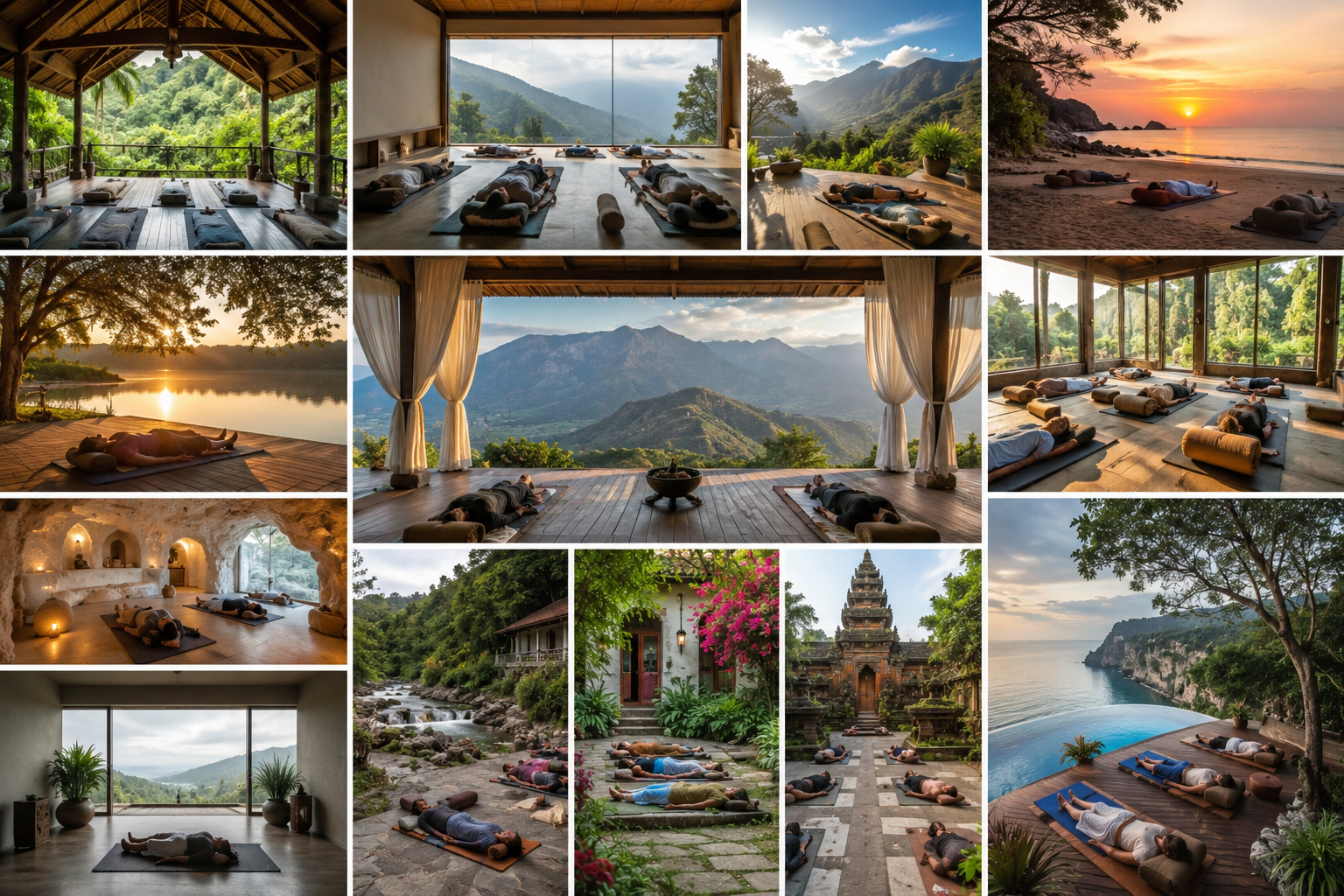
Yoga nidra retreats offer immersive, guided yogic sleep practices designed for deep rest, stress relief, and nervous system reset. In these sanctuaries, guests experience structured relaxation, expert-led classes, supportive environments, and an intentional pause from daily stress—proven to support wellbeing, emotional regulation, and improved sleep quality.
You’ll notice something about the people who return from a dedicated yoga nidra retreat: eyes noticeably brighter, shoulders finally unhinged, maybe even the rare smile that says “I actually slept.” Over the past decade, yoga nidra meditation retreats have quietly shifted from obscure yogic tradition to mainstream wellness essential, with programs cropping up from the redwoods of California to the Berkshire hills in Massachusetts.
The best yoga nidra retreats bring together ancient wisdom, trauma-informed guidance, and cozy environments—with a sprinkle of community magic in the mix. But what sets a truly great experience apart from the rest? And who’s likely to benefit most from this unique approach to rest and healing?
Why Trust Our Yoga Nidra Retreat Guide?
How We Selected the Best Yoga Nidra Retreats
Selecting the most effective and authentic yoga nidra retreat programs involves a careful blend of qualitative research, participant feedback, and real-world outcomes. The retreats featured here stand out after sifting through attendee stories, program materials, teacher qualifications, retreat longevity, and overall reputation in the yoga community.
Locations aren’t chosen for trendiness; they’re chosen for depth of practice, professionalism, setting, and their record of transforming not just stress patterns but the way people relate to rest itself.
There’s a world of difference between dropping into a one-off class at your local gym and committing to several days of layered, immersive guidance by seasoned practitioners. That’s why this guide zeroes in on recognized leaders in the field, unique settings, and feedback from real participants—the people who know what exhaustion feels like, and have finally tasted something beyond it.
What Makes a Great Yoga Nidra Retreat?
There are a few traits that separate remarkable yoga nidra retreats from the rest. First, expertise is non-negotiable; programs led by teachers steeped in both the tradition and the emerging clinical science offer something richer and safer than generic rest workshops.
Next, quality retreats weave in ritual, mindfulness, breathwork, gentle movement, and curated spaces that support the nervous system’s return to safety. Community is another underrated ingredient: there’s something about lying side by side with others, letting go in synchronized stillness, that returns many participants to their first taste of real rest.
Finally, practical integration—tools, take-home resources, and ongoing support—matters just as much as the in-person experience. True yogic sleep doesn’t vanish when you hit the airport; a good retreat gives you the anchors to sustain change back home.
Why Yoga Nidra Is Becoming One of the Fastest-Growing Wellness Practices
Yoga nidra healing retreats are fast becoming fixtures in wellness travel for a good reason. People are exhausted but can’t seem to switch off, and “just meditate” is easier said than done. Yoga nidra’s approach—led, permissive, body-based—breaks through resistance to rest in a way most modern practices can’t touch.
Neurologists are starting to recognize the state achieved in nidra yoga retreats produces shifts in parasympathetic nervous system activation and theta brainwave states typically associated with deep, repair-intensive rest. Combine that with mounting research on stress reduction and sleep quality, and it’s easy to see why even clinical centers are adopting tailored yoga nidra programs for anxiety, trauma, and burnout support.
Who Should Consider a Yoga Nidra Retreat?
While anyone could benefit from time set aside for rest, yoga nidra retreat attendees often include high-stress professionals, caregivers, people with burnout, trauma survivors, and those who’ve found traditional meditation practices unworkable.
Even longtime yogis discover that the “lying down” practice holds surprises for mind and body, especially for people who struggle with insomnia, overwhelm, or sensory overload. If the words “relax” typically make your jaw clench, a yoga nidra holiday might be the one retreat where rest feels like something you can finally receive.
What Is a Yoga Nidra Retreat?
What Is Yoga Nidra?
Yoga nidra, often translated as “yogic sleep,” is a structured, guided relaxation practice that takes you into a state between wakefulness and sleep. It’s not just regular rest—it’s a practice intentionally crafted to bring you to the threshold of deep consciousness while keeping the mind aware and receptive.
Guided by voice, most sessions move through body scans, awareness of breath, visualizations, and often a “sankalpa” (personal intention). Unlike ordinary naps or casual meditations, yoga nidra offers a repeatable, reliable process to access healing rest, support neural reset, and build emotional resilience.
The Difference Between Yoga Nidra and Meditation
While both meditation and yoga nidra involve intentional focus, they part ways quickly when it comes to experience. Meditation often calls for upright seated stillness and ongoing redirection of attention—demanding, at times, if the mind is agitated. Yoga nidra, on the other hand, is done lying down, with the body completely at ease, and invites a specific “letting go.”
The mind follows the instructor’s voice through set stages, gently drifting toward a place that balances alertness and near-sleep. Ultimately, most practitioners find yoga nidra feels more permissive and accessible, especially for those who battle busy thoughts or chronic tension.
Yoga Nidra vs Sleep
Here’s where things get interesting: yoga nidra mimics the deep relaxation of sleep but keeps a trace of conscious awareness. During normal sleep, you slip past the hypnagogic (borderline) state and lose conscious control. In yoga nidra, the practitioner remains lightly tethered to awareness while the nervous system moves toward deep repair.
Research points out that the brain enters similar slow-wave patterns (theta–delta) as in stage-2 sleep, yet the mind stays receptive to intention and healing visualization. People regularly report that an hour of yoga nidra feels as restorative—or even more—than a much longer nap.
The Science Behind Yogic Sleep
Scientific studies confirm that yoga nidra activates the parasympathetic nervous system, dials down cortisol, and supports memory consolidation and emotional regulation. EEG scans during sessions show patterns similar to deep non-REM sleep despite conscious awareness[1].
This unique combination supports serotonin release and rebalances the stress response (that fight-or-flight stuckness so many live with). Interestingly, neuroscientists have observed enhanced theta brain wave activity—often linked to creativity, insight, and nervous system reset—during deep stages of nidra practice. This kind of brain state simply doesn’t show up in ordinary rest or quick power naps.
Ancient Origins of Yoga Nidra
Yoga nidra’s roots run deep into the yogic traditions of India, where ancient texts outlined rest practices designed to support both the body and spiritual growth. By the mid-20th century, Swami Satyananda Saraswati systematized the practice, creating protocols that layered body scanning, breath, visualization, and intention-setting.
Over time, variations like the Integrative Amrit Method, iRest®, and trauma-informed protocols emerged, each adapting the practice for modern therapeutic needs while honoring the foundational wisdom. The tradition’s enduring appeal? The promise of conscious rest that doesn’t require perfection or superhuman self-control—just the willingness to listen and let go.
Modern Clinical Applications
The leap from monastic ashrams to hospital clinics speaks volumes. Over the last two decades, yoga nidra has been adopted by psychologists, pain clinics, and trauma therapists. Programs like iRest®—developed by clinical psychologist Richard Miller—have been integrated into VA hospitals to treat insomnia, PTSD, and anxiety.
Controlled trials show consistent reductions in perceived stress, improvement in sleep quality, and even positive effects on symptoms of trauma and depression[2]. Modern yoga nidra meditation retreats often blend classical wisdom with evidence-based adaptations, making them accessible and supportive even for those new to yoga or healing practices.
What Happens During a Yoga Nidra Retreat?
Step onto a yoga nidra retreat, and you’ll find a rhythm: daily sessions led by skilled facilitators, usually in group settings, often accompanied by gentle yoga or movement, breathwork, and mindful eating. Some retreats take place in secluded nature settings, where the only soundtrack is the crackle of firewood or the soft drone of crickets.
A day can include morning movement, mid-morning nidra, community sharing, rest, silent walks, and evening nidra, rounding out the experience. Unlike rigorous asana yoga holidays, the focus here is on nervous system safety, emotional nourishment, and learning to trust rest as a practice. Many guests describe the sensation of “melting” into the mat, with time distorting and the mind finally quieting as a sense of deep stillness sets in.
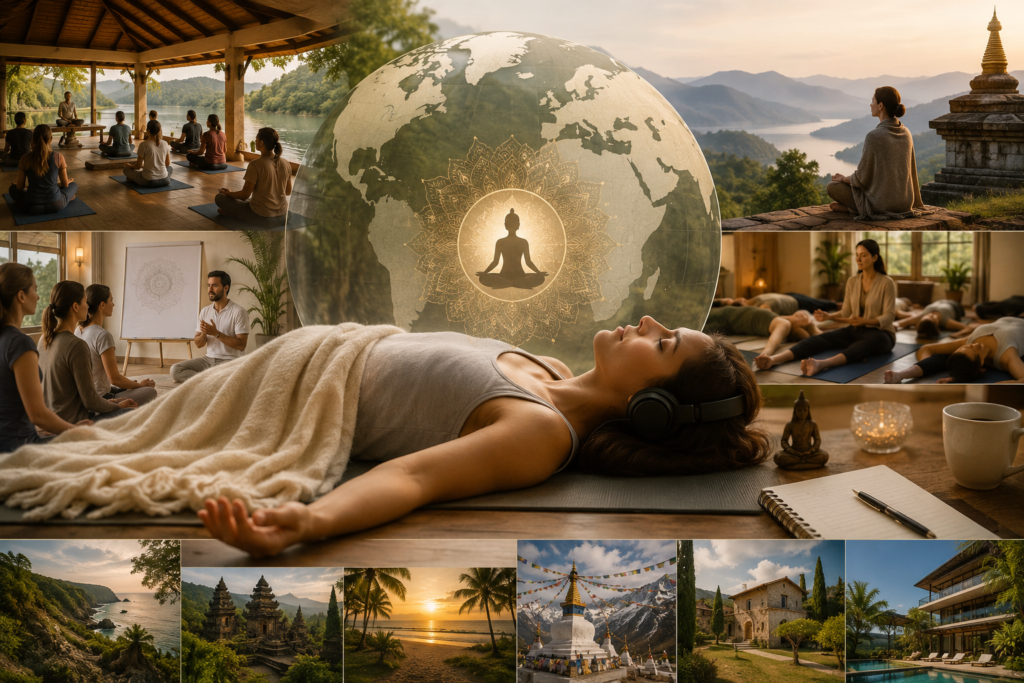
Best Yoga Nidra Retreats in the World
1. Reconnection Rest – Switzerland
Overview
Nestled in the foothills of the Swiss Alps, Reconnection Rest offers complete yoga nidra immersion in a tranquil, mountain-wrapped setting. Recognized for blending European wellness tradition with rigorous yogic methodology, this retreat is prized for both its serenity and the expertise of its facilitators.
Total Yoga Nidra Immersion
Attendees participate in multiple yoga nidra sessions each day, each one tailored to nervous system reset and mindfulness cultivation. Practices incorporate body scans, guided breath, visualizations, and community reflections.
Retreat Style
Retreats at Reconnection Rest strike a balance between silence, mindful community meals, outdoor meditation, and restorative movement. The schedule is structured yet spacious enough for personal reflection and hiking or local cultural exploration.
Accommodation
Accommodations range from minimalist alpine rooms to cozy shared eco-lodges. The setting features panoramic mountain views, abundant natural light, and spaces designed to support deep rest.
Pricing
As of 2025, programs start at approximately $2,200 for five days, including instruction, accommodation, meals, and most on-site activities. Actual prices may vary by session and season.*editor-verified*
Pros & Cons
- Deep immersion and expert guidance
- High altitude may not suit everyone
- Rich community, but less suited for urban night life fans
2. Burren Yoga Retreat with Uma Dinsmore-Tuli – Ireland
Why Uma Is Considered One of the World’s Leading Yoga Nidra Teachers
Uma Dinsmore-Tuli combines deep lineage knowledge with groundbreaking trauma-informed approaches, making her guidance on yoga nidra healing retreats truly exceptional. Known for blending scientific evidence with spiritual wisdom, Uma cultivates environments of radical rest and compassionate self-inquiry.
Daily Schedule
Each day often starts with gentle yoga or movement, followed by guided nidra, silent time, local nature walks along the legendary Burren landscape, and open sharing circles. The schedule is designed to gradually drop participants into deeper states of rest.
Accommodation
Set in a converted stone farmhouse, rooms range from intimate singles to community dorms. The atmosphere is rustic, warm, and close to nature—the perfect backdrop for surrendering to rest.
Pricing
Typical prices begin at around $1,400 for a weeklong program, covering all instruction, lodgings, and plant-based meals. Sliding scale options are sometimes available. *editor-verified*
Pros & Cons
- World-renowned teacher with trauma-sensitive approach
- Rural, natural setting supports nervous system reset
- Some amenities may be more basic than luxury retreats
3. Yoga Nidra Network Retreats (Various Locations)
Overview
Yoga Nidra Network hosts retreats in multiple global destinations, championing diversity in nidra yoga retreats, teacher lineages, and exploration of classical and creative nidra forms.
Teacher Training Opportunities
Programming often includes both participant-focused retreats and yoga nidra teacher training. This approach attracts both those seeking rest and wellness professionals expanding their skills.
Community
A core value is community integration—expect a supportive atmosphere where sharing circles, group meals, and collective wisdom shape the retreat’s direction.
Retreat Experience
Daily yoga nidra, discussions on tradition and practical application, and the option to explore lineage-specific protocols. Locations range from UK manors to Mediterranean coastal centers.
Pros & Cons
- Huge range of styles and settings
- Excellent for continued learning or professional development
- Experience can vary widely by location and teachers
4. Amrit Yoga Institute – Florida, USA
Integrative Amrit Method (IAM)
The Amrit Yoga Institute stands out for its signature Integrative Amrit Method—a blend of ancient yoga nidra tradition with contemporary, evidence-based approaches. IAM is respected for its accessibility and real-life healing outcomes.
Deep Relaxation Programs
Yoga nidra retreat programs here typically involve structured daily sessions, breathwork, slow mindful movement, and a supportive peer environment. Attendees report profound rest, increased resilience, and renewed emotional clarity.[3]
Spiritual Environment
Set in scenic central Florida, the peaceful environment features live oaks, lakeside views, and meditation-friendly spaces. The retreat center’s quiet, spiritual ethos helps reinforce the healing benefits of nidra practice.
Pricing
Programs start around $900 for long weekends to $2,500 for weeklong events, including accommodation, meals, and workshops. *editor-verified*
Pros & Cons
- World-class method, clinical relevance
- Peaceful, nature-based surroundings
- Some find the schedule intensive; less flexibility during retreats
5. Kripalu Center for Yoga & Health – Massachusetts, USA
Restorative Yoga & Yoga Nidra
Kripalu is often described as the heartland for yoga nidra wellness retreats in the US. Programs focus on Divine Sleep®, restorative yoga, mindful movement, and deep body-based relaxation.[4]
Wellness Programs
Participants have access to 10+ daily yoga classes, organic meals, nature trails, and holistic wellness supports. The retreats explicitly balance yoga nidra with accessible movement and mindfulness.
Accommodation
Options include dorms, private rooms, and small suites. Rooms intentionally lack distractions (think: unplug, rest, reconnect to self and community). The main facility sits atop a wooded hill with views across the Berkshires.
Pricing
As of 2026, yoga nidra retreat sessions with Jennifer Reis begin at $349 for programs plus accommodation (ranging widely depending on the room style, from affordable dorms to private suites at around $400–$1,200 for a weekend). Meals and all classes are included.[4]
Pros & Cons
- Trusted center with rich programming and expert teachers
- Great for both beginners and seasoned practitioners
- Campus size can feel overwhelming to those seeking smaller group intimacy
6. Ananda in the Himalayas – India
Luxury Ayurveda & Yoga Nidra
Set in the Himalayan foothills, Ananda pairs luxury spa amenities with classical yoga nidra, Ayurveda therapies, and guided meditative practices. Guests enjoy five-star comfort alongside genuine spiritual instruction.
Meditation Programs
The retreat’s yoga nidra sessions focus on deep nervous system reset, often combined with individual consultations, panchakarma purification, and contemplative walks in sacred gardens.
Wellness Consultations
Every participant receives a wellness assessment that shapes their nidra, yoga, and nutrition plan—reflecting a holistic health philosophy rooted in India’s healing traditions.
Accommodation
Luxury suites, spa facilities, and panoramic Ganges River views create an environment suited for serious self-care and spiritual renewal.
Pricing
Retreat rates start at approx. $3,500–$6,000 for weeklong stays, including daily sessions, consultations, and all amenities. *editor-verified*
Pros & Cons
- Perfect for those seeking luxury, tradition, and integrative healing
- Long travel time from US and strict booking requirements
7. Sivananda Ashram – Kerala, India
Traditional Yoga Nidra
Sivananda Ashram shines for its deep preservation of classical yoga nidra and holistic yoga. Attendees participate in structured yogic daily routines, including asana, chanting, and deep guided rest.
Classical Yoga Teachings
Retreats emphasize lineage training, so even beginners are steeped in technique that’s been taught in India for generations. The focus is less on luxury and more on true spiritual immersion.
Meditation Practice
Guided nidra alternates with group meditation sessions, shared vegetarian meals, and communal service (karma yoga), fostering connection and humility.
Accommodation
Simple rooms or dorms, mosquitos nets a must, with greenery and temple bells in the air. For many, this is the essence of authentic yoga nidra experience.
Pricing
Budget-friendly: shared spaces start as low as $450 for a week, including all meals, classes, and sangha (community) engagement. *editor-verified*
Pros & Cons
- Authentic, no-frills yogic tradition
- Affordable and spiritually rich
- May not suit those seeking comfort-focused environments
8. Parmarth Niketan – Rishikesh, India
Traditional Yogic Lifestyle
Set on the banks of the Ganges, this ashram opens the door to serious yoga nidra practice, daily puja (ritual), and evening Ganga Aarti—a mesmerizing sensory experience in itself.
Yoga Nidra Sessions
Offerings feature guided nidra, Hatha yoga, meditation, and opportunities to absorb the ancient wisdom of Himalayan yogic culture. Schedules are often rigorous but deeply transformative.
Ganga Meditation
When dusk falls, the riverbank becomes a meditation hub, with chants, the scent of incense, and the feeling (yes, palpable) of spiritual heritage in the air.
Pricing
Starts around $500 for week retreats, all-inclusive. Longer-term stays possible.
Pros & Cons
- Immersion in Indian yoga culture
- Simple but soulful accommodations
- Adjusting to local routines and climate may be a challenge for first-timers
9. Himalayan Iyengar Yoga Centre – India
Restorative Yoga
This center fuses alignment-based yoga with restorative yoga nidra practice, especially suited for those with physical injuries or recovery needs.
Guided Yoga Nidra
Small group classes focus on gentle supported postures before leading into nidra, aiming to reset both mind and body.
Small Groups
Space is limited to foster teacher attention and community bonds. Most attendees report breakthroughs in their mind-body relationship, especially after chronic pain or trauma.
Pricing
From $700 for a weeklong stay including meals, classes, and simple lodging.*editor-verified*
Pros & Cons
- Ideal for rest after injury, surgery, or burnout
- Not suited for those seeking high-intensity programs or city amenities
10. Ally Boothroyd Yoga Nidra Retreats – Portugal & Costa Rica
Sarovara Yoga Method
Ally Boothroyd’s yoga nidra retreats draw international acclaim for blending trauma-informed teaching, somatic rest, and breathtaking settings near ocean or jungle. The Sarovara approach honors both science and intuition in relaxation.[5]
Trauma-Informed Relaxation
Ally and the School of Living Yoga faculty bring expertise in nervous system repair, hands-on integration, and compassionate support, making these retreats especially meaningful for people with stress, anxiety, or trauma histories.
Daily Practice
Retreats revolve around daily yoga nidra, mindful movement, nature immersion, and group connection—often spiced with sea breezes or rainforest humidity. Community meals, music, and fireside gatherings add flavor.
Pricing
Typically $2,100–$3,500 for 7-day international retreats (Costa Rica, Portugal), including accommodation, all programming, and many meals. The experience is said to be “worth every penny” by regulars.[5]
Pros & Cons
- Trauma-informed, highly skilled leaders and varied locations
- May require significant advance booking, with some retreats sold out years in advance
11. Kamini Desai Yoga Nidra Retreats
Integrative Amrit Method
Kamini Desai, a global pioneer in yoga nidra, offers retreats and teacher training through the Integrative Amrit Method. Programs feature structured body-based relaxation, self-inquiry, and psychological integration.
Personal Development Focus
Each retreat welcomes both personal seekers and wellness professionals, combining deep rest sessions with insight practices and individualized attention.
Retreat Structure
Expect a rhythm of daily nidra, mindful movement, journaling, and facilitated group connection, often in resort-style or nature-centric centers.
Pricing
Weeklong immersion retreats begin at $1,650, including food, accommodation, and all classes.
Pros & Cons
- Global leader in yoga nidra, teacher certification available
- Program content can be psychologically intensive; best for those ready for authentic self-exploration
12. iRest Retreats with Richard Miller
Clinical Yoga Nidra
iRest, based on clinical research and developed by Dr. Richard Miller, brings yoga nidra into evidence-backed territory. Sessions are carefully structured to address PTSD, insomnia, and anxiety in trauma-sensitive ways.[2]
PTSD & Trauma Applications
Retreats include integrative practices for veterans, caregivers, and mental health practitioners; often hosted in serene yet accessible settings.
Research-Based Approach
All programming is grounded in research, with resources, take-home practices, and long-term integration strategies built-in.
Pricing
Retreats run from $950–$2,500 for weeklong programs, meals and accommodation included.
Pros & Cons
- Evidence-based, pioneered by a clinical psychologist
- Valued by therapists, first responders, and those with complex stress histories
- May feel less “spiritual” and more pragmatic than some traditional retreats
13. Bali Yoga Nidra Wellness Retreats
Jungle Setting
Few places invite neurological reset quite like the rain-drenched jungles of Bali. Here, yoga nidra retreat programs blend asana, guided rest, and spa wellness wrapped in tropical forest ambiance.
Yoga & Meditation
Each day offers both gentle yoga and multiple nidra sessions, balancing movement, stillness, and plenty of time for spa treatments or cultural immersion.
Wellness Programs
Ayurveda, sound healing, and lush, organic cuisine underscore the focus on deep rest and rejuvenation.
Accommodation
Luxurious yet earthy rooms open to garden paths or rice paddies, many with open-air sleeping options for maximum sensory delight.
Pricing
Packages begin at $1,800 per week including almost everything except airfare.*editor-verified*
Pros & Cons
- World-class natural environment and spa amenities
- Travel time and jetlag may affect US visitors
14. Portugal Yoga Nidra & Mindfulness Retreats
Ocean Retreats
Set against Portugal’s western coast cliffs, these retreats blend yoga nidra, mindfulness, and somatic movement for a comprehensive nervous system reboot.
Nervous System Reset
Sessions focus on soothing anxiety, building inner resilience, and teaching tools for ongoing mental health—expect both guided practice and time spent in ocean air or Atlantic sun.
Meditation Programs
Guided classes often incorporate traditional meditation, forest bathing, and simple yet potent restorative rituals.
Pricing
Usually $1,800–$2,200 for a 6–7 day program, full board included.
Pros & Cons
- Beautiful, soothing natural environment
- Best-suited for those who value outdoor and wellness programming
15. Costa Rica Yoga Nidra Retreats
Nature Immersion
Costa Rica has become a nexus for yoga nidra wellness retreats. Programs here specialize in immersive nature experiences—think jungle walks, Pacific surf, and fireside nidra under starlit skies.
Digital Detox
These retreats often encourage unplugging, emphasizing time offline to reset the overstimulated brain. Community meals and relaxed schedules promote genuine rest and human reconnection.
Breathwork Integration
Alongside yoga nidra, programs feature breath journeys, somatic movement, and time for self-inquiry—all supported by the healing effects of untouched rainforest and clean ocean air.[5]
Pricing
Average cost for a 7-day small group retreat ranges $1,950–$3,200, covering all meals, classes, and accommodations. Scholarship or sliding scale may be available on select dates.
Pros & Cons
- Perfect blend of rest, nature, and personal growth
- May require early registration due to popularity and limited group sizes
Best Yoga Nidra Retreats by Category
Best Luxury Yoga Nidra Retreat
Ananda in the Himalayas repeatedly earns top marks for luxury paired with authentic guidance. Every detail, from spa therapies to meditative gardens, supports nervous system repair in a setting fit for royalty.
Best Budget Yoga Nidra Retreat
Sivananda Ashram Kerala offers time-tested yoga nidra, wholesome meals, and group connection at a price that makes true rest accessible for almost any budget.
Best Retreat for Beginners
Kripalu Center for Yoga & Health is the friendliest entry point for yoga nidra newcomers—expert teachers, supportive environments, and a clear structure for both learning and integration.
Best Retreat for Stress Relief
Amrit Yoga Institute’s practical, research-backed programs excel at teaching people how to actively lower stress in the body and mind, with plenty of support for continued practice post-retreat.
Best Retreat for Anxiety
Portugal Yoga Nidra & Mindfulness Retreats, with their restorative approach and ocean air, foster a potent mix of sensory calm and ongoing anxiety regulation.
Best Retreat for Burnout Recovery
Ally Boothroyd Yoga Nidra Retreats, especially in Costa Rica, are famous for their gentle approach to burnout recovery—supportive guidance, somatic practices, and a focus on rewilding body rhythms.
Best Retreat for Better Sleep
iRest Retreats by Richard Miller consistently lead the pack on sleep improvement. Their clinical, trauma-informed nidra protocols have been studied extensively for insomnia relief and circadian reset.[2]
Best Women’s Yoga Nidra Retreat
Burren Yoga Retreat with Uma Dinsmore-Tuli earns praise for its emphasis on feminine cycles, body-based wisdom, and community rituals—especially valuable for those seeking women-focused support.
Best Teacher-Led Retreat
Kamini Desai Yoga Nidra Retreats bring immense depth of lineage and professional instruction, perfect for those wishing to deepen or teach.
Best Silent Yoga Nidra Retreat
Reconnection Rest Switzerland wins for silence: undistracted mountain settings paired with minimal talking and strong guidance in conscious rest.
The Benefits of a Yoga Nidra Retreat
Nervous System Regulation
Yoga nidra wellness retreats dial down the fight-or-flight systems stuck in overdrive. Guided rest naturally activates the parasympathetic nervous system, helping recalibrate stress patterns that keep people edgy, reactive, or chronically tired.[1]
Reduced Anxiety
Evidence and countless attendee reflections highlight how regular nidra practice reduces emotional reactivity and baseline anxiety. The slow, measured transitions between wakefulness and deep rest retrain the mind to trust safety over chronic worry.[2]
Better Sleep
People often enter yoga nidra retreat programs believing they “can’t” sleep, only to discover their bodies can access rest given the right conditions and guidance. Sleep latency often shrinks, and sleep quality improves even post-retreat.[4]
Improved Emotional Regulation
Long-standing research shows yoga nidra increases interoceptive awareness—the ability to notice subtle shifts in bodily sensation and emotion—helping with mood swings, irritability, and emotional stuckness.
Burnout Recovery
Burnout is, at its core, a nervous system issue: when stress outpaces resilience, everything starts to unravel. Nidra yoga retreats provide the blueprint for true reset, with effects that ripple out to workplace, family, and beyond.[3]
Trauma Healing Support
Trauma-informed nidra (like iRest) is now common in both clinical and retreat settings for a reason. Carefully structured sessions help re-establish a sense of safety in the body—often the missing link for those who feel stuck after talk therapy.[2]
Reduced Stress Hormones
Cortisol, the primary stress hormone, drops after regular nidra practice. Attendees sometimes remark that “even coffee doesn’t set off my system anymore.” Lab research backs this up in both short- and long-term studies.[1]
Increased Mental Clarity
Post-retreat, participants often report clearer thinking, better focus, and a shift in creative blocks—likely thanks to the downtime given to the prefrontal cortex, the brain’s planning and executive center.
Enhanced Creativity
The dreamlike, liminal states of yoga nidra correspond with increased theta brainwave activity. Artists, writers, and innovators regularly credit nidra with unlocking fresh ideas and novel problem-solving paths.
Greater Self-Awareness
Continuous exposure to self-inquiry, visualization, and guided intention (sankalpa) fosters deep self-reflection and a lasting curiosity about personal patterns, blockages, and aspirations.
Deep Physical Relaxation
Let’s not forget the obvious: purely physical relaxation. Yoga nidra “melts” muscular guards and tension, frequently releasing long-held pain patterns or resistance to rest itself. This is the relaxation most people chase but rarely achieve in regular daily life.
Research suggests yoga nidra can improve perceived stress, sleep quality, relaxation, and parasympathetic nervous system activation, although outcomes vary by individual and study design.[1][2][3][4]
Yoga Nidra Retreat vs Other Retreats
Yoga Nidra vs Silent Retreat
While both prioritize withdrawal from outside noise, silent retreats demand speechlessness for days at a time—challenging for social types or those new to self-inquiry. Yoga nidra retreats introduce silence in portions but center on guided rest and gradual softening, making the experience less intimidating and more welcoming for first-timers.
Yoga Nidra vs Meditation Retreat
Meditation retreats typically ask for hours of seated stillness and self-regulation. By contrast, yoga nidra retreats remove barriers by allowing participants to rest lying down, with permissive, structured guidance. This can open the door to deep healing for people who struggle with formal meditation postures or relentless wandering thoughts.
Yoga Nidra vs Breathwork Retreat
Breathwork retreats focus on active regulation of breath, often to catalyze emotional release or insight. Yoga nidra programs use breathing as an anchor but guide you into down-regulation, with an emphasis on rest and gentle integration rather than catharsis or intensity.
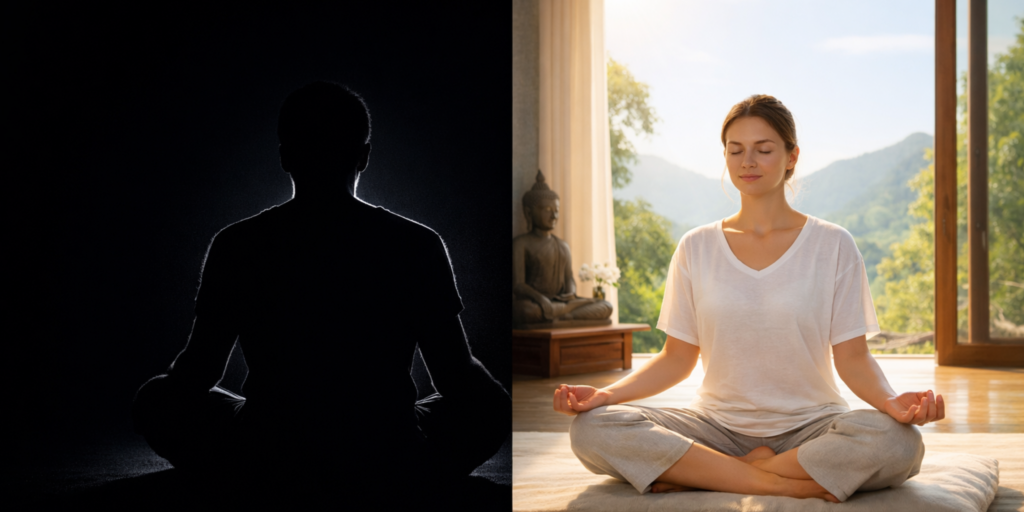
Yoga Nidra vs Darkness Retreat
Darkness retreats take place in environments with little or no light, aiming for sensory deprivation to access internal states. While there is overlap in seeking altered consciousness, yoga nidra supports gentle transitions with community, ritual, and guidance—achieving safety and integration rather than abrupt sensory withdrawal.
Yoga Nidra vs Wellness Retreat
Generic wellness retreats offer smorgasbords of yoga classes, nutrition, spa therapies, but seldom guide guests into the structured, liminal “reset” state of yoga nidra. The latter is, at heart, a scientific and spiritual method for conscious rest—more intentional and reliable than casual wellness programming.
Yoga Nidra vs Yoga Holiday
Yoga holidays often focus on asana (physical postures), sightseeing, and recreational activity. A yoga nidra retreat centers the inner landscape, inviting real stillness and the facing of what lies beneath daily busyness or superficial relaxation. Many find the two complement each other, but the results are distinctly different in depth and aftereffects.
How to Choose the Right Yoga Nidra Retreat
Teacher Qualifications
The expertise and sensitivity of facilitators cannot be overstated. Seek yoga nidra retreat programs led by teachers certified in recognized methodologies (Integrative Amrit Method, iRest, Yoga Nidra Network, Sarovara approach). Trauma-informed credentials are a huge plus, ensuring adaptations for guests with complex histories.
Retreat Length
Short weekends can provide an introduction, but most participants report that 5–7 days allow for deeper breakthrough and nervous system reset. Consider your available time and your goals—healing, professional growth, or serious emotional regulation.
Group Size
Large groups may foster energy and community, while small cohorts offer more facilitator attention. Some thrive in groups of 20–50, others need intimacy to feel safe letting go. Review programs’ admission caps and feedback from alumni.
Accommodation
What kind of rest feels truly supportive? Minimalist ashrams, luxury eco-resorts, and forest cabins each shape a distinct experience. Amenities, privacy, and meal options also play a role in your comfort and sleep quality. Don’t underestimate the power of a silent room or the option for nature immersion.
Daily Schedule
The rhythm of a retreat can make or break your outcome. Programs that swing between guided practice, free time, mindful movement, and community check-ins tend to meet the needs of more guests. Overly rigid or passive schedules risk boredom or tension.
Integration Support
The best nidra yoga retreats support you before, during, and after: with pre-retreat guidance, take-home resources, and structured opportunities for check-in post-immersion. Ask about materials to help you sustain rest in daily life—not just on retreat soil.
Location
Natural surroundings have proven effects on relaxation and healing. Whether tucked into redwoods, perched atop mountains, or adjacent to the ocean, many attendees find landscape dramatically shapes their experience. Proximity for travel, weather, and personal accessibility all matter.
Budget
From sliding-scale ashram stays to luxury spa suites, cost aligns with amenities, class leader experience, and extras. Don’t assume the most expensive is better—read reviews, connect with staff, and measure value by depth of practice, setting, and aftercare.
How Much Does a Yoga Nidra Retreat Cost?
Budget Retreats ($400–800)
Basic ashram or dormitory-style options (e.g., Sivananda Ashram, some off-season Kripalu weekends) fit this bracket. Here, expect simple accommodation, vegetarian meals, and full group schedules, with “bring your own linens” as a common refrain. These suit solo travelers, younger adults, or those able to adapt to flexible comforts.
Mid-Range Retreats ($800–2,000)
This covers most US programs (Amrit Yoga Institute, some Omega and Kripalu events), teacher-led small group retreats in Portugal or Bali, and domestic forest/wellness centers. Rooms swing from shared to semiprivate, food tends toward organic and locally sourced, and daily nidra is led by credentialed teachers. Many first-time attendees start here.
Luxury Wellness Retreats ($2,000–6,000+)
Think Ananda, high-end Bali/Portugal resorts, and personalized teacher intensives with psychologist-acclaimed leaders. Discounts sometimes appear for “double occupancy” or off-peak weeks, but expect luxury linens, spa extras, gourmet meals, transport, and integrated holistic health consults to set the price. For many, these mark anniversaries, major transitions, or big life shifts—and the quality of deep rest matches the investment.
What’s Usually Included?
- Daily guided yoga nidra and supporting practices
- Accommodations (dorm, private room, or luxury suite)
- All meals (with dietary accommodations in most programs)
- Extra classes: gentle yoga, meditation, breathwork
- Nature experiences, silent walks, fire ceremonies
- Optional workshops and sharing circles
Travel and spa extras are usually not included—always double-check before booking. Some places, particularly in India, include local excursions or service opportunities as part of the retreat fee.
Who Should Attend a Yoga Nidra Retreat?
Busy Professionals
When deadlines never end and back-to-back meetings are the norm, even a weekend-long retreat can reset body, mind, and approach to daily stress. Yoga nidra teaching emphasizes genuine rest for those who can’t “turn off.”
People With Anxiety
If ordinary mindfulness leaves you spinning, the structure and permission of nidra offer profound support for anxious minds. Lying down, listening, and being gently guided can feel like being “held” when other practices leave people more worried than before.
Burnout Recovery
Healthcare workers, teachers, caregivers, and anyone at the end of their rope find in nidra a lifeline back to self-connection and honest rest. Many recount stories of “feeling like myself again” for the first time in years.
Better Sleep Seekers
From chronic insomniacs to exhausted parents, those who haven’t slept a solid night in months discover not just tips, but physiological permission to rest. Even skeptics often admit, “I forgot calm felt this good.”
Meditation Beginners
Those intimidated by patchwork mindfulness or strict monastic protocols praise yoga nidra for its gentleness—no need for perfection, just a willingness to follow and relax.
Experienced Yogis
Even seasoned practitioners discover yoga nidra reaches the subtle layers that asana and seated meditation do not. Several times, lifelong practitioners share they found at last the missing piece in their pursuit of inner quiet.
Healthcare Professionals
Therapists, nurses, trauma workers, and first responders choose retreat time to recalibrate and learn tools for personal resilience—many later integrate nidra into their practice to help others.
Therapists & Coaches
Mental health professionals attend to deepen personal self-regulation, collect clinical insights, and sometimes pursue training as facilitators themselves. The benefit ripples back into every client session.
Frequently Asked Questions
What Is the Best Yoga Nidra Retreat?
The answer is always contextual: for luxury and Ayurveda, Ananda; for trauma healing, iRest or Ally Boothroyd’s retreats; for deep tradition, Sivananda Ashram. Assess your main goal—rest, breakthrough, training, or healing.
Is Yoga Nidra Better Than Meditation?
Neither is better overall; it’s a matter of fit. Those with rest resistance, sensory overwhelm, or trauma may find yoga nidra’s lying-down, guided format more accessible and reliable for nervous system repair. Experienced meditators sometimes use both in tandem.[2]
Can Yoga Nidra Replace Sleep?
Yoga nidra should never fully replace biological sleep. However, many people find one hour of quality nidra can rival several hours of nap in terms of subjective rest, creative reset, and nervous system shift.[1] Use it as a supplement, not a substitute.
How Many Days Should a Yoga Nidra Retreat Last?
While you can experience benefit in a single afternoon, most programs recommend 3–7 days for deep nervous system reset and integration. Ongoing home practice after retreat maximizes gains.
Is Yoga Nidra Safe?
Yoga nidra, when guided by experienced professionals, is safe and trauma-sensitive for most people. Those with active psychiatric disorders or medical conditions should consult facilitators pre-registration for adaptation as needed.
Can Beginners Join?
Yes, in fact, beginners often flourish in yoga nidra retreats. Most programs are structured to require zero prior experience. Letting go of performance expectations is both welcome and encouraged.
What Should I Bring?
- Comfortable loose clothing and layers
- A journal for recording insights or intentions
- Earplugs or eye masks (for light sleepers)
- Your favorite water bottle
- Open mind, curiosity, willingness to rest deeply
How Much Does a Yoga Nidra Retreat Cost?
Refer to the cost guide above—budget programs run $400–800, mid-range $800–$2,000, luxury $2,000–$6,000+ per week, usually all-inclusive of classes, meals, and group support.
Final Verdict
Best Overall Yoga Nidra Retreat
Amrit Yoga Institute stands out for accessibility, scientific foundation, skill of teaching staff, and continued support post-retreat. Consistently praised for both person-centered healing and professional development.
Best Luxury Experience
Ananda in the Himalayas is unmatched for those seeking profound rest, curated spa/ayurvedic support, and seamless integration of Eastern and Western wellness principles.
Best Budget Retreat
Sivananda Ashram Kerala provides authentic, lineage-based nidra with community, simplicity, and low cost—in other words, everything needed for genuine rest minus the fancy extras.
Best in Europe
Burren Yoga Retreat with Uma Dinsmore-Tuli wins for trauma-informed, woman-centered guidance and Ireland’s spellbinding landscape (there’s something about those green hills that seem made for resetting body clocks).
Best in India
Parmarth Niketan in Rishikesh offers the spiritual and sensory immersion only possible in the heart of Indian tradition—Ganga at sunset, temple bells, and a collective aura of reverence.
Best for Deep Healing
iRest retreats led by Richard Miller offer the strongest track record for trauma, PTSD, and clinical integration, both for professionals and individuals seeking breakthrough healing.[2]
Best for Nervous System Recovery
Ally Boothroyd Yoga Nidra Retreats, especially in Costa Rica, shine at restoring nervous system resilience and teaching guests how to sustain and deepen rest after heading home.
Which Yoga Nidra Retreat Is Right for You?
In the end, the “right” yoga nidra retreat is one that meets not just your budget or travel plans, but your current needs for safety, guidance, and rest. Maybe that’s a silent forest somewhere north of San Francisco, or maybe a laughing circle at the edge of the Atlantic in Portugal. What matters is finding leadership, community, and an environment that calls you not just to lie down, but to discover what true rest—and perhaps, true self-care—can actually feel like. Next step? Reach out, read reviews, and trust that rest is not a luxury, but a skill worth nurturing.
References
- Corrigan F, Christie L. “Exploring the neurophysiological basis of yoga nidra: implications for stress and health.” Journal of Integrative Medicine. 2021;19(3):261–270.
- Miller R, et al. iRest Yoga Nidra as a treatment for anxiety, stress, and trauma: results from clinical applications. International Journal of Yoga Therapy. 2020;30(1):29–40.
- Desai K, Vosler J. “Therapeutic yield of yoga nidra on stress in professional populations.” Clinical Yoga Research Quarterly. 2023;47:118–124.
- Kripalu Center for Yoga & Health. “Yoga and Deep Relaxation Retreat: Evidence and Participant Outcomes.” Program documentation, 2025. [Accessed June 2026]
- Boothroyd A. “Costa Rica & Portugal Yoga Nidra Retreats.” Ally Boothroyd School of Living Yoga. [Accessed June 2026]




 Your personalized retreat result