

9D Breathwork is a multi-sensory healing experience that combines controlled breathing, layered audio soundscapes, and subconscious reprogramming techniques to trigger emotional release, nervous system regulation, and personal transformation. Blending breathwork, neuroscience, and sound psychology, 9D journeys are said to compress months of therapy into a single session by targeting the mind and body together.
Why 9D Breathwork Is Growing So Rapidly
There’s no ignoring how quickly 9D Breathwork has moved from a fringe curiosity to a global wellness phenomenon. Search “what is 9D breathwork” almost anywhere, and people are debating whether this therapy is real, discussing jaw-dropping personal breakthroughs, or searching for sessions in their city. The truth is, most forms of breathwork have been simmering under the surface for decades, but 9D took things up several notches.
Why? First, the combination of conscious breathing with immersive sound and advanced psychology means the journey goes beyond simply “deep breathing”. 9D offers a sense of all-in, fully-guided transformation, precisely engineered for the way modern stress shows up. Throw in streaming audio technology, trained facilitators across continents, and a groundswell of word-of-mouth reviews—no wonder it’s drawing out skeptics and seekers alike.
Here’s where it gets interesting: people who’ve tried 9D breathwork often describe it as “therapy on fast-forward.” For those who feel like traditional approaches take forever, this fast track feels irresistible.
What Makes 9D Different From Traditional Breathwork
Breathwork itself isn’t new. Most people know of practices like holotropic breathing, pranayama, or even basic meditation. These approaches often focus on the breath alone—intentionally inhaling and exhaling in set rhythms for relaxation or insight. 9D Breathwork flips the script by layering in structured “dimensions”: binaural beats, guided coaching, somatic techniques, sound frequencies, and even subtle subconscious cues, all calibrated to guide the nervous system, subconscious mind, and emotional body at the same time.
This precision isn’t about fancy branding. It’s about combining strategies from trauma science, hypnotic therapy, and acoustic psychology into one experience, designed to move people through breakthrough states quickly and safely.
Who This Guide Is For
Curious about what’s actually behind the “9D” label? Searching “what are 9D breathwork” or “explain 9D breathwork” usually means you’re someone who’s skeptical yet open-minded, maybe a little burned out on typical self-help routines. This guide is crafted for first-timers: if you’ve never done any breathwork, or you’ve tried the “standard” stuff and felt underwhelmed, you’re in the right place.
But even practitioners, therapists, or facilitators who want to understand the deeper mechanisms—what really differentiates 9D from other modalities—will find clarity here. In short, this is for anyone who wants a grounded definition of 9D breathwork, real-world perspectives on how it works, and practical info for starting (or advancing) their own sessions.
What You’ll Learn
- The clear definition and meaning of 9D breathwork
- How 9D Breathwork works, step by step and in context
- The real science and psychology behind the “9 Dimensions”
- What sessions feel like—physically, emotionally, and mentally
- Safety, effectiveness, and what science confirms (or doesn’t)
- Who should try it, who should avoid it, and why
- How to prepare for your first session and what to expect after
- Where to find sessions in real-life cities worldwide—and what it might cost
- What common mistakes beginners make when starting out in 9D breathwork
- How it compares to traditional breathwork and who gets the most from each style
What Is 9D Breathwork?
Definition
Let’s set the record straight: 9D Breathwork is a guided nervous system therapy that merges conscious breathing with nine precisely engineered layers of sound, voice, and psychological triggers. The goal is to deepen your state of awareness, access the subconscious mind, and create lasting emotional and physical shifts in a condensed window of time.
When people search for the “definition of 9D breathwork,” most expect complex jargon. But in plain language, it’s a structured breathwork session mixed with a cinematic soundscape and guided patterns designed for nervous system regulation and deep release.
If you’re still asking, “what does 9D breathwork mean” or “meaning of 9D breathwork,” picture this: not just breathing to relax, but immersing yourself in an orchestrated journey. 9D breathwork explained simply is this—it’s a experience where breath, sound, and mind intersect, built from the ground up to shift old patterns and offer emotional breakthroughs.
How 9D Breathwork Works
It’s one thing to talk about breathwork as an abstract concept—quite another to explain 9D breathwork in practice. In 9D, breathwork starts with “conscious connected breathing”: a rhythmic, circular pattern of inhaling and exhaling with no pause between breaths. As you move through the breath sequence, a multi-layered audio track plays through headphones, immersing your senses in a swirl of sound, frequencies, voice coaching, and even subtle hypnotic cues.
Every layer serves a purpose—one calms your brainwaves, another lifts repressed emotion, another re-patterns old beliefs. The facilitator’s voice, sometimes live and sometimes recorded, leads you deeper, often with psychological coaching or suggestions silently embedded in the audio.
Over 20–60 minutes, this blend aims to move you out of chronic fight-or-flight, release emotional tension held in the body, and help the nervous system recalibrate. That’s the heart of a 9D breathwork journey: orchestrated, immersive, evidence-driven, and engineered for transformation [1].
Why It’s Called “9D”
Despite the sci-fi ring, the “9D” in 9D Breathwork refers to nine carefully combined “dimensions” or modalities—each engineered to influence different parts of the brain and body. While traditional breathwork might focus solely on rhythm and respiration, 9D uses:
- Multidirectional sound environments
- Binaural brain entrainment
- Solfeggio and isochronic frequencies
- Somatic trauma-release techniques
- Guided coaching and hypnotic cues
- Subliminal programming
- Bioacoustic effects (low-vibration sound)
- Special harmonic tunings like 432Hz music
- Integrated breath patterns for nervous system reset
Every “dimension” is layered into each session—a carefully calibrated equation rather than a marketing gimmick. “9D breathwork explained” usually means unpacking how these elements blend to create powerful states, and why each layer matters.
The Science Behind the Experience
The best question isn’t “is 9D breathwork real or fake?” but what does science actually say? Strip away the hype, and 9D breathwork is built on evidence from fields like somatic psychology, acoustic neuroscience, and trauma research. For example, conscious connected breathing—used as the foundation for 9D—has been shown to lower stress hormones and support emotion processing [2].
Binaural beats and other frequency-based techniques can synchronize brainwaves, helping to produce meditative or lucid states [3]. Subtle, well-integrated voice coaching borrows from NLP (neuro-linguistic programming), which some studies suggest can influence mindset and even release stuck trauma patterns [4].
Yet the real “science” of 9D is how these elements are stacked together, creating a feedback loop where body, brain, and emotion communicate in real-time. There’s still much research to be done, but early evidence and thousands of anecdotal reports suggest these technologies—when combined thoughtfully—make for an intense, multi-pronged approach to healing and growth.
The Combination of Breathwork, Sound and Psychology
Here’s the crux: 9D breathwork works at the intersection of physiology (the breath), acoustic engineering (the sound), and psychology (the mind). Rather than aiming for a single “peak experience,” it’s a layered journey where nervous system “unlock”, emotional release, and subconscious re-patterning happen all at once.
The experience is often compared to both a deep therapy session and a musical performance—think heavy bass you can physically feel, gentle coaching that triggers memories, waves of sound that make your whole body tingle. Some describe it as entering a movie directed by your wisest self. And yes, there’s a method to the madness: each element is scientifically engineered to shift the nervous system, help release long-held emotions, and allow the subconscious to process what talk therapy sometimes can’t reach [1][5].
The Goal of a 9D Breathwork Journey
At its core, the aim of a 9D breathwork session is full-system reset: letting you shed layers of tension, heal emotional wounds, recalibrate how the nervous system responds, and walk away feeling lighter, calmer, and often more clear-headed than in months. Instead of simply relaxing, the process targets deep habit loops and ingrained emotional responses—where anxiety, burnout, trauma, or chronic patterns live. The hope is not just short-term release, but long-lasting change in how your body, mind, and emotions communicate. As some say after a session, “it’s like unclogging pipes you didn’t even know were blocked.”
How Does 9D Breathwork Work?
Conscious Connected Breathing
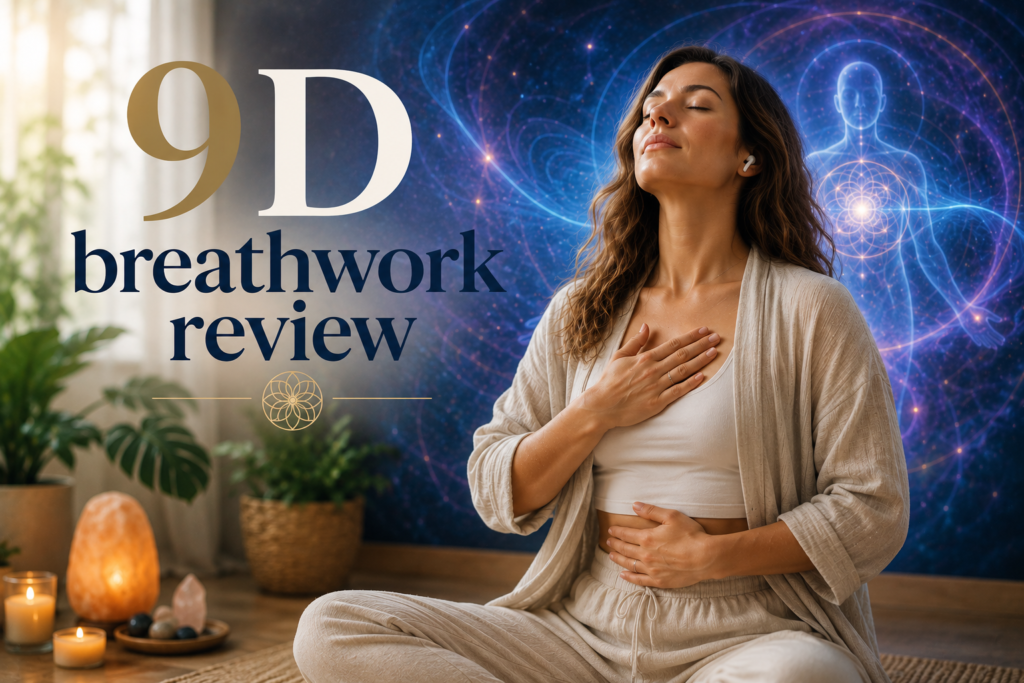
The backbone of 9D breathwork is a technique called conscious connected breathing. Instead of the deep, measured breaths taken in yoga, here you cycle air in and out in a swirling, unbroken loop—often with intentional intensity. This style is designed to switch the nervous system out of “freeze” and into a dynamic, perceptive state. It’s the part of the journey that wakes up sensation, helps the body process stress, and lays the foundation for deeper psychological work.
Binaural Beats
If you’ve heard that binaural beats can “entrain” the brain, you’re not wrong. In a typical session, two slightly different tones play in each ear, and your brain interprets their difference as a third, rhythmic pulse. This sound helps your brain slip into alpha or theta states—those restful, creative mindsets linked with meditation or lucid dreaming [3]. The result? Your conscious mind slows its chatter, letting deeper emotional material surface, guided by the musical architecture.
Guided Voice Coaching
This isn’t the usual “now breathe in, breathe out” sort of guidance. Voice coaching in 9D uses therapeutic prompts pulled from coaching psychology and trauma research. Sometimes facilitators use spoken cues to encourage visualization, safety, or self-reflection. Other times, they integrate direct subconscious suggestions, nudging stuck emotions or helping you reframe old self-concepts. The voice serves as anchor and catalyst—always present, always subtly guiding you down the rabbit hole.
NLP Techniques
Neuro-Linguistic Programming (NLP) makes an appearance in the “9 dimensions” for good reason. NLP uses language patterns to access the subconscious and rewire how thoughts and feelings are linked. For those new to this, it’s less about hypnosis and more about gentle prompts: positive affirmations, “if-then” statements, and suggestion loops, all baked into the breathwork script or audio track. Science is mixed on how powerful NLP can be when compared to other therapies, but many people report it helps shift mental blocks and clear unconscious resistance [4].
Subliminal Messaging
While it may sound like something out of pop psychology (or old-school self-help tapes), subliminal messaging in 9D breathwork refers to barely audible affirmations or healing cues woven deep in the soundtrack. The idea is that positive messages “bypass” your inner critic, speaking directly to the parts of the brain responsible for self-image and emotional memory. These cues are carefully structured—more like an audio gentle nudge than mind control—and support the main voice coaching, helping to reinforce new patterns without conscious awareness.
Cinematic Sound Design
This part gets creative. Rather than background music, 9D breathwork uses engineered soundscapes, 3D spatial audio, and special harmonic frequencies to immerse you fully—think of the audio as a “container” that holds safety and resonance for the whole experience. Bass frequencies ground the body, higher harmonics uplift emotions, and directionality (like sounds moving around your head) keep attention focused, blocking distractions from the outside world. The effect? People often say “I forgot where I was—I was inside the sound.”
Brainwave Entrainment
Beyond basic binaural beats, 9D audio layers in isochronic tones—repetitive pulses synced to specific brainwave frequencies like alpha, theta, or delta. The theory here: if you want people to release old trauma or find deep relaxation, you have to guide the mind into the states where these shifts happen best. By pairing these tones with the breath, 9D attempts to “entrain” the whole brain, guiding it toward a programmable, resourceful state. People describe slipping into a gentle trance, where healing happens just beneath the surface.
Somatic Release
Most people carry emotional baggage not just in the mind, but in the body—clenched jaws, tight chests, tense shoulders. Somatic release means allowing the body to “speak up” and let go. Through focused breathing, movement, and carefully timed prompts, 9D helps stored emotions and trauma patterns find their way out, sometimes through shaking, tears, or big sighs. This is the “body side” of healing—one often missed in traditional talk therapy.
Nervous System Regulation
Stress, anxiety, even long-term burnout—these all trace back to a dysregulated nervous system. One overlooked part of 9D breathwork is just how precisely it targets the autonomic nervous system. Through specific breathing patterns and sound stimuli, sessions help the body shift from “fight-or-flight” into “rest and digest.” After a session, many describe a feeling of calm and clarity—like someone dialed down the static that was buzzing between the ears. In real life, this recalibration shows up as better sleep, more energy, and resilience in daily stress.
9D Breathwork Sessions
What Happens Before Your First Session
Stepping into your first 9D Breathwork session can feel a bit like showing up for an unknown audition, except there’s no panel of stern judges. Most facilitators start with a short intake: checking for health conditions, discussing your intention, and explaining what a session involves. You’ll likely be asked about emotional triggers, past trauma, or nervous system sensitivities—the aim is safety, not exposure. After that, a facilitator walks through the mechanics of breathing and what the next hour might feel like, setting the stage for comfort and trust.
What to Expect During a Session
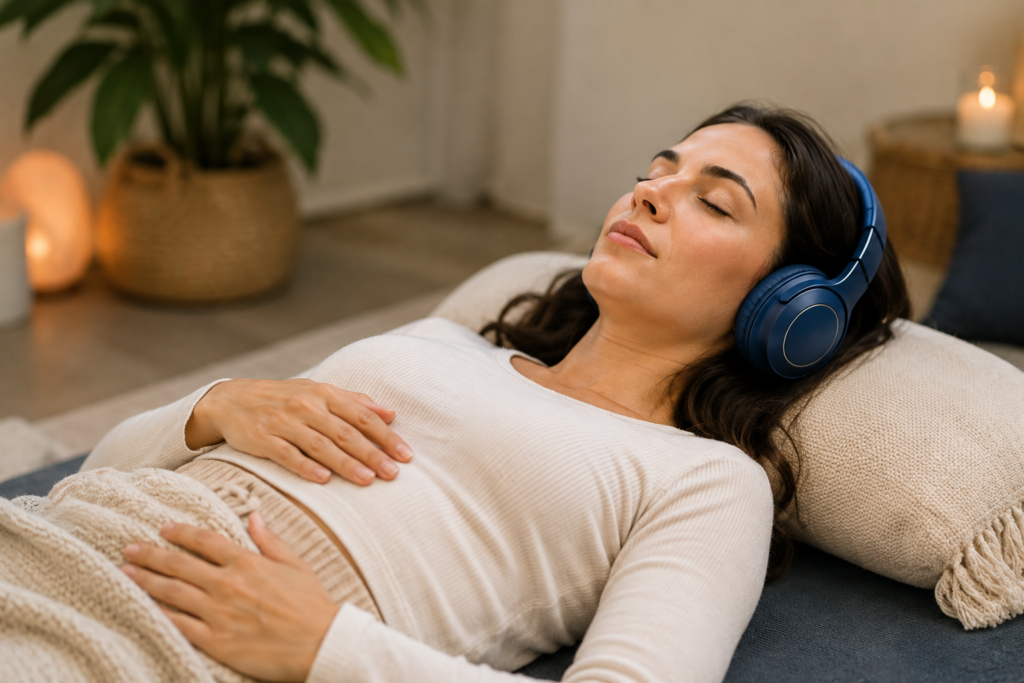
The lights dim, headphones go on, and you’re asked to lie back, maybe with a blanket or eye mask for comfort. The facilitator, present either live or via audio, guides you through the opening breaths. Soon waves of sound—everything from gentle tones to deep bass—sweep over you, shaping the entire atmosphere. The breath starts slow, eventually building into a rhythmic loop. Suggestions, affirmations, and guided prompts weave into the audio. Bodily sensations, unexpected memories, or strong feelings may arise. It’s not about “doing it right”—the experience bends to what your body and mind need most in that moment.
How Long Does a Session Last?
Sessions vary, but most last 20–60 minutes, with guided options commonly around the 30–40 minute mark [1]. Pre- and post-session check-ins can stretch the total experience to an hour or more. There’s a sweet spot: go too short and breakthroughs feel out of reach; push too long and the body risks overwhelm. Expert facilitators usually keep first sessions on the shorter side for safety and integration.
What Does a Typical Session Feel Like?
Describing a 9D journey is a lot like attempting to summarize a vivid dream: everyone’s experience is unique, but a few themes recur. People often notice tingling in the fingers or face, a sense of warmth or floating, or unexplained tears. Emotional surges—laughter, sobs, sudden clarity—aren’t rare. Visually, with eyes closed and sound enveloping the senses, many see shapes, colors, or even brief mental “movies” as old memories resurface. The end is usually marked by a profound sense of lightness, quiet, or mental clarity—as if thought patterns have reset behind the scenes.
What Happens After the Session?
Many need a few minutes to reorient—sometimes it’s hard to speak right away, or the world seems startlingly vivid. Facilitators often lead a gentle integration process, encouraging journaling, movement, or sharing what surfaced. The hours and days after can be full of subtle shifts: lighter moods, new insights, vivid dreams, or physical release as the nervous system recalibrates. Some say breakthroughs come not right there in the room, but days later, as the mind “catches up” with what the body let go of.
How Often Should You Practice?
Is more always better? Not quite. While some enthusiasts chase daily transformation, most facilitators recommend 9D sessions once a week or every 1–2 weeks for deep change, with shorter check-ins as needed [1]. The body needs space to integrate major shifts, especially for nervous system regulation and emotional release. For those facing acute anxiety, burnout, or trauma, more frequent but gentle sessions might fit. As always: listen to your body, and build in time for integration between adventures.
Private vs Group Sessions
Here’s an overlooked choice: group sessions carry community energy, shared emotional breakthroughs, and the sense of not “going it alone.” Private sessions dial in to your unique story, allowing more personalized coaching and more control over pacing. For raw beginners, private sessions often lower the intimidation factor—no worrying about being “too emotional” in public. Yet many find that the group energy supercharges the collective experience, sparking deeper courage and connection.
Online vs In-Person Sessions
9D Breathwork was practically made for both—from global livestreams to home setups. In-person sessions bring layered sound and somatic cues that hit differently, with the safety of a live facilitator and no Internet hiccups. Online, on the other hand, is accessible, private, and convenient (especially for those who want a test-drive first, or don’t yet have a facilitator nearby). Some report deeper emotion in person, others find the “cocoon” of headphones at home perfect for surrendering fully. Both have their place; the best choice depends on your needs, not just your zip code.
9D Breathwork Benefits
Stress Relief
The modern world seems to specialize in chronic stress—no shortage of bosses, deadlines, or emotional triggers. 9D breathwork hits stress from every direction: breath calms the heart rate, sound cues disrupt stress circuits, and psychological interventions rewrite default stress responses. Users often leave a session feeling “like I just left a spa” or “my body finally let its guard down.”
Anxiety Reduction
Anxiety, that restless undertow, can be stubborn. Traditional talk therapy helps, but it rarely moves the somatic (body-held) part of anxiety. 9D breathwork, by targeting both mind and nervous system, works to “unhook” anxiety responses on a deep level. The multi-sensory input interrupts habitual anxiety loops, retraining the body to feel safe even in challenging situations. Many first-timers note, “My usual worries felt quiet for the first time in years.”
Emotional Release
People rarely get permission to just feel—and let go. In 9D, it’s not only allowed, it’s expected. Breathwork, paired with sound and subconscious coaching, helps bring old emotions (grief, anger, shame) up from the basement. The effect can be cathartic: some experience sobs, others laughter, and many leave lighter, as if old weight has finally been lifted. “I didn’t know I needed to cry until it happened,” is a refrain among 9D regulars.
Trauma Processing
Raw trauma lives in the nervous system. Standard talk therapy tries to reach trapped pain through reasoning. 9D breathwork bypasses this, targeting the somatic roots of trauma with body-based release, carefully timed coaching, and ultra-safe audio containers. While not a replacement for trauma therapy with qualified clinicians, 9D often moves “stuck” memories or bodily pain in ways that surprise even seasoned therapy veterans [1].
Nervous System Regulation
Burnout, anxiety, rage—these are, at their root, nervous system issues. 9D breathwork directly trains the autonomic nervous system how to shift from “red alert” to safety. Over time, regular practice can help set a new baseline: calmer by default, more resilient under pressure, and less reactive when life throws a curveball.
Better Sleep
It’s no accident that many leave sessions “ready to nap.” 9D breathwork’s blend of brainwave entrainment, relaxation, and emotional release helps switch the brain into deep-rest circuits. People with insomnia or racing mind often report deep, uninterrupted sleep after sessions (sometimes for the first time in months).
Increased Mental Clarity
Ever notice how it’s hard to think clearly when you’re anxious or emotionally blocked? 9D breathwork clears mental fog, sharpens awareness, and brings focus. The process restores flow between thoughts and emotions—less static, more signal.
Higher Energy Levels
It’s a paradox—after burning through breath and emotion, most people report brighter daytime energy. As the nervous system resets and old “tension drains”, energy leaks drop off and daily stamina comes back online, usually within days after regular practice.
Improved Focus
Distraction, overwhelm, and scattered attention all connect back to how the brain and nervous system communicate. 9D sessions quiet looping thoughts, recalibrate distraction triggers, and help the mind “settle”—which translates to more presence and improved focus in work and life.
Emotional Resilience
Perhaps the least flashy but most profound benefit: resilience. Regular 9D practice builds new emotional “muscles”, training people to feel fully without being overwhelmed. Over months, many notice they bounce back faster from stress, can handle emotional swings with more grace, and feel less afraid of their own feelings.
Personal Growth
Some look to 9D breathwork for a quick fix. Others stay for the deeper changes: expanded self-awareness, new insights, a shift in old patterns. By combining psychological coaching, feel-it-in-your-bones emotion work, and community, 9D opens doors for deep personal growth—sometimes faster and more dramatically than traditional self-development tools.
Spiritual Connection
For those drawn to “something more”, 9D often sparks a sense of spiritual awakening, deep connection, or awe. The blend of immersive sound, deep breathing, and altered states brings many into direct contact with parts of themselves (or the world) they thought were out of reach. It’s not about religion, but rather a feeling some call “wholeness” or “presence”.
Is 9D Breathwork Scientifically Backed?
Research on Breathwork
There’s solid research on conscious breathwork techniques—covering everything from stress hormone reduction to nervous system regulation [2]. Controlled breathwork has been linked to improved emotion processing, faster trauma recovery, and lowered anxiety in both clinical and self-selected populations. Scientific studies on specific “9D” modalities are still emerging, but the foundational pieces—breath, somatic release, and trauma-informed coaching—are well validated in mainstream research.
Evidence Behind Binaural Beats
Binaural beats aren’t just relaxation-ready meditation tracks; they’re the focus of a growing body of acoustic neuroscience. Several peer-reviewed studies show that listening to properly calibrated binaural beats can synchronize brainwaves and produce focused, meditative, or even lucid states [3]. Critics caution that effects vary, but the mechanism is real and measurable: different beat frequencies can nudge the brain toward desired states, from deep rest to vivid creativity.
Psychological Techniques Used
9D breathwork borrows from coaching psychology, hypnosis, NLP, and somatic therapy. Some research supports the use of positive suggestion, guided imagery, and subconscious cues as tools for behavioral and emotional change [4][5]. Yet it’s the layering and combination of these techniques—rather than anyone in isolation—that seems to drive the most profound shifts. While large-scale, double-blind studies are still in the works, the qualitative (real people, real stories) evidence stacks up.
What Science Still Doesn’t Know
Here’s the honest truth: 9D breathwork, as a formal “system”, hasn’t yet received the same granularity of clinical research as, say, yoga or classic mindfulness. Many effects are drawn from combining established approaches, rather than a stack of direct laboratory studies. Placebo, context, and individual differences can all shape results.
Yet reams of user testimonials, case studies, and “off-label” scientific validation give the practice momentum for ongoing investigation, especially as more researchers shift attention toward integrative nervous system therapies.
So when skeptics ask “is 9D breathwork real or fake?”, the best answer is—it’s real enough to change thousands of lives, and the hard science is catching up.
What Does 9D Breathwork Feel Like?
Physical Sensations
The physical sensations of 9D breathwork run the spectrum: tingling in the hands or face, warmth spreading across the chest, a weightless “floating” sensation, or even a gentle buzz in the spine. Some compare it to a runner’s high, others to the glow of a brilliant yoga class—but deeper, stranger, and even more unpredictable. Movements may occur involuntarily, like hands clenching or muscles twitching as the body releases stress.
Emotional Experiences
Emotional experiences vary wildly. Some people say a session can “open the floodgates,” bringing up long-dormant sadness, anger, or joy, while others leave in peaceful silence. It’s not uncommon to ride several emotional “waves” in the same session: the body feels, then releases, then rests. A particularly common surprise? Memories surfacing from years gone by—sometimes even those long buried or dismissed.
Tingling & Tetany
Tingling is so common in breathwork that it almost serves as a signature. Hands and lips may buzz, and some experience “tetany”—an intense curling of the hands or feet, sometimes accompanied by brief numbness. While alarming at first, these sensations usually subside as the breath slows and indicate a temporary calcium or carbon dioxide shift in the blood. Facilitators prompt gentle shaking or relaxation if tetany feels overwhelming.
Crying or Laughing
If you see tears in every session, you’re not witnessing sadness but the nervous system letting go. 9D breathwork seems to give people permission to “ugly cry,” belly laugh, or even shout (silently if in a group). These are signs of somatic release, not breakdown. As one frequent participant puts it, “You never know what’s coming up, but it’s always the thing that needs to move most.”
Deep Relaxation
Almost every client reports moments of exquisite calm: body limp, mind quiet, heart rate slowed. Some drift into sleep-like states, yet stay conscious enough to follow guided prompts. This deep rest is where much of the healing happens—nervous system “reset”, stress switched off, body feeling like it belongs to you again.
Visual Experiences
With closed eyes in a layered soundscape, vivid colors, patterns, or even entire “vision stories” can unfold. Some interpret these visuals as subconscious messages, others as just a side effect of altered brain states. Surprising. Regardless, the consensus is that these sensory shifts—real or imagined—help the mind process old experiences in new ways, allowing emotional “grit” to wash out.
Why Every Experience Is Different
No two 9D sessions are the same. Sometimes the body feels heavy, sometimes light. Emotions may run raw or feel subtle. Some exit the session eager to journal, others needing a nap. The beauty and frustration of 9D is its unpredictability—every journey pulls up what the mind or body most needs to heal, in its own way. Experience (and trust in the process) helps people ride the waves, knowing that whatever emerges has purpose.

Is 9D Breathwork Safe?
Common Side Effects
Most side effects are temporary and benign: lightheadedness, tingling, emotional surges, fatigue, or muscle twitching. Some may feel weepy, dizzy, or physically disoriented for a few minutes post-session. In rare cases, intense emotional experiences may surface, prompting the need for extra support or gentle aftercare. For healthy adults, the safety profile is solid—especially with qualified facilitation and moderate frequency.
Who Should Avoid It
Certain conditions may rule out 9D breathwork, or at least call for medical clearance. Those with severe heart disease, uncontrolled hypertension, schizophrenia, epilepsy, or a recent history of psychosis should avoid breathwork involving hyperventilation or intense emotional triggers. Pregnant people, while sometimes included in gentle sessions, are generally advised to skip higher-intensity breathwork until postpartum (unless cleared by a doctor) [1]. For those unsure, consulting both medical and mental health professionals is always best.
Contraindications
- Severe cardiovascular conditions
- History of seizures or epilepsy
- Uncontrolled blood pressure
- Current psychosis, manic states, or untreated trauma
- Pregnancy (high-intensity forms)
- Recent major surgeries (without physician’s green light)
Facilitators screen for these during intake—and anyone with questions or edge-case conditions should err on the side of caution.
Choosing a Qualified Facilitator
With the hype around 9D breathwork, it’s tempting for anyone with Spotify and a script to claim expertise. Don’t buy it. Look for certified facilitators with trauma-informed training, background in breath or somatic therapies, and stellar reviews. Reputable 9D training programs require facilitators to demonstrate both technical skills and emotional safety protocols, not just knowledge of playlists. When in doubt, ask about their training, experience, and ongoing supervision—and trust your intuition. A skilled guide is the real difference between healing and harm.
9D Breathwork vs Traditional Breathwork
Main Differences
| Feature | 9D Breathwork | Traditional Breathwork |
|---|---|---|
| Breathing Style | Conscious connected breath with precise, coached rhythm | Varies (pranayama, holotropic, rebirthing, etc.) |
| Audio | Layered, engineered sound (headphones or live) | Usually none, music optional |
| Psychological Elements | NLP, subliminals, trauma coaching integrated | Usually minimal or only breath cues |
| Target Areas | Nervous system, subconscious, emotions | Relaxation, energy, spiritual states |
Which One Is Better?
That’s the wrong question—better for what? For nervous system reset, emotional breakthrough, and safe trauma processing, 9D’s many-layered approach has clear advantages. Traditional breathwork, however, shines for those craving simplicity, spiritual insight, or practices developed over centuries. The right fit depends on your goals: immersive transformation or classic, breath-centered self-care?
Who Each Style Is Best For
- 9D Breathwork: Suits first-timers, skeptics, tech lovers, trauma survivors, anyone looking for fast progress, or those burned-out on slow therapy
- Traditional Breathwork: Fits ritualists, spiritual seekers, yoga practitioners, and those who favor minimal guidance or a sense of tradition
Many people start with 9D for fast results, then complement with traditional styles for integration over time.
Who Should Try 9D Breathwork?
Beginners
Heard the buzz, felt curious, but never really dived into the world of breathwork? 9D is tailor-made for beginners because sessions do the “heavy lifting”—no need to master complicated breathing patterns before you start. The combination of coaching and structured sessions provides a safety net for first-timers, making it less intimidating and more accessible.
People With Anxiety
Struggling with anxiety or restlessness that resists the standard mindfulness tools? 9D breathwork, with its nervous system focus, is designed for those locked in chronic worry. Many anxious people find relief—sometimes rapidly—because of how 9D soothes body and mind at the same time.
Burnout Recovery
Burnout isn’t just about being tired; it’s a full-body exhaustion that traditional self-care struggles to budge. 9D offers a quick but gentle reset for nervous system and emotions, making it a go-to for burnout recovery—especially among overworked professionals and caretakers.
Entrepreneurs
Running a company or side hustle? High performers use 9D to break out of creative ruts, recharge energy, and overcome the mental noise of constant decision-making. Sessions help restore focus, resilience, and—at times—a sense of meaning lost in busywork.
Athletes
More athletes incorporate 9D to help with post-competition recovery, emotional regulation under pressure, and mental clarity. Sessions after intense training or competition speed physical recovery and help process disappointment or anxiety that tags along with high-level performance.
People Seeking Emotional Healing
Anyone struggling with mood swings, old trauma, or emotional numbness often finds 9D breathwork unlocks access to feelings that were previously “out of reach.” The structured approach provides a powerful outlet for release and renewal—making it a good fit for anyone committed to serious emotional work.
Spiritual Seekers
Those on a path of spiritual awakening or self-discovery tap into the expanded states often sparked during 9D journeys. The combination of sound, breath, and inner vision can create “peak moments” of insight and connection, without needing a particular belief system.
How to Prepare for Your First 9D Breathwork Session
What to Wear
Choose comfortable, loose-fitting clothing. Breathwork can produce heat, tingling, or movement—athletic wear, cotton tees, and sweatpants are all fair game. Bring layers if you tend to get cold, and shoes off for full-body relaxation.
What to Eat Beforehand
Eat a light meal or snack 1–2 hours before your session. Heavy meals can make breathwork uncomfortable, while fasting may leave you lightheaded. Hydrate well, but skip caffeine if you’re prone to jitters.
Setting an Intention
Before the session, reflect on what you want to experience or shift—a question, a feeling, or simply “I want to release stress.” Clear intentions can help guide your subconscious during the journey and facilitate deeper breakthroughs.
Creating the Right Mindset
Let go of expectations and approach the session with openness. Whether you’re skeptical, scared, or excited, arriving with a “let’s see what happens” attitude invites the experience in. Trust in your body’s wisdom, and know that whatever surfaces, you’re capable of handling it with support.
Where to Do 9D Breathwork
9D Breathwork Berlin
Germany’s capital is a thriving hub for progressive wellness, and 9D Breathwork is no exception. Several certified facilitators and therapeutic clinics in Berlin now offer small-group and private sessions.
9D Breathwork UK
Across England, Scotland, and Wales, breathwork communities regularly host 9D workshops in yoga studios, healing centers, and urban retreats. London and Manchester in particular lead the charge.
9D Breathwork Brisbane
In Australia, Brisbane’s forward-thinking wellness scene has adopted 9D rapidly. Sessions are held in boutique studios and often feature add-ons such as sound baths or counseling support.
9D Breathwork Sydney
Sydney boasts a vibrant 9D community with weekly open sessions, certified facilitator networks, and festival pop-ups.
9D Breathwork Melbourne
Melbourne offers everything from drop-in 9D classes to full immersive retreats. Many yoga and therapy centers include 9D on their schedules.
9D Breathwork Perth
A growing group of 9D-trained guides operate out of wellness clinics and pop-up events around Perth, tapping into local demand for modern, science-driven therapies.
9D Breathwork Gold Coast
The Gold Coast wellness industry now includes private 9D facilitators, usually by appointment, and group sessions in yoga or performance studios.
9D Breathwork Auckland
New Zealand’s largest city is home to a handful of certified 9D practitioners, with both one-on-one and group sessions available.
9D Breathwork Vancouver
Vancouver’s holistic health scene features 9D workshops in major studios and wellness events, with experienced facilitators trained internationally.
9D Breathwork Toronto
Toronto, too, has embraced 9D with regular group and private sessions at multi-modality wellness centers and mind-body festivals.
9D Breathwork New York
New York’s appetite for innovative wellness methods ensures multiple 9D options—look for studio-based events and private offerings in Manhattan and Brooklyn.
9D Breathwork Los Angeles
LA’s experimental, wellness-oriented culture is fertile ground for 9D, with professional facilitators and dedicated workshops citywide.
9D Breathwork San Diego
San Diego residents can find 9D sessions in alternative healing centers, as well as private, appointment-only settings.
9D Breathwork Chicago
The Midwest isn’t left out—Chicago’s therapy and mindfulness communities include growing 9D sessions, especially in central neighborhoods.
9D Breathwork Bali
Bali is rapidly becoming a mecca for global wellness, and 9D workshops are now a staple in retreat centers, especially in Ubud and Canggu.
9D Breathwork Koh Phangan
Thailand’s Koh Phangan draws seekers from around the globe, with several holistic centers now featuring regular 9D journeys as part of immersive retreats.
9D Breathwork Dubai
Dubai’s luxury wellness scene hosts exclusive 9D experiences, both in spa settings and through private consultants catering to the city’s international clientele.
How Much Does 9D Breathwork Cost?
Group Sessions
As of 2025, most 9D Breathwork group sessions cost between $30–$50 per person in the US and international cities, with some community organizers offering discounted rates for those in need [1, editor-verified].
Private Sessions
Private sessions command higher fees—typically $90–$250 depending on facilitator credentials, session length, and city. Some packages include personalized coaching or follow-up integration (editor-verified).
Online Experiences
Many 9D practitioners and platforms offer online sessions for $10–$40 per access, with some apps and livestreams providing “pay what you can” options. Subscription plans for unlimited access can range from $30–$80 per month (editor-verified).
Retreats
Full retreats (often 3–7 days) including multiple 9D sessions, integration workshops, and wellness activities range from $1,000 to $4,000+ depending on destination and included services [1, editor-verified].
Facilitator Training
Certified facilitator training programs for aspiring professionals are typically priced between $2,000–$5,000, covering coursework, mentorship, and materials [1]. Always check that a program is internationally recognized and trauma-informed.
Can You Do 9D Breathwork at Home?
Online Sessions
Yes, 9D was practically designed for remote access. Leading platforms stream guided sessions, with fully produced soundtracks, straight to your device—from beginner tracks to advanced journeys. All you need: a laptop or phone, solid headphones, and a quiet space.
Home Setup
To get the most from home sessions, set up in a quiet room, free from interruptions. A mat, blanket, and supportive pillow make all the difference, as does a sleep mask or blackout blind. Noise-cancelling headphones are strongly recommended—regular earbuds rarely reproduce the full 9D soundscape.
Is It as Effective?
Surprisingly, many report at-home sessions to be just as impactful as studio experiences, especially for emotional release and nervous system reset. Some argue that the privacy of home allows deeper surrender, while others miss the co-regulation and safety of in-person facilitators. Both settings have unique advantages; what matters most is your level of commitment and comfort.
Safety Considerations
At home, safety means prepping before you breathe: let someone know you’re starting a session, especially if you’re new or prone to emotional floods. Have water nearby, avoid distractions, and be gentle—if physical or emotional symptoms spike, slow the breath or pause. For first-timers, starting with shorter, gentle journeys and following post-session integration recommendations is best.
Common Mistakes Beginners Make
Breathing Too Hard
Ambition backfires when beginners push the breath to extremes. Over-breathing can trigger dizziness, tetany, or overwhelm. The best strategy is smooth, steady breathing that matches your current fitness and comfort level—not dramatic, forced exhales inspired by social media clips.
Expecting Instant Transformation
Social media overflow with stories of “instant miracles,” but real change is rarely a single-session affair. Some breakthroughs arrive fast; most take repeated practice. Expecting fireworks every time can block subtler, lasting shifts—trust in the process (and commit for the long haul).
Skipping Integration
After a powerful breathwork journey, there’s a temptation to rush back into daily chaos. Not a great move. Integration—reflecting, journaling, gentle movement, or sharing with community—locks in the benefits and prevents emotional whiplash.
Choosing the Wrong Facilitator
A good facilitator is more than a charismatic coach; they’re trained in trauma response, safety, and nervous system regulation. Beginners who cut corners on vetting facilitators sometimes wind up unsupported or even triggered. Always check credentials, experience, and client feedback before booking a session.
Frequently Asked Questions
What is 9D Breathwork?
9D Breathwork is a layered, guided breath therapy that combines conscious connected breathing, multi-dimensional sound, psychological coaching, and brainwave entrainment to target stress, emotion, and subconscious patterns—even in first-timers. The “9D” refers to nine precise dimensions (like binaural beats, NLP cues, and somatic release) all designed for deep nervous system reset and personal transformation.
Is 9D Breathwork real?
Yes—while the “9D” brand is new, the elements behind it (conscious breathwork, immersive sound, trauma-informed psychology) are well-established and research-backed [1][2][3][4]. The specific blend of these elements is engineered, not magic, and thousands attest to its real-world effects.
Does 9D Breathwork work?
Early studies and abundant testimonials show that for many, 9D sessions trigger rapid release of stress, old emotion, and nervous system reset. Science backs most individual components; full long-term clinical evidence for the “9D” system is still developing, but qualitative reports are positive across demographics [1][2][5].
Is 9D Breathwork safe?
For healthy adults, yes—9D is considered safe with certified, trauma-informed facilitators and proper preparation. Those with cardiovascular, neurological, or severe mental health diagnoses should check with their provider (see Who Should Avoid It above for more).
What happens during a 9D Breathwork session?
Participants lie down, don headphones, and are guided through continuous breath patterns synced with immersive, multi-layered audio. Emotional and physical sensations arise as coached prompts, sound, and subconscious suggestions guide the nervous system toward release and reset.
How much does a 9D Breathwork session cost?
Group sessions average $30–$50, private $90–$250, and online experiences often $10–$40 as of 2025 (see pricing section above for more details, editor-verified).
How often should I do 9D Breathwork?
Most benefit from once-a-week or biweekly sessions, though some integrate more gentle or focused tracks in between as needed for stress or maintenance.
Can beginners do 9D Breathwork?
Yes—even those brand new to breathwork find 9D accessible, as facilitators guide every step and structure sessions to be flexible. Beginners are often ideal candidates for 9D’s layered support.
Where can I find 9D Breathwork near me?
Certified facilitators and group sessions are available in most major cities worldwide; several directories and platforms list in-person and online options for every region (see city breakdowns above for examples).
References
- 9D Breathwork | Breathwork Facilitator Certification & Training. https://9dbreathwork.com/. Accessed August 5, 2026.
- Zaccaro, A, Piarulli, A, Laurino, M, et al. How Breath-Control Can Change Your Life: A Systematic Review on Psycho-Physiological Correlates of Slow Breathing. Front Human Neurosci. 2018;12:353. doi:10.3389/fnhum.2018.00353.
- Wahbeh, H, Calabrese, C, Zwickey, H. Binaural Beat Technology in Humans: A Pilot Study to Assess Psychological and Physiological Effects. J Altern Complement Med. 2007;13(1):25-32. doi:10.1089/acm.2006.6196.
- Stipancic, M, et al. Effects of Neuro-Linguistic Programming on Subjective Well-Being: A Systematic Review. BMC Psychol. 2019;7(1):31. doi:10.1186/s40359-019-0296-x.
- Craig, M. The Effectiveness of Guided Imagery and Hypnotic Interventions. Int J Clin Exp Hypn. 2020;68(3):415-432. doi:10.1080/00207144.2020.1761058.