


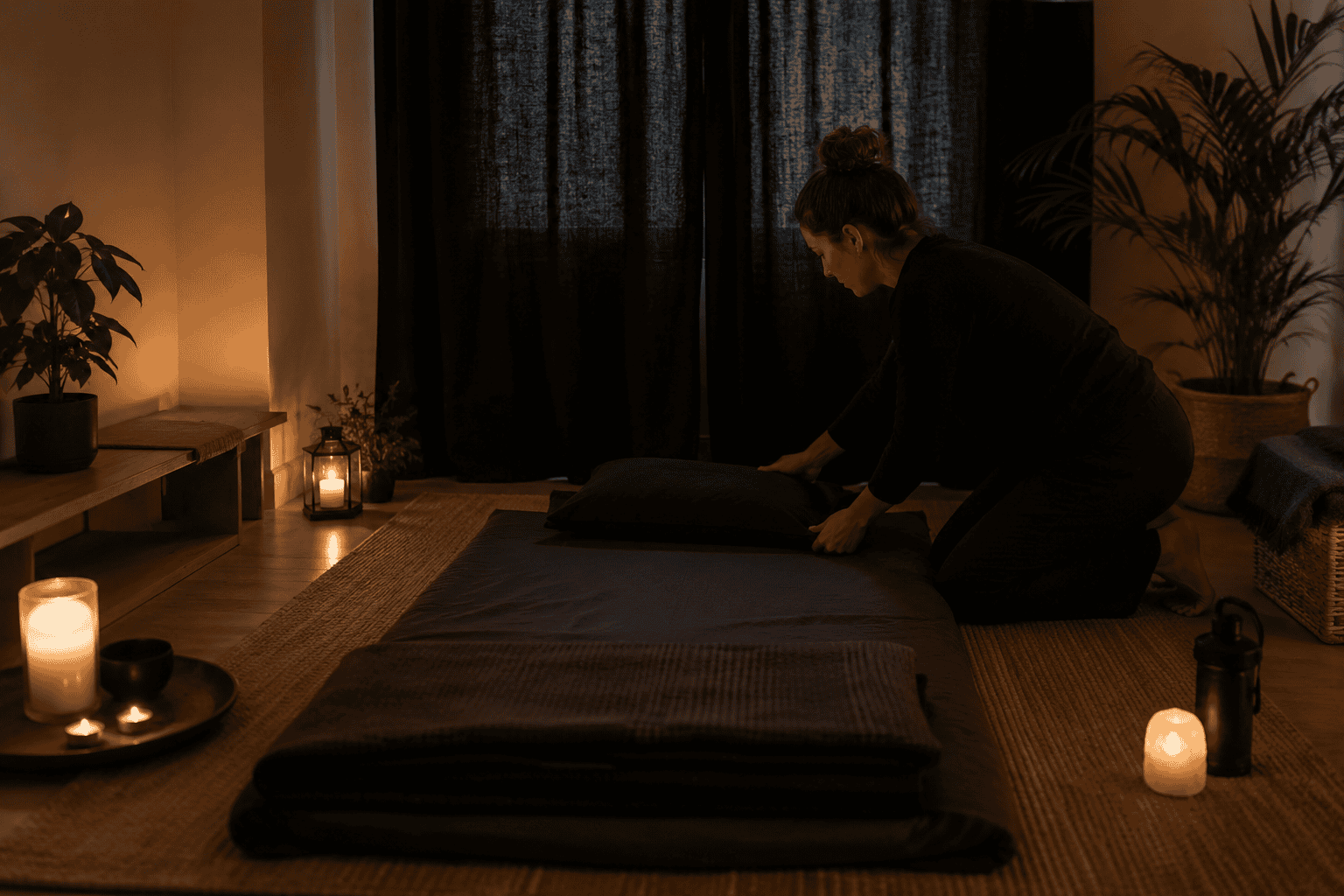
A darkness retreat at home involves spending a set period in complete darkness, away from digital and social distractions, to foster deep rest, introspection, and potential shifts in perception. With careful preparation—room setup, meal planning, and honest self-assessment—people can safely experience many of the benefits found in professional darkness retreats while minimizing risks, provided they approach the practice thoughtfully.
Introduction
Can You Really Do a Darkness Retreat at Home?
Here’s a question that keeps returning: Can you really do a darkness retreat at home? Yes, you can. People have been creating dark, insulated spaces in their homes for decades, inspired by ancient traditions and modern wellness pursuits alike. Whether the room is a blackout-curtained basement or a spare windowless office, the fundamentals don’t change—silence, absence of light, and intentional disconnection. It’s not about replicating a cave in the Himalayas but about finding that essential sense of internal stillness. What matters is the sincerity of intent and the care you put into the setup. The core requirements—total darkness, safety, and minimal external stimulation—are well within reach for most households with some creativity and elbow grease.
Why More People Are Creating Dark Spaces Instead of Traveling
Traveling across state lines or even continents to dark retreat centers might sound romantic, but for most, it’s either a logistical tangle or a budget-buster. Fast-forward to a reality where taking a week off and flying somewhere remote is less viable. Now, with increased awareness around digital burnout, home-based darkness retreats are quietly emerging as a surprisingly practical antidote. Privacy, comfort, and flexibility all factor in. Rather than booking a slot at an exotic dark retreat near me, people are finding that with some advanced planning, the space for profound stillness might be as close as their own (slightly awkward shaped) spare room.
Is an At-Home Darkness Retreat Right for You?
Undertaking a darkness retreat at home isn’t for everyone. The practice demands honesty about mental and emotional health, a willingness to face discomfort, and a basic sense of curiosity. For the perpetually restless or anyone with underlying psychological conditions, extra caution is non-negotiable. On the other hand, if sitting quietly without distraction sounds at least intriguing, or even slightly intimidating in a good way, an in home darkness retreat might provide the kind of challenge that modern routines rarely offer. The key? Approach it in incremental steps, always honoring your own pace and limits.
What Is a Darkness Retreat at Home?
Definition
A darkness retreat at home is an intentional period spent in total darkness within a private space in one’s own residence. Stripped of all visual stimulation—no sunlight, no glow from a phone screen, not a single LED—the environment promotes inward focus and quiets the endless flow of external noise. Home darkness retreat setups vary, but the underlying theme is the same: create a structurally dark space where the mind no longer orients itself by the sun, the clock, or the next notification.
How It Differs From a Traditional Darkness Retreat
The main difference between a DIY at-home experience and attending a professional retreat lies in environment, support, and the degree of darkness achieved. A traditional dark room retreat—whether at a meditation center, Taoist enclave, or remote ashram—often features purpose-built architecture, strict menu controls, and dedicated staff checking in periodically. At home, daily life creeps in: the low hum of the refrigerator, the barking of the neighbor’s dog, the faintest light leak around a window. Professionally designed spaces offer near-absolute darkness, on-call support, and sometimes a spiritual teacher on-site. A home-based darkness retreat leans on your own planning, improvisation, and self-reliance—with all the improvisation and realness that brings.
The Core Principles
Fundamentally, darkness retreats are rooted in the ancient recognition:
- Visual deprivation alters cognitive and emotional patterns
- Stillness and absence (of light, of stimulation) foster profound states of rest and insight
- Intentional withdrawal breaks habitual cycles, letting the nervous system hit ‘reset’
- Facing the unknown—the literal and figurative darkness—invites deep self-exploration
At the center of it all sits the simple idea: When you remove ordinary anchors, the mind reveals its hidden contours. And those contours are rarely what people expect.
What People Hope to Experience
Why do people do this? Motivation varies, but a few themes keep bubbling up:
- Deep rest—Sleep patterns may shift, but most initially experience profound fatigue followed by deeper levels of relaxation
- Creative breakthroughs—‘Visual’ thinking can become vivid; synesthetic effects crop up as the brain adapts
- Spiritual or existential insight—Some seek mystical experiences, others just want a break from overstimulation
- Detox from digital life—Often, it’s “I just need silence” holding hands with “I can’t stop scrolling”
- Psychological reset—For those feeling stuck or anxious, the dark is both a challenge and a possible relief
Take a quick scroll through darkness retreat at home Reddit threads: people share everything from odd visual patterns to sudden emotional outpourings, confirming there’s really no standard outcome—just themes and possibilities.
Can You Safely Do a Darkness Retreat at Home?
Is It Recommended?
Safety is always the elephant in the (dark) room. The consensus among seasoned practitioners and facilitators is that home-based darkness retreats are generally safe for healthy adults, provided you take meticulous steps regarding safety, preparation, and duration. “It’s not complicated, but it must be taken seriously,” as one wellness teacher put it. Jumping in without a plan can lead to anything from stubbed toes to emotional distress. Key? Prepare your environment, set clear intentions, and enter with respect for your own limits.
Potential Benefits
The upsides aren’t just spiritual hype. Time in true darkness—and, crucially, in silence—seems to produce quantifiable shifts in how the nervous system functions. Participants often report:
- Deep physical rest, sometimes accompanied by unexpectedly long sleep cycles in the first 24–48 hours
- Lower subjective stress and a subtle ‘clearing’ of mental noise
- Periodic emotional release, sometimes surfacing old memories or feelings requiring attention
- Heightened sensory awareness (especially hearing and proprioception)
- Creativity: increased ability to ‘see’ solutions or patterns when not distracted by screens or routine stimuli [1]
Whether these effects are a result of the brain’s neurochemistry adapting to lack of light (as Mantak Chia and other teachers suggest), the evidence is there: Darkness reliably shifts inner experience in ways both challenging and restorative.
Potential Risks
Of course, every practice with depth has sharp edges. Risks in a home darkness retreat setting include:
- Anxiety and panic, especially in the first few hours or for those with unresolved trauma or claustrophobia
- Disrupted sleep, ranging from insomnia to hypersomnia
- Emotional flooding—waves of sadness, grief, or anger surfacing without external distraction
- Physical mishaps: bumping into objects, minor injuries if the room isn’t clear
- Confusion or disorientation, particularly in spaces not truly lightproof or in prolonged isolation [2]
Serious adverse effects (like psychotic episodes) are rare, but stories do circulate of poorly prepared retreats escalating psychological distress, particularly when someone starts with a ‘white-knuckle’ mindset or intends to muscle through for bravado’s sake. “You can go to incredible depths really quickly—this is where the promise and peril lie,” said author and dark retreat facilitator Andrew Holecek [3].
When You Should Avoid It
This is not a practice to be attempted during periods of severe mental health instability, active psychosis, untreated depression, or for anyone with a known history of serious trauma—especially without guidance. People experiencing grief, major anxiety disorders, PTSD, or sudden changes in medication should pause before considering a home darkness retreat. If doubt lingers, consult a therapist or trusted mental health professional prior to attempting.
Who Is a Good Candidate
Most people in stable physical and psychological health, with at least a few months’ experience in meditation, mindfulness, or silence, adapt well to short home-based retreats. Good candidates are typically:
- Comfortable spending extended time alone and in quiet
- Curious about their internal landscape, even in discomfort
- Capable of recognizing (and honoring) personal limits
- Willing to reach out for support if needed
A home darkness retreat suits someone who wants depth but is willing to pause at the first sign of genuine instability. “Honor your limits,” as the old axiom goes—it’s better to do too little than too much.
Home Darkness Retreat vs Professional Darkness Retreat
Safety
Professional darkness retreats stack the odds in your favor—think built-in support, daily welfare checks, and structure. There are backup protocols if someone experiences distress or confusion, and professionally designed rooms are checked for hazards before arrival. In contrast, an at-home darkness retreat puts the onus of safety squarely on your shoulders. It’s up to you to design an emergency exit plan, alert trusted family or friends, and triple-check for tripping hazards.
Level of Darkness
Total darkness is much easier to achieve in purpose-built spaces. At professional centers, double-doored entryways, ventilation channels that don’t leak light, and special blackout materials are the norm. At home, complete darkness means blocking not just sunlight but every crack from digital clocks, power strips, and even LED smoke alarms. It’s a constant battle with the little leaks—think of it as “good enough” versus “absolutely zero light.” For some, an eye mask bridges the gap, but even the best mask can’t compensate for full room darkness.
Food & Daily Support
At a professional facility, meals often arrive via a food hatch designed to maintain darkness, with menus curated for simplicity and digestive ease—usually plant-based, light, and minimal. Home-based? Unless you have a supportive cohabitant bringing meals to your door, you’ll be relying on cold or prepped foods stashed within reach. Even boiling water for tea is only an option if you can do it blindfolded or with minimal light exposure. The lack of kitchen support shapes your menu toward simplicity—vegetable broths, seed cakes, basic snacks—unless you accept a bit of light-spill for meal prep.
Emotional Support
This is a major reason some choose professional support: staff or teachers can check in, listen, and guide. At home, you’re navigating any emotional surge or anxiety solo. That said, some people value the autonomy, finding the home-based darkness retreat more accessible, gentle, and flexible. The tradeoff? Learning to be both anchor and observer—unless you intentionally arrange phone or check-in support, which isn’t always possible without letting in light.
Psychological Safety
Accountability—someone on the outside who knows what you’re doing—is a hidden scaffold in professional retreats. Participants are less likely to take unnecessary risks or push past safe boundaries. At home, maintaining psychological safety hinges on clear agreements with friends or family and listening really closely to any discomfort that turns into distress. In this context, personal capacity for honest reflection is the best safety net.
Cost Comparison
No contest—home darkness retreats usually cost only the supplies you need for blackout (curtains, tape, door strips) and basic food, while professional retreats typically start at hundreds—or thousands—of dollars per night. For example, as of 2025, a four-night dark room at Sky Cave in Oregon runs about $1,770[4]. In contrast, even patching up a home basement rarely runs over a couple hundred.
Overall Experience
A home-based darkness retreat offers authentic, sometimes raw, insights into your own boundaries, preferences, and resilience. Center-based retreats, meanwhile, provide structure, safety, and a “container” for going deeper, especially for long durations or for people aiming for spiritual transformation. There’s no one-size-fits-all—rather, think of the home model as a flexible, lower-stakes entry point, and professional centers as amplifiers for those craving depth and willing to pay for it.
If you want to join an existing darkness retreat, check out: Where To Do a Darkness Retreat in 2026: Access 30+ Listings
Benefits of Doing a Darkness Retreat at Home
Deep Mental Rest
Most people come out of a properly executed darkness retreat marveling at how deeply they rested—even if the sleep quality during the retreat feels odd. The mind, deprived of visual cues, stops scanning and begins to settle. This effect is hard to “hack” in daily life. “It was like my brain emptied out static for the first time in years,” as one regular practitioner described on a darkness retreat at home Reddit thread. This makes the practice invaluable for the chronically over-stimulated.
Reduced Stress
Subjective reports—supported by scattered physiological markers—suggest stress levels decline over the course of consistent stays in darkness. There’s less for the brain to process; noisier thoughts eventually drop away. The persistent, low-level tension of modern living gives way to a quieter, softer background—rather like what happens on a silent meditation retreat, only more pronounced.
Nervous System Reset
Extended darkness has a tangible impact on circadian rhythm. With no external cues, the body recalibrates its idea of day, night, and “rest mode.” In the early phase, some sleep for 14 hours in a stretch, then reset toward natural, deep sleep cycles. Physiologically, this may reflect changes in melatonin and serotonin metabolism in the brain—a point referenced by both traditional and modern guides[5].
Improved Sleep
This is a paradox even seasoned practitioners comment on: sleep in the retreat itself is unpredictable, but quality tends to bounce back stronger, richer, sometimes more dream-filled afterward. There’s something about the nervous system being ‘starved’ of outside cues that triggers a compensatory deepening of the sleep process.
Increased Creativity
When you lose sight (pun intended) of clocks, calendars, and glowing screens—suddenly, internal imagery floods in. Many participants report surges in creative thinking, spontaneous problem-solving, or wild new ideas. Musicians have described hearing novel arrangements in pitch black; writers sometimes emerge with pages of insight. Is it just boredom, or something more? The pattern is widespread enough among artists to suggest that the darkness genuinely primes new neural pathways for creative association.
Emotional Processing
Without external interruption, old emotions surface, simmer, and—often—dissipate of their own accord. While this isn’t always comfortable, people find that the darkness works as a kind of “fast track” for felt experience. “Boundaries are dissolved,” to quote Osho—grief, fear, joy, and curiosity all commingle without the usual need to hide or perform.
Meditation Practice
Home-based darkness retreats provide a deeply supportive environment for both novice and advanced meditation. Most struggle at first with the lack of time cues, but after a few hours—or a full day—concentration often grows, with less mental chatter and heightened awareness of breath and body.
Self-Reflection
What happens when you can’t reach for distraction every ten minutes? Patterns—both mental and emotional—become visible. Reflecting back once re-emerged, people say, “I saw habits I never noticed before.” That mirror—held up in pure darkness and total quiet—brings the kind of insight that’s hard to get otherwise.
Reduced Digital Stimulation
Let’s be honest. The chance to unplug—completely—is increasingly rare. No scrolling, no dopamine hits from fresh notifications, no digital noise. Some call it the “ultimate dopamine fast.” Afterward, many notice they’re more intentional with technology or at least more aware of habitual patterns. It’s a reset button for information overload.
Risks and Challenges
Loneliness
Even for those who crave solitude, the magnitude of aloneness in total darkness is hard to grasp until you try it. There’s no glance at a familiar room, no visual cue to anchor your mind in the shared world. For people unused to being alone—or holding silence for more than a few hours—this can border on existential loneliness, a sense of separation that triggers deep discomfort.
Anxiety
Almost everyone, at some point, is visited by waves of worry: “How much time has passed?” “Did I lock the door?” “Will I get stuck in some negative mental loop?” These are real, and, if unacknowledged, can escalate from passing thought to full-blown panic. Anxiety tends to spike in the first hours and sometimes abate with time, but not always. Knowing your own risk profile helps here.
Fear of Darkness
It’s easy to underestimate how unsettling true darkness feels. For some, primal fears or childhood associations resurface. There’s a saying, “The darkness knows what you’re hiding from.” While poetic, it makes a point: darkness is both a blank canvas and a potential amplifier of fear. For many people, these fears subside after acclimatization; for some, persistent terror becomes an urgent reason to exit the retreat early.
Emotional Release Without Support
Intense shame, sadness, or even anger can bubble up, sometimes with surprising force. Without a supportive practitioner on call or trusted friend nearby, processing this alone isn’t always healthy or safe. Having walkie-talkie communication, a phone outside the room, or a simple check-in plan with someone you trust goes a long way.
Sleep Disruptions
Bizarre dreams, frequent waking, hypersomnia—expect oddities in your sleep. The nervous system, deprived of consistency, can either overcompensate or seize the chance for major repair work. Most issues resolve after return to normal light exposure, but severe insomnia or hypersomnia can show up in those with prior sleep irregularities.
Lack of Professional Guidance
Let’s call it what it is: DIY means no immediate expert support. While independence is beautiful, those new to meditation or easily destabilized can drift into unhealthy patterns—making the retreat more of a confusing endurance test than an experience of growth.
Maintaining Complete Darkness
One rogue LED, one window crack, one misaligned curtain and the whole experience shifts. Home environments are full of sneaky light leaks—everything from digital alarm clock displays to the faint glow of electrical sockets. Maintaining true darkness takes relentless attention to detail, and is rarely perfect.
How to Prepare for a Darkness Retreat at Home
Choosing the Right Room
Pick a space that’s as isolated from outside light and noise as possible—a windowless basement, interior walk-in closet, or a bedroom with heavy blackout drapes. Surface area counts. The fewer windows and doors, the better. Proximity to bathrooms is a plus (unless you’re using a portable toilet).
Eliminating All Sources of Light
- Use blackout curtains or thick industrial trash bags to cover windows (black, not blue or green—it matters).
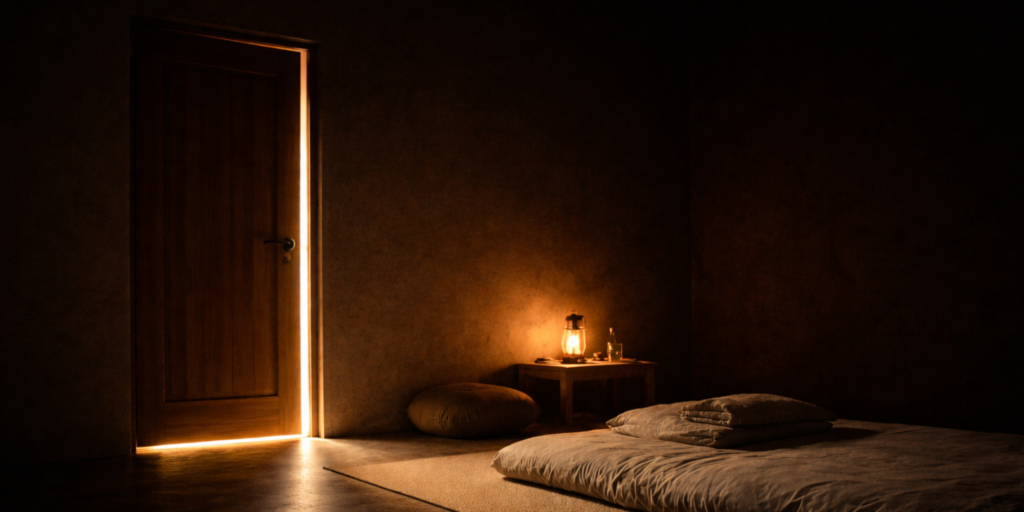
- Seal door frames with weather stripping or towels to block leaks around handles and at the bottom.
- Unplug or cover clock radios, chargers, and any device with a glowing light—even a WiFi router’s LED can be surprisingly intrusive.
- Tape over smoke detector LEDs, but never disable safety equipment—subtle distinction, big consequence.
Test the room before your retreat: shut the door in broad daylight and let your eyes adjust. Even the faintest outline will glow like the moon after 30 minutes.
Testing Your Darkness
Stand in your sealed room, close your eyes for 1–2 minutes, then open them and look for even slight shadows. Unexpected? Sometimes the mind invents light—phosphene patterns, like static or colored dots, are normal. Try to walk the perimeter in pitch darkness, memorizing the room’s layout. Do you bump into anything or see unwanted light? Adjust as needed.
Preparing Meals
Prepare all meals in advance—soups, smoothies, nut cakes, or prepackaged snacks (unsweetened granola bars, dried fruit). Opt for foods that keep well at room temperature or in a cooler, ideally in glass jars for safety. Avoid dairy, meats, and anything requiring heating unless you choose to risk a brief step into light (with sunglasses, if possible).
Organizing Supplies
Make a checklist of everything you’ll need:
- Water (large jugs or bottles, easily reached blind)
- Basic cutlery and bowls
- Trash can within reach
- Meditation cushion, yoga mat, pillows
- Emergency supplies: flashlight, lighter without gas, backup food
- Essential hygiene items within reach—preferably non-scented
Place items in fixed positions you can memorize. “The first day you will get lost… but be amazed at how quickly you adjust to your new environment,” notes Han Serhan Keser, reflecting on his own in-home retreat [1].
Informing Family or Housemates
Let others know precisely what you’re doing, for how long, and how to reach you in an emergency. Clarity around boundaries prevents accidental interruptions or (worse) well-meaning “check-ins” that sabotage the darkness!
Setting Boundaries
Define clear boundaries—no calls, no phone access except for emergencies, and an agreement with anyone at home to disturb you only if genuinely necessary. Posting a “Do Not Disturb—Darkness Retreat in Progress” sign isn’t overkill; it’s just being thorough.
Emergency Plan
Place an emergency phone or call bell just outside your room, or have a plan for a daily ‘check-in’ signal with a friend. Have a flashlight or lighter at arm’s reach for absolute emergencies, color-coded or tactile enough so you’re not fumbling if startled awake. Safety trumps all else—never lock yourself in from the inside if there’s any risk of being unable to exit in the dark.
Essential Equipment
Blackout Curtains
True blackout curtains make life easier. If those aren’t an option, thick industrial trash bags—black only—are a surprisingly robust fallback. Double up on window coverings if any shimmer remains.
Door Seals
Gaps under or around doors bleed light like you wouldn’t believe. Use weatherstripping, towels, or foam strips inside and out. Check after each door opening—shifting materials can undo hours of prep.
Eye Mask (When Appropriate)
Some choose to supplement imperfect room setups with an eye mask, particularly for sleeping or transitional periods. However, if the room is solidly dark, eye masks are optional and sometimes distracting.
Water Supply
Dehydration sneaks up on you in retreat (no visible cues), so stock ample water within arm’s reach—more than you think. Large, reusable jugs or bottles with a pop cap work best.
Comfortable Bedding
Layer blankets and pillows for seated meditation or naps. Some prefer a sleeping bag for tactile spatial reference—especially useful for those prone to anxiety in the dark.
Meditation Cushion
Most daily activities in retreat—breathwork, body scan, gentle movement—are easier with a familiar meditation cushion or yoga mat.
Flashlight for Emergencies
A small, tactile flashlight (with red tape over the lens if possible) stays next to the exit. Strictly for emergencies. In non-emergency scenarios, consider a disposable lighter that gives the briefest flash if you absolutely lose your bearings.
Journal (To Use After the Retreat)
Leave a blank notebook and pen just outside the room. You’ll want to capture impressions right after re-emerging—if you wait, details evaporate like dreams.
Timer or Alarm
Decide how you’ll measure time, if at all. Many choose to surrender all sense of schedule, letting meal intervals, sleep, and meditation direct the rhythm. For those needing structure for medication, set a timer or alarm with a tactile button or vibration.
How Long Should an At-Home Darkness Retreat Be?
12 Hours
For first-timers, twelve hours overnight is a gentle introduction—enough to feel the effect without triggering more than mild discomfort. Think of this as a “taste” of what’s possible, not a full retreat.
24 Hours
One full day in darkness marks the threshold where novelty drops and psychological adaptation begins. Expect rest, confusion about time, and the first wave of emotional or physical discomfort.
48 Hours
Two days brings depth. Melatonin levels build, circling thoughts dissolve or intensify, and some people notice subtle changes in dream or waking imagery. Disorientation about the outside world increases, as do benefits and risks.
3 Days
Day three is often cited as the point where deeper shifts occur. Some report visual hallucinations or altered states, others feel deep fatigue pass into unexpected energy. Professional centers sometimes cap stays at 3–4 days to avoid mental overload, while more advanced practitioners go much longer.
5 Days
Extended five-day darkness retreats remain rare at home and require prior experience, solid safety planning, and fallback support. Effects can be dramatic—ranging from profound insights to temporary confusion about basic realities.
Should Beginners Attempt Longer Retreats?
In nearly every traditional tradition, the answer is a clear ‘no.’ Beginners are urged to start small and build up gradually. “Better to do too little than too much.” Push too far, too fast, and risks (from sleep disturbance to acute anxiety) spike. Reserve long retreats for those already confident with shorter, supervised experiences.
Step-by-Step Guide
Before Entering Darkness
- Check your space again at different times of day for light leaks. Adjust covers as needed.
- Set up hydration, food, bedding, and seating exactly where you’ll need them.
- Share your retreat details (duration, start/end times, emergency plan) with a trusted contact.
- Double-check that your phone and any clocks are silent or out of the room unless needed for true emergencies.
- Take a moment—literally a few minutes—to clarify your purpose or intention, whether that’s rest, reflection, or creative reset.
- Transition into the darkness with a simple ritual: dim the lights, close the door, breathe, and begin.
The First Hours
Most people notice misgivings or low-key discomfort bubble up—restlessness, nerves, boredom. Use this time for gentle acclimatization: slow movement, simple breathing. Let the room “shrink” in a good way, becoming your whole world.
Day One
Expect to sleep—sometimes a lot—or, oddly, to lie awake with a swirl of thoughts. The body recalibrates when usual time anchors are gone. Meditate, rest, allow meals to become points of sensory focus. Taste, smell, even textures feel strangely magnified.
Day Two
For those continuing, emotional patterns intensify. Stories from veteran practitioners often mention flashes of childhood memory or emotional release. Not uncommon to experience waves of fear followed by calm or even sudden insight as the mind turns inward. Gentle movement—yoga or stretching—can break the monotony.
Day Three
Hallucinations (visual patterns with open or closed eyes), altered sense of time, and deeper meditations often arrive. Many notice the mind slips between dream-like and waking states freely. Staying rooted in simple practices—focus on breath, body scan, affirmations—centers the experience. Anxiety may spike; trust your plan and exit if real distress builds.
Ending the Retreat Safely
- Pause before leaving the darkness; sit or lie quietly for a few minutes and prepare yourself for sensory input.
- Slowly open the door or window covering—letting in light gradually, not abruptly.
- Protect your eyes with sunglasses if needed, or shield them with your hand.
- Drink water, eat something light, and sit quietly before jumping into phone or computer use.
- Take notes in your journal, or simply observe the echoes of the retreat for the next few hours.
- Contact your designated check-in person to let them know you’ve finished safely.
Daily Routine Example
Morning
No clocks. Instead, let your body dictate rhythm. Many find themselves waking for brief stints, sleeping intermittently, and sitting quietly as the “day” unfolds. First activity? Mindful breath, simple stretching, or body scan.
Meditation
Carve out several blocks of 20–60 minutes—timed with an audio cue set outside, or simply until you feel ready to move. If restlessness arises, allow it to be.
Rest
Give yourself permission to nap, stretch, or just sit in silence. Periods of deep fatigue are normal and can dominate the retreat, especially for the chronically stressed.
Gentle Movement
A short yoga sequence or freeform stretching breaks up long stints of stillness. In darkness, movement requires slowness and intention.
Eating Mindfully
Meals become milestones. Attend closely to texture, aroma, and taste—heightened by lack of sight. Many report a sense of “rediscovering” basic foods.
Reflection
Let spontaneous thoughts or feelings pass without writing them down—unless you keep a recorder with voice memo functionality (but keep it out of reach unless necessary). Many find the important revelations remain accessible after immersion ends.
Sleep
Expect fragmented sleep at first—long naps, short bursts, dream sequences, all free from normal temporal cues. Eventually, the body settles into a new rhythm.
What to Do During the Retreat
Meditation
Whether you practice focused attention, open awareness, or metta (loving-kindness), darkness amplifies whatever meditation style you favor. Now’s the time to experiment—try meditating with eyes open; you won’t see anything anyway.
Breathwork
Slow, rhythmic breathing serves both to ground the body and anchor the mind. Long, counted inhales and exhales modulate stress and clarity. Try simple ratios: inhale for 4, hold for 4, exhale for 6, hold for 2.
Yoga Nidra
Guided by memory or a preloaded audio device, yoga nidra (yogic sleep) is deeply restorative. It’s perfectly suited to darkness, as all visual prompts fade and awareness turns to subtle sensation.
Body Scan
Start at the feet and move slowly up to the crown of the head, mentally checking in with each muscle, joint, and system. This practice is both meditative and grounding—a favorite of those who distrust “floating off into space.”
Prayer
For the spiritually inclined, silent prayer or mantra repetition becomes especially potent—intimacy with the unseen, as it were, has never felt so literal.
Mindfulness
Every action—from eating to shifting posture—becomes a mindfulness prompt. Attend to each internal cue without rushing onward.
Rest
Let yourself fully rest, without guilt or purpose. The hardest—and perhaps most important—activity in darkness is simply being.
Simply Being
No need to force outcomes. Sometimes it’s enough to listen to the hum of your own breath, the shape of silence, and whatever arises… and passes… on its own timeline.
What NOT to Do
Use Your Phone
Checking notifications, texting, or scrolling—even in night mode—snaps the spell and reintroduces light and distraction. Turn off and stow away all electronic devices before entry, unless one is kept strictly for emergencies (hidden and silenced).
Watch Videos
Watching shows or YouTube with the sound off “just for background noise” negates the practice. The absence of stimulation is the point; digital input pulls you right back into old patterns.
Listen to Podcasts
Unless you’re using brief, intentional guided meditations, avoid podcasts. External voices introduce new stimulation and split your attention from presence.
Work
Emails, spreadsheets, or creative productivity—let all work obligations rest on the outside. You’re not on the clock.
Consume Alcohol or Drugs
Any psychoactive substance introduces risk, both to the integrity of the retreat and your safety. The line between visions arising from darkness itself and those chemically induced is blurry—and can escalate into dangerous territory.
Force Spiritual Experiences
Some come to darkness retreats hoping to conjure breakthrough states on demand. Problem is, force leads to frustration or disappointment—it’s enough to show up and notice what emerges.
Ignore Serious Emotional Distress
If genuine fear, panic, or suicidal thinking arises, don’t tough it out—exit the room and reach for support. Stubbornness has no heroism in this context.
What You May Experience
Altered Sense of Time
Without clocks or sun, hours become meaningless. Many people guess they’ve napped for twenty minutes only to find that hours have passed—or vice versa. Time becomes stretchy, unreliable.
Heightened Hearing
In the absence of visual input, auditory perception ramps up. The hum of a fridge feels like an orchestra; distant street sounds become oddly intimate. For some, this is oddly comforting; for others, distracting.
Vivid Dreams
A near-universal feature. Whether due to melatonin surge or brain plasticity, dreams during and after retreats can stretch into cinematic territory—elaborate sequences, old faces, and sometimes, lucid flashes.
Emotional Waves
From gentle nostalgia to waves of sorrow or fear, emotions intensify in the dark, emerging without distraction. Most find that, given time and attention, these pass, leaving a sense of release.
Increased Calm
After initial turbulence, a deep quiet settles. The nervous system downshifts, thoughts grow less urgent, and even persistent inner chatter loses its edge.
Anxiety
Let’s be honest—not everyone gets bliss. Restlessness, old anxieties, even panic can emerge. Recognizing and tending to these sensations compassionately is the key.
Creative Insights
Fresh perspectives, new ideas, and the sudden lining up of old problems are common aftermaths. The creative flood isn’t forced; it arrives when least expected.
Visual Phenomena
Patterns, lights, or even whole ‘movies’ with eyes open or closed—these are normal and not automatically cause for alarm. Darkness reveals, rather than invents, the latent activity of the visual cortex. As one participant quipped, “It’s like free DMT, but less scary.”
Deep Rest
Whether physical, mental, or emotional, the experience of deep, bone-level relaxation is one of the most-cited reasons for repeat retreats.
How to Handle Difficult Moments
Fear
Recognize it, name it, breathe with it. Remind yourself: “The darkness can’t hurt you.” If the fear doesn’t subside with breathwork or gentle self-talk, consider pausing or reaching out for support.
Restlessness
Doesn’t take long before antsiness kicks in—wanting to move, fidget, do anything but sit still. Stand up, stretch, or take a slow lap of the room with hands outstretched, feeling your way along the walls. Movement often dissipates mental agitation.
Boredom
The mind craves stimulation—don’t fight it. Allow boredom to bubble up and fall away, resisting the urge to manufacture imaginary entertainment. With time, boredom dissolves into presence.
Racing Thoughts
Mental chatter can spike before it subsides. Try redirecting attention to the breath or slow counting. If mind loops become relentless, recite a mantra or affirming phrase.
Emotional Release
Let tears come if they will—resistance only intensifies the feeling. If emotions become overwhelming, focus on the physical sensations rather than the story behind them. Gentle acceptance wins the day.
Panic
Panic is always a cue to pause. Use your emergency plan—contact a friend, step out into the light, or end the retreat early. Darkness is medicine, not punishment.
Knowing When to Stop
The golden rule: if distress feels unmanageable or your sense of safety is compromised, stop immediately. No experience is worth long-term discomfort or harm. Exiting the darkness isn’t failure; it’s wise, attuned self-respect.
What to Eat During a Darkness Retreat
Light Meals
Vegetable broths, lightly cooked grains, steamed root vegetables, and seed/nut-based cakes are the go-to. Heavy foods slow digestion and complicate the simplicity of the experience.
Hydration
Drink water regularly, aiming for small sips throughout. Herbal teas are permitted if prepared in advance or in a thermos. The brain’s thirst cues distort without visual reminders.
Foods to Avoid
Dairy, meats, eggs (especially yolk), processed grains, sugar, and heavy, oily foods are discouraged[1]. Caffeine is frowned upon, but some tolerate mild green or black tea.
Meal Timing
Time loses meaning. Eat when hungry, or at fixed intervals if you need structure (using a silent alarm). Meals mark a rhythm but don’t need to be rigid.
Should You Fast?
Fasting during darkness is an advanced discipline—called Pi Gu in some Taoist traditions[1]—and not for most home practitioners. If you choose to fast, be clear on your reasons and monitor for dizziness or weakness. Light, regular nourishment is the safer choice for first-timers.
Should You Meditate the Whole Time?
Common Misconceptions
It’s tempting to believe that “real” darkness retreats involve meditating every waking hour. In reality, too much forced practice backfires. What unfolds is less about doing and more about permitting experience to happen. Many centers recommend alternating periods of practice, rest, and simply being.
Finding Balance Between Meditation and Rest
Let meditation and rest alternate like the breath. Long meditative stints lead to fatigue or agitation; rest brings back freshness for deeper states. Some instructors recommend short blocks—20–30 minutes—broken up by napping, eating, or gentle movement.
Allowing the Mind to Settle Naturally
When boredom or resistance arises, don’t force yourself to “do” another round of practice. Let the mind unwind at its own pace. Paradoxically, open-ended idleness often reveals the most surprising insights.
Creating the Perfect Darkness Room
Bedroom Setup
Bedrooms are popular—familiar, private, easy to customize. Use layered blackout curtains, furniture for spatial memory, and soft rugs to dampen echo. Block every LED and put the phone outside.
Basement Setup
Basements (when dry) are naturally insulated from light and noise. Use weatherproofing strips on exterior doors, wall tapestries, and portable purifiers for air. Temperature, though, can swing—so plan bedding accordingly.
Spare Room Setup
An internal room with few windows is easiest to modify. Block vents or keyholes, pile towels against thresholds, and use heavy rugs to muffle ambient noise.
Sound Management
Silence sharpens all sound. Turn off appliances, use earplugs if you’re noise sensitive, and consider a white noise machine—if it doesn’t emit light!—outside the room for masking street or neighbor sounds.
Ventilation
Plan how you’ll keep the room fresh without letting in light. Open windows with multiple layers of blackout material, or use a fan placed outside blowing air through a vent that doesn’t leak light.
Temperature
Comfort swings—dark spaces cool off fast. Set a stable temperature before entry, and layer clothing/blankets for fine-tuned comfort.
Mistakes Beginners Make
Staying Too Long
Ambition runs high. Many bite off more than they can chew—shooting for three days on the first attempt. The classic error: overestimating inner reserves and patience. Start small, learn your limits, then increase gradually.
Expecting Instant Enlightenment
Blame the hype. Some enter expecting visions, healing, or cosmic breakthroughs on a schedule. More often, the first experience is simply…quiet and uncomfortable. Sometimes that’s the lesson.
Incomplete Darkness
Small light leaks can sabotage the entire retreat, constantly pulling the mind back to the mundane. Double-check and patch leaks—don’t shrug them off.
Overplanning
Endless lists, strict routines, setting five alarms a day—such rigid planning collapses in the dark. Prepare soundly, but allow space for spontaneity and surrender.
Ignoring Emotional Reactions
Suppressing fear, sadness, or boredom only leaves them festering. Healthy darkness retreat practices encourage noticing, accepting, and allowing emotions to flow through—without analysis.
Not Preparing Properly
Skimping on supplies, failing to communicate with others, or ignoring safety measures spells trouble. Good outcomes start with good preparation—always.
After the Retreat
Reintroducing Light Slowly
Your retinas, after hours (or days) in pitch black, are shockingly sensitive—like vampires at dawn. Open coverings a sliver at a time, or don sunglasses. Let the outside world bleed in over 5–15 minutes, not all at once.
Journaling
Before the outside reasserts itself, jot down impressions, dreams, and sudden realizations. Even fragments are valuable; recall fades fast. “Details evaporate,” as one practitioner commented.
Integration Practices
Ground yourself back in daily life—walk outside, eat something nourishing, check in with a trusted friend. Take time to reflect on how the experience shifts your perspective on routine, stress, and relationships.
Avoiding Immediate Digital Overload
Hold off on phone, email, or social media for several hours after emerging. Otherwise, the ‘reset’ you bought with precious discomfort fades within minutes.
Sleep After the Retreat
Expect a period of vivid dreaming, more restful nights, or sometimes fatigue as the nervous system finishes recalibrating. Give yourself permission to nap or go to bed earlier than usual for a couple of nights.
When to Consider a Professional Darkness Retreat Instead
You Want Complete Darkness
If there’s no way to black out your environment perfectly—windows, doors, and all—in the home, a purpose-built retreat center offers uncompromised, bomb-proof darkness. Some experience is simply unachievable in casual setups.
You Want Daily Support
For those who suspect emotional turbulence or who want periodic check-ins from a teacher or counselor, professional retreats give peace of mind. Emotional safety is as important as physical safety.
You Want a Deeper Experience
If you’re seeking transformative, spiritually anchored work—long sessions, deep inquiry, guided processes—a professional framework is likely better.
You Live With Family
No matter how sympathetic your housemates, privacy is harder to preserve in a busy household. Accidental interruptions, household noise, or concern from loved ones can break the necessary container of silence and solitude.
You Want a Dedicated Retreat Environment
Some settings can’t be replicated at home: natural quiet, total isolation, specialized support. Professional retreats offer a container that allows for the full depth and breadth of experience—no “sorry, my phone alarm went off anyway.”
Frequently Asked Questions
Can I do a darkness retreat at home?
Yes, you can. With enough preparation—a dark, safe space, supportive boundaries, and mindfulness of personal risks—home-based darkness retreats are not only possible but increasingly popular alternatives to formal centers.[1]
Is it safe?
Generally, yes—for most healthy adults, short retreats pose minimal risk when proper safety and communication protocols are in place. Serious psychological distress or physical injury can occur if you ignore warning signs or attempt too much, too soon.
How dark does the room need to be?
As dark as physically possible. Even faint light leaks can disrupt the experience. Aim for a space where, after 10–20 minutes of adaptation, you can’t see your own hand or outlines of the room.
How long should my first retreat be?
Most guides recommend starting with a short retreat—12 to 24 hours—before attempting two or three days. Increase duration only as you feel confident in your emotional and physical response.
Can I use an eye mask instead?
An eye mask helps supplement imperfect blackouts, especially during sleep, but can’t compensate for full room darkness during waking hours. Use as an aid, not a cure-all.
Can I use my phone?
No. Light from screens—even in ‘dark’ settings—breaks immersion and undermines the intent. Keep phones outside, powered off, or use strictly for emergencies (reasonably close by, but out of reach).
What if I become scared?
Honor fear—don’t muscle through. Use grounding practices: breathwork, contact with a friend, or ending the retreat early if needed. Fear can teach, but not at the expense of your wellbeing.
Can I sleep during the retreat?
Absolutely. Extra sleep is common, especially in the first 24–48 hours. Don’t fight it; deep rest is a primary benefit of darkness retreats.
What should I eat?
Light, plant-based, easily digestible meals—vegetable soup, steamed root veggies, plain grains, seeds, and nuts. Avoid heavy, sugary, or highly processed foods, especially anything requiring preparation with light exposure.[1]
Can I leave the room?
Yes. Safety first. If distress grows or necessities arise, step out briefly. The practice is valuable only if you remain physically and emotionally safe inside.
Final Thoughts
Is a Darkness Retreat at Home Worth Trying?
For those craving authentic rest, creative recharging, or simply a crack in routine, the at home darkness retreat holds real promise. While it won’t deliver instant enlightenment, most people find even 24 hours in true darkness shakes loose patterns, sharpens awareness, and reveals surprises both subtle and grand. Naturally, only you can decide if it’s appropriate for your temperament, home, and season of life.
Start Small and Build Experience
The best advice rings out: “Start small, pay attention, and ramp up only as needed.” A single night or a gentle weekend in darkness does more than most expect. Even if discomfort bubbles up, it’s all information—the darkness simply amplifies what’s already there, offering a mirror most people never have the time (or courage) to gaze into.
Knowing When a Professional Retreat May Be the Better Choice
If you seek structure, deep spiritual support, or struggle with emotional regulation in solitude, there’s no shame—and much wisdom—in seeking a professional retreat instead. Sometimes the depth you’re after is best reached with trained, compassionate guidance. Either way, the practice will always be about meeting yourself, in honesty, in darkness, for as long—or as little—as feels just right.
Ultimately, home-based darkness retreats belong to a growing constellation of practices that honor deep rest, mindful technology use, and honest self-inquiry. If the idea lingers, maybe it’s time to give the dark a try—just remember to let the light back in gently.
References
- Keser HS. How I made it in the dark at home. Mantak Chia Universal Healing Tao. Published February 7, 2024. https://www.mantakchia.com/how-i-made-it-in-the-dark-at-home/
- Busby M. Days-Long ‘Dark Retreats’ Are the Newest Spiritual Conquest for Tech Elites. WIRED. Published June 4, 2025. https://www.wired.com/story/days-long-dark-retreats-are-the-newest-spiritual-conquest-for-tech-elites/
- Hridaya Yoga. Darkness Retreats – Dark Room Retreats. https://hridaya-yoga.com/silent-retreats/dark-room-retreats/
- Sky Cave Retreats pricing, as cited in WIRED report [2].
- Mantak Chia. Darkness Technology. Various lectures and online teachings cited at Mantak Chia Universal Healing Tao, 2024. https://www.mantakchia.com/




 Your personalized retreat result